
A Conversation Between Mind and Body
In Georgica Pettus’ 2025 play, Seconds Minutes Hours, four actors portray the minds and bodies of a man and a woman lying in bed together for 10 minutes as they inwardly contemplate lust, love, and life. Stretched into a 90 minute play, the performance features Georgica acting as the mind of Molly, while Stella Jiler plays Molly’s body. Now that the play has wrapped, the two women reflect on cognitive connections and matching haircuts.
Moderator ARCHIE CARIDE
Photographer SHELLI WEILER
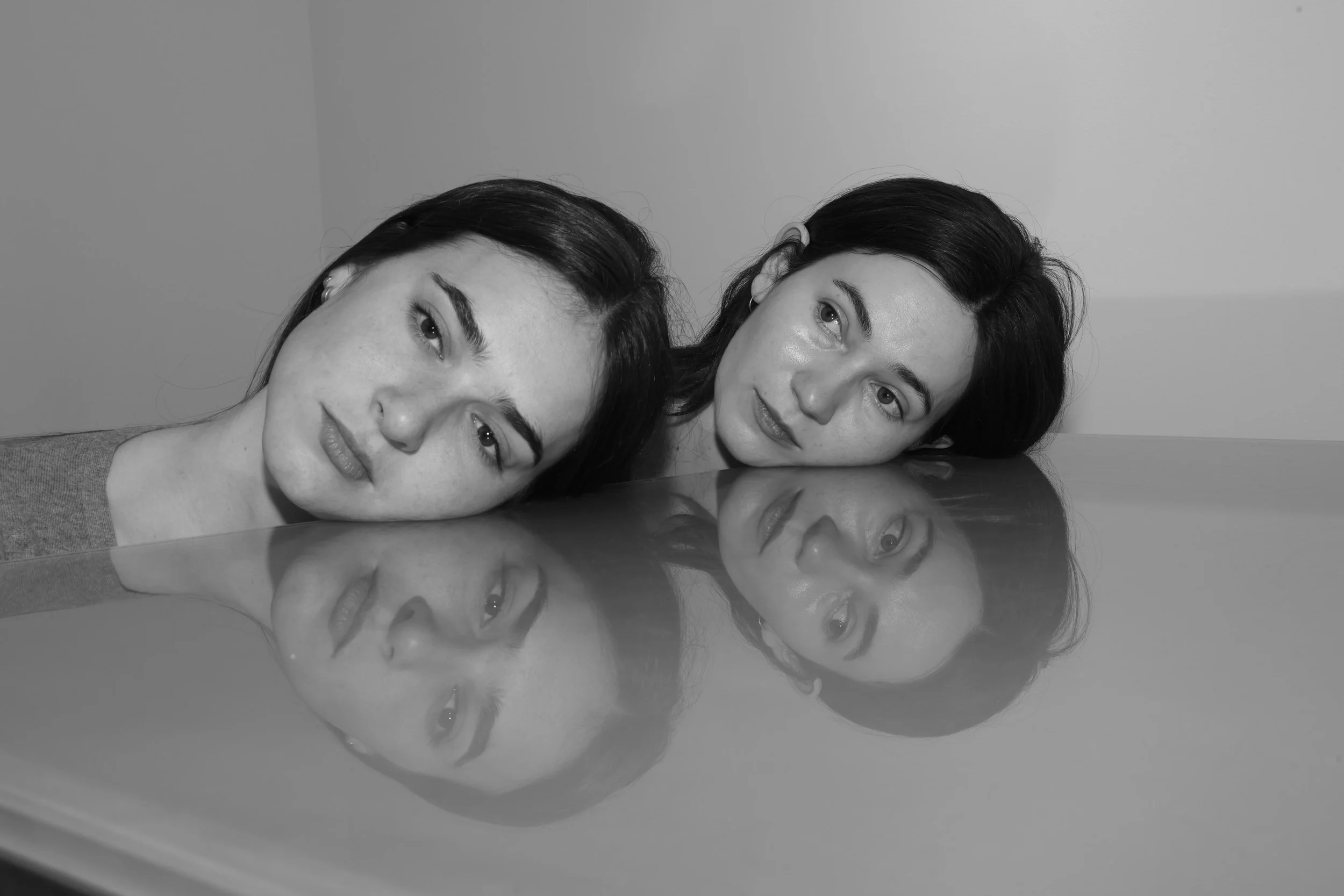
GEORGICA PETTUS Seconds Minutes Hours came to be through working with Francis Irv [gallery]. They asked to do a show together and even though I didn’t have a specific idea in mind, I jumped at the opportunity.
STELLA JILER I didn’t know that they asked you to write a play [from scratch]!
GEORGICA It became a much bigger production than what they had in mind. The idea came to me in England when I saw a play that had the words “ten minutes” in the dialogue and it made me think about a play as a medium that usually condenses a long period of time. You take one day or many days or years and shorten them into an hour and a half-long story. I wanted to experiment by writing something that did the opposite of that.
I started with an interest in moments where time slows down. The first experience that came to mind was sleeping with someone new–how much time you spend in your head, how slowly time moves in your mind versus in real life. Immediately the image that I saw was the physical separation of mind and body—having a character for each. One of the hardest parts was casting, because up until this point I have acted in all my own work–because I'm so available to myself, I can ask anything of myself. I cast our co-star Kayhl [Cooper] and I thought, "Now we have to find people who look like us [to play the bodies that match our minds].” I had a hard time finding my look-alike. One day I was talking to a friend, complaining about how hard it is to cast doubles. She responded, “Wait a second, my friend Stella is an actress and you guys kind of look alike.” So I reached out to Stella and it was perfect.
STELLA You called me and explained the premise and I said, “Of course!” The form, having a mind and body character, had so much opportunity; it's like Inside Out (2015) vibes, but contemporary and speaking to the anxieties of young adulthood.
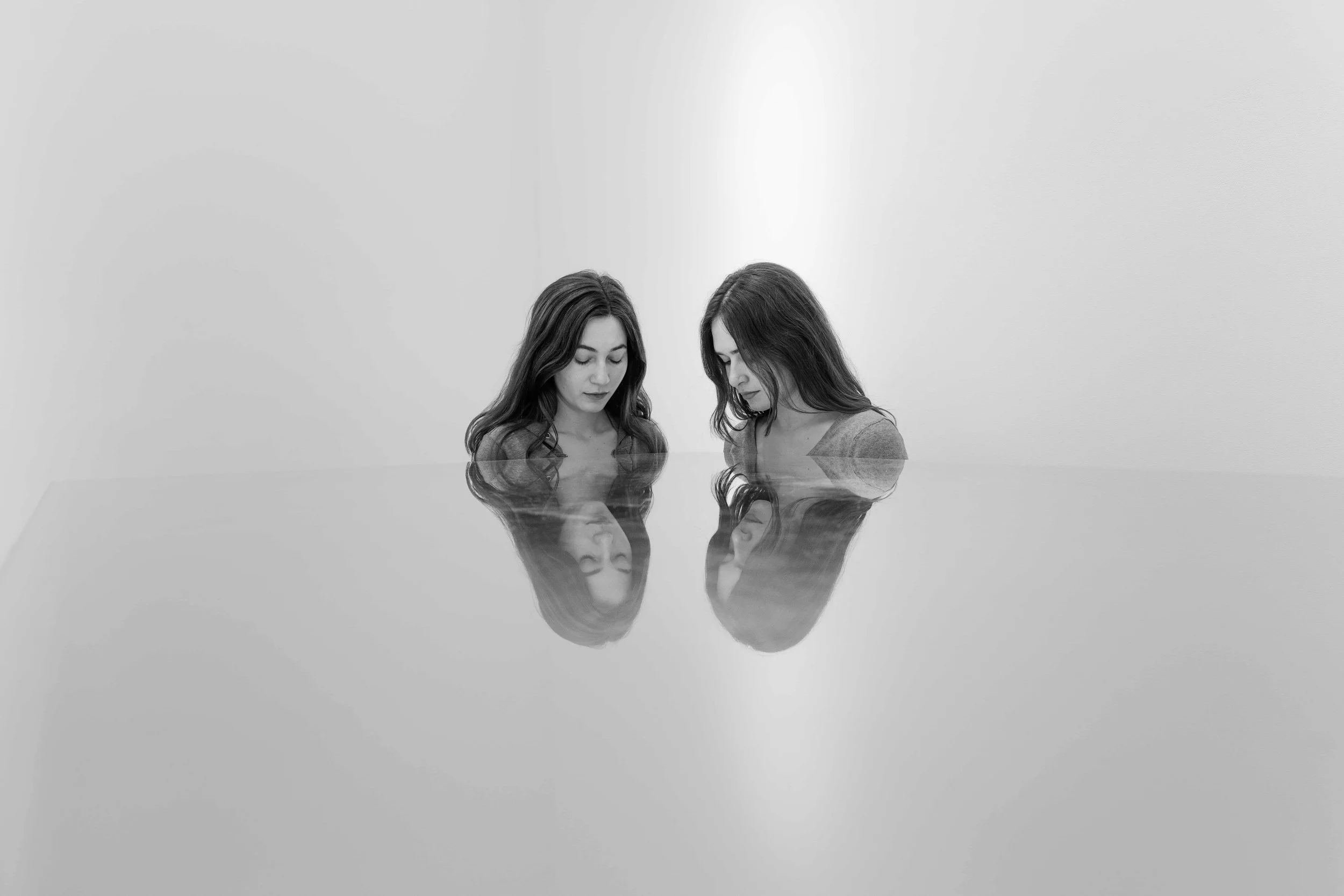
GEORGICA I felt nervous approaching people about the role of the body because you're in a bed and intimate with another person for the entire play. It's an important role, but you have one line. I think it took courage on your part to sign up for something like that.
STELLA It sounded so cool. I felt like, “I can’t pass up an opportunity to see what this means and how this is going to play out.” It was an interesting concept for an acting role. Before I was an actor, I was a dancer. The idea of a role that was just about the movement and a story I was telling with only my body was super interesting, and I knew it would be fruitful even if I didn't have lines. What an opportunity to be fully present.
GEORGICA So many people commented on how much they watched your face as I spoke because the audience realizes fairly quickly that “She is the embodiment of what she is thinking, but what she is feeling I can see on her [face].”
STELLA We're all so anxious these days, and when seeing a play, we feel more connected to the people around us [because] when it's over we’ve gone through the same thing. Seeing a play that's this intimate, you're asking, “How does this person feel? How does that look on the outside? Do they do the same thing that I do?” Do my thoughts match how I look on the outside?
GEORGICA I think the answer is often no.
STELLA The first couple rehearsals I just listened to you speak.
GEORGICA You were doing the Meisner [technique], right?
STELLA Yeah, the technique is about building the dynamics of the performance moment by moment with your scene partner, so that you and the audience experience something together in real time. A lot of it is training yourself to be a feather in the wind of your partner.
GEORGICA It ended up being perfect because so much of this role is about responding to what's being said.
STELLA Totally. You're narrating my every thought, so I just listen. Then, there are times where certain things do happen in the body first–the “I think I love him” moment, where I, we, Molly, is feeling super enamored. Physically, you watch that, and then the thought comes: “I think I love him.” And that's a shock. It's interesting when the thought is behind the body.
“What an opportunity to be fully present.”
GEORGICA In my original script there was hardly any stage direction, but the one that we were working with was full of it. Like you said, we were makin it up as we went. That's just how I work: I have the text, a sense, and a couple of main images that I want to make. The image of the minds watching the bodies from behind the bed was really important to me. But in rehearsal you discover new things, and everyone brings something physical to the table that I don't think of. I was so concerned about boring people because it's such a meditative play. There’s so much monologue, a lot of text, and not that much going on. I found myself having the impulse to create more activity.
STELLA We were like, “He’s gonna pick me up and we’re gonna spin!”
GEORGICA We had versions where they did a lot more in the bed. We were really careful because there's definitely a surreal aspect of the play, but I didn't want it to feel unreal.
STELLA I questioned how expressive I should be with my face. If I’m representing thoughts silently, ultimately less is more. Molly developed a habit of physically turning away when she had difficult thoughts, because it’s hard to remain present with someone when you need privacy–even if it’s not real privacy–to think.
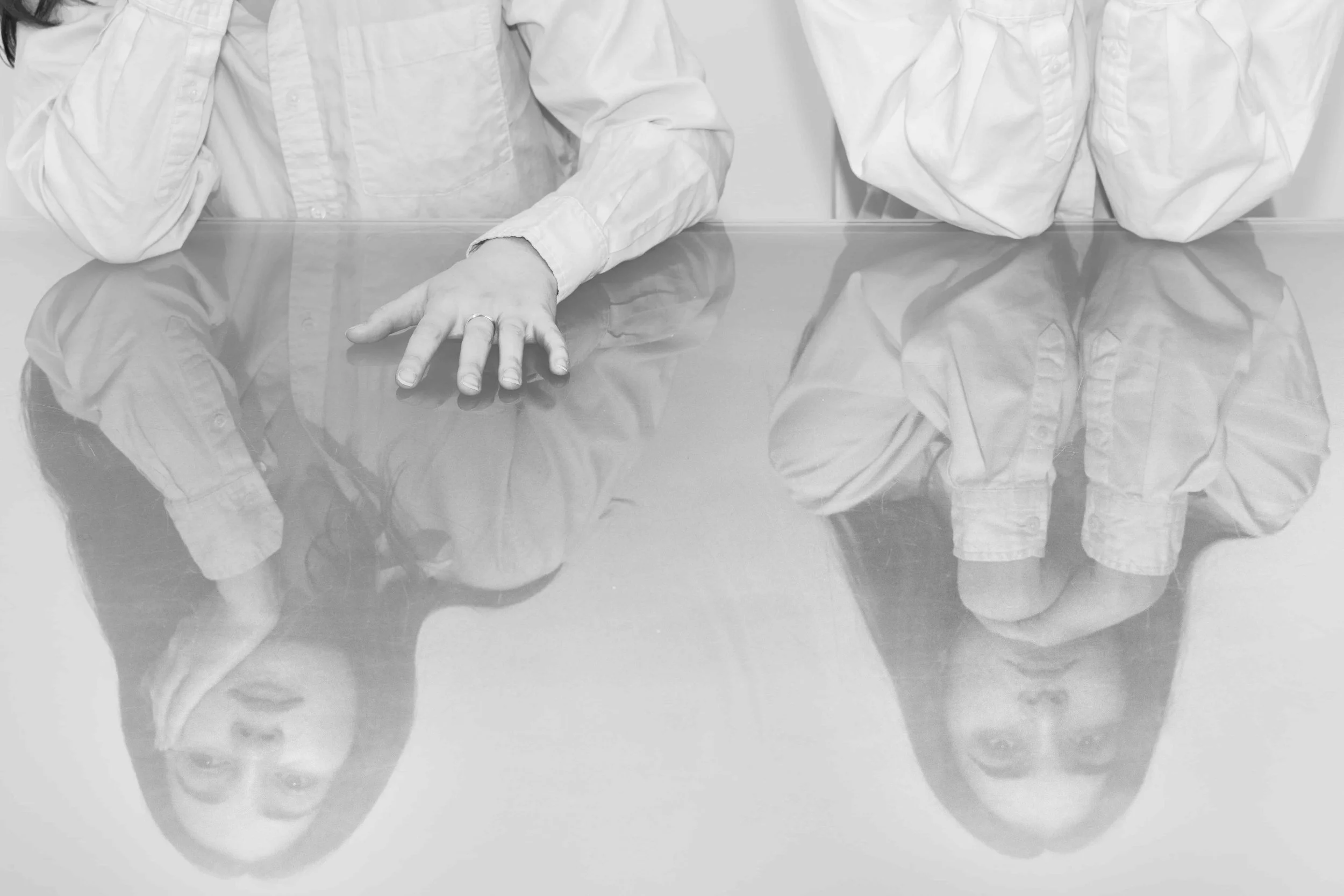
GEORGICA I believe that people can read each other so well. The whole play is these people going back and forth between, "Are we trying to get through to each other or are we trying to keep this barrier up between us?” There are a few times where they look at each other lovingly, yet they are thinking of totally opposite or unrelated things. Then there are times where they're not looking at each other, but they’re thinking the same thing.
STELLA This conversation is bringing me back to such a pleasant place. This play provided a context to investigate how dynamics of closeness come to be. It feels awkward—even as an actor—to be put int these positions and embrace them wholeheartedly.
GEORGICA There were a few times during rehearsal when we had conversations about our own experiences related to love and sex. I think that's inevitable because we were exploring the subject matter every time we rehearsed. Dealing with such personal, intimate material does open the door for that. It's funny too because a lot of [the play] is pretty autobiographical. Though much of it isn't, too, there's definitely a feeling of, “Oh my god, this is embarrassingly masturbatory.” But I also felt so removed. As soon as it's a written thing I'm like, “That's not my life, that's fiction.”
STELLA Then you're starting to have conversations about her as a character.
GEORGICA She's her; she's Molly. Every character I write is an amalgamation of people I know. Molly is based on me and a woman I work with. I don't know her well but I project a lot onto her. I sometimes think abouT her life and what that might look like. [The male character] Gabe is a combination of probably every guy I've ever dated. One of my friends went through a breakup and I saw him in Gabe a lot. Gabe’s story is that he has a great life, but the love of his life left him. When I wrote this play, I wanted to write two very normal, nice people. She's a guidance counselor, and he's a cancer researcher. They live good, content lives. But of course, people who live good, normal lives also have doubt and anxiety and sadness and get their hearts broken. I made a lot of assumptions about both of them. Honestly, the whole time I thought Gabe was a more likable [character] than Molly.
STELLA Why?
GEORGICA Actually, I take it back. He isn’t more likable, I just think that Gabe is more of a good person.
STELLA Say more.
“This play provided a context to investigate how dynamics of closeness come to be.”
GEORGICA I guess I see Gabe as more of a victim than Molly, so I have a bit more sympathy for him. They’re both good people, but I think Molly has done more harm in love. She has a couple moments where she reflects and says, “I've been cruel.”
STELLA It's funny that your idea of who's a better person is represented by their histories of love.
GEORGICA It's interesting, right? It's very telling.
STELLA They say you're not supposed to judge your character when you play one; it's an unhelpful way to embody them. But we judge ourselves all the time.
GEORGICA I read somewhere that if you're writing a character, you have to love them, even if they do bad things. When I read that, I thought, “That is something I'm going to practice.” I'm not going to say that character is done until I love them. If you write a character that's all bad and you can't find something to love, they’re probably boring. I’m always trying to be extremely specific [when writing characters]. I want them to be a person who I know or could know.
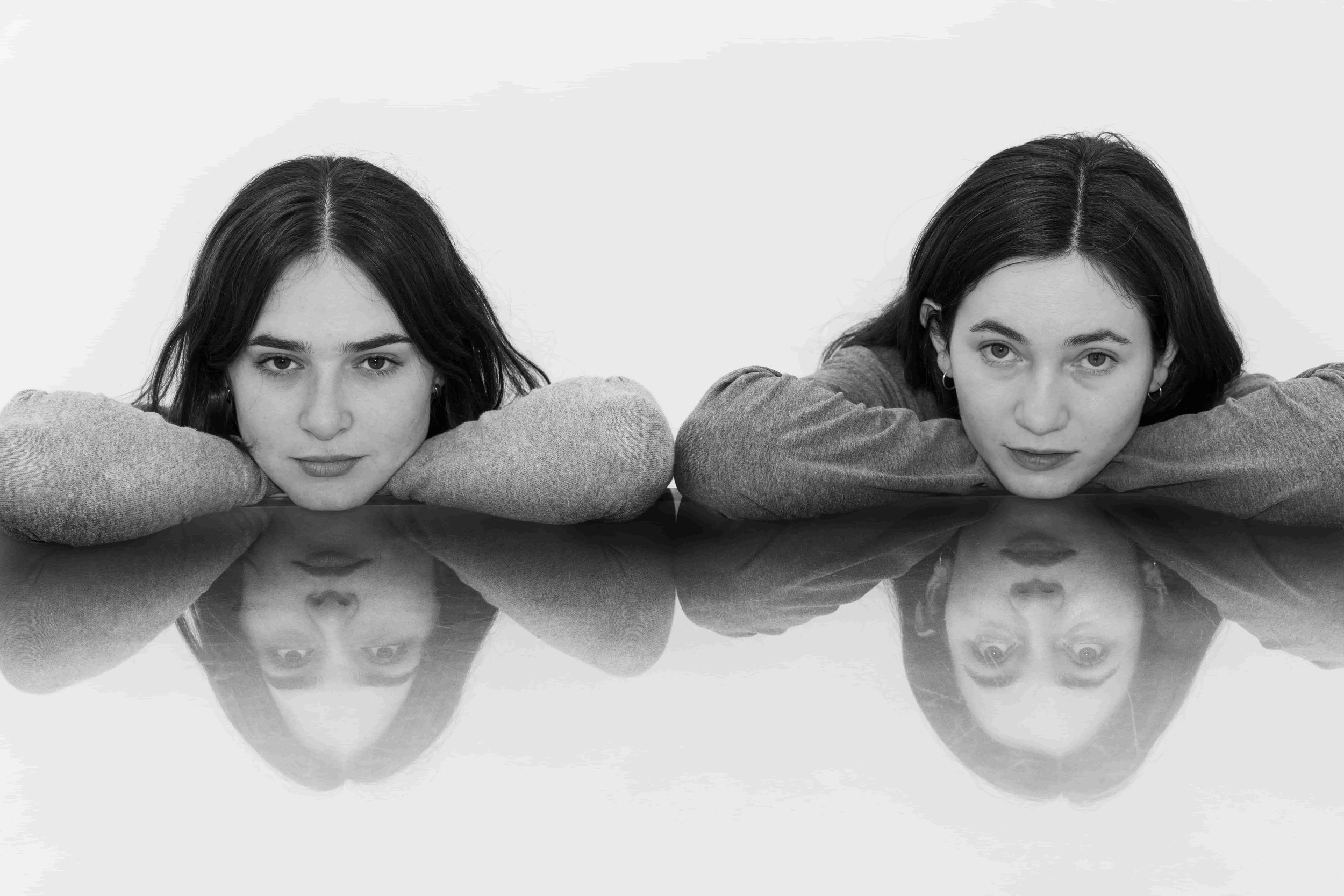
STELLA In acting class, you need to be really specific about the choices you make for your character because if they're generic, the character doesn’t develop very much inside of you. Human beings are incredibly individual. Our lives are unique, and that's why being specific is important. Being general is not very real.
GEORGICA And therefore, not relatable. It's not about needing to write an experience that everyone has had or a character with attributes that everyone has. Instead, I'm going to write about a very specific, detailed experience that I’ve had, and because I know it so well, the effect is what people relate to.
STELLA Totally.
GEORGICA When I first cast the bodies, there were so many different directions I was thinking about going in. One of them was to have the bodies be much older. My dad [had said to me], “When I think of myself, I see myself as 30 years old,” so I thought about aging yet still seeing yourself as young in your brain. I have a note in the script [that says, “the Bodies need not look like the Minds”]. Hopefully, years from now, someone else will direct this play and they can go crazy with the casting. Ultimately, I stuck to likeness.
STELLA I remember after the first dress rehearsal, I started to think about how our bodies are different, and [the boys’] bodies are different too.
GEORGICA And everyone can see that!
STELLA Totally! People are naturally going to notice [those differences]. It's a visual medium.
GEORGICA But then some people saw the play and commented on how much we looked alike, you know? Everyone has their different experience, it just depends what they're paying more attention to.
STELLA Your dad said we have a similar laugh.
GEORGICA You and I have a similar laugh?
STELLA Yeah. I was so shy around your parents because I was like, "How can I even begin to be the body of this girl?"
GEORGICA That reminds me: in the process of becoming one, we were dressing the same all the time by accident.
“I was looking at you and thinking about how you are my mind, and I’m just an extension of you.”
STELLA Part of me was thinking…
GEORGICA ...What is she wearing?
STELLA It was not lost on me that a lot of this [character] was autobiographical and I wanted to try and embody you. I was looking at you and thinking about how you are my mind, and I'm just an extension of you.
GEORGICA We got the same haircut too.
STELLA I was really getting into it. Then I would go home and be by myself—be Stella. I'd spent so much time having a different mind, and questioning how that compares to my own mind. It was the experience of having a different brain.
GEORGICA There's definitely a portion of the character that I feel is in control of me and not the other way around. When I'm writing the character, I'm often listening a lot. During my first play, 4,000 Dollars (2024), I wrote about a woman who's very much inspired by my life, but she's not me. People who I'm very close with told me I was acting like the character more than myself. I totally fell victim to the character. When you hear the words so much, they get stuck in your head.
STELLA You start to think of things in terms of the lines in the play or the ideas in the play. I'd be thinking on the train and question, “What is my body’s behavior while I'm having this thought?”
GEORGICA Interestingly, I was talking to [the playwright] Richard [Maxwell], and I used the word “dissociating.” I said it in a way that made him say, “Dissociating is not a bad thing.” He said, “The experience that you're portraying is very normal; your mind is just wandering," and he is so right. Your mind is just wandering. Literally, I was walking around the stage.
STELLA The mind wanders
GEORGICA At the end of the play, it's just them in bed, they're present now. They've finally stopped this ten minutes of overthinking.
STELLA I thought it was an interesting idea that at the beginning of the play, they’ve just had sex. Ideally, I think your mind and body are pretty connected during [sex]. Your mind is present in your body, and you’re not having a lot of separate thoughts about what's going on.
GEORGICA You’ve said that the mind is always in control of the body–the mind is leading. Because I'm diabetic, I often feel like my body is [more] in control. My body dictates my actions. In a way, all of our bodies do. We need to sleep. We need to eat. We are so controlled by our bodily functions. But if I have low blood sugar, I literally have to do something about it or my brain shuts down.
STELLA Our bodies have so much to do with the way that we think. We don't always think about it that way because our minds have a way of making meaning out of everything. We're not always going to think about things in terms of empirical, biological values. It helps me to listen to my bodily needs first as a way of helping my mind.
GEORGICA It's so true.
STELLA You get such a visceral reminder that our physical needs have an impact on our cognitive function. It’s so important to honor the connection.
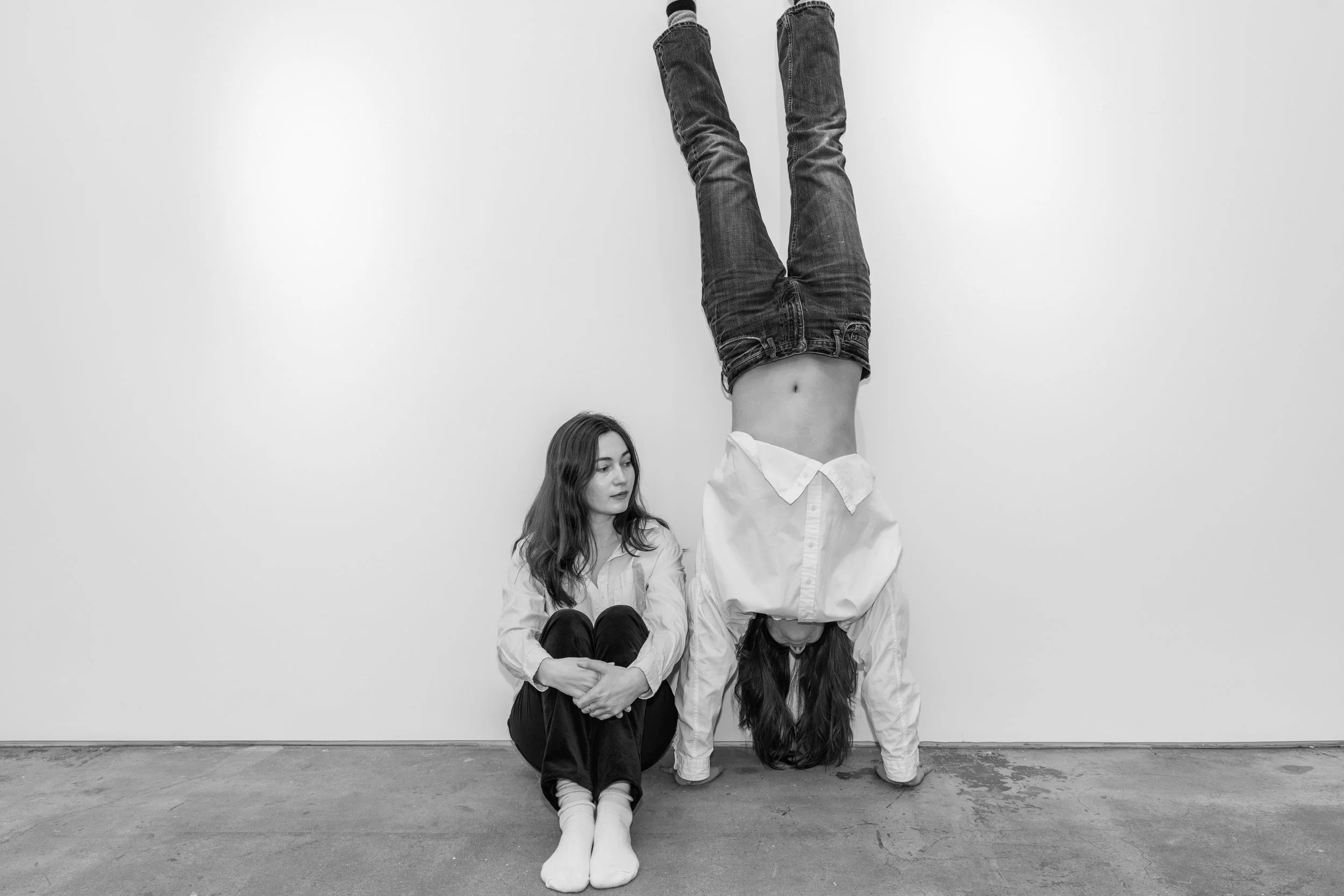
Talent GEORGIC PETTUS, STELLA JILER
This story was first published in print for Bias Cut 03: The Signature Issue.