
A Fateful Convergence
In photographer Adali Schell and painter Ethan Kramer's work, abstraction and representation meet in a rigorous union. The two best friends push each other into conceptual deep ends, discussing growing pains and surrendering to one another.
Moderator ARCHIE CARIDE
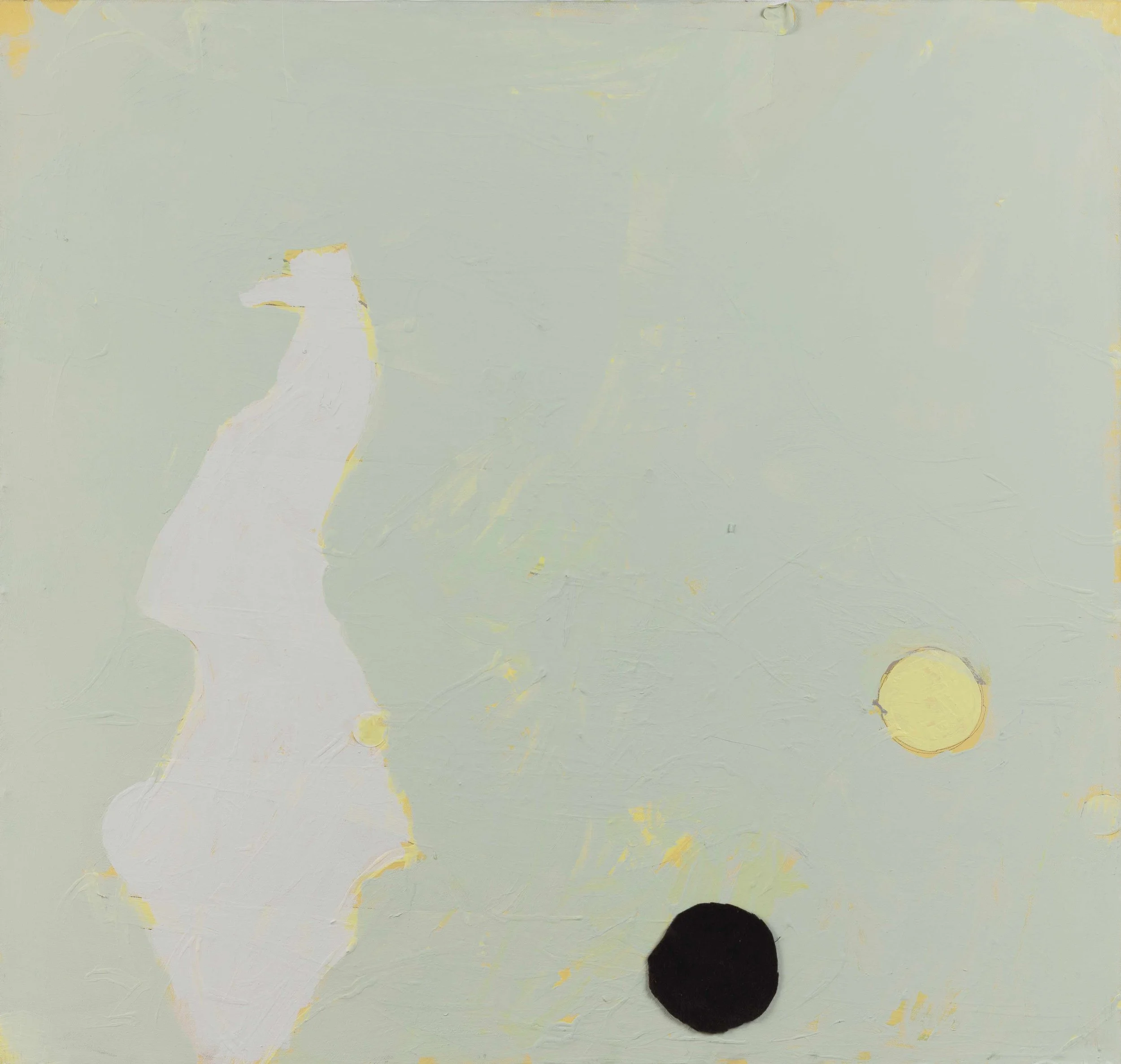
Ethan Kramer, Undulating Day, 2025. Image courtesy of the artist.
ADALI SCHELL We met on a botched double date.
ETHAN KRAMER Two artists meeting over a fateful two-man.
ADALI We’re both from LA, so I'm surprised we didn't meet earlier. He has a perfect memory of when we first met and I have none.
ETHAN We were in a backyard in Silver Lake and a friend was performing her new album. We were introduced to each other, and I think we said “Hi.” Two years later we accidentally spent an all-nighter together.
ADALI Possibly the greatest night of my life.
ETHAN One of the greatest nights of my life ever. We were not close at all. I haven't pulled an all-nighter since. It wasn’t normal.
ADALI It was the first all-nighter of my life. Such an unusual experience.
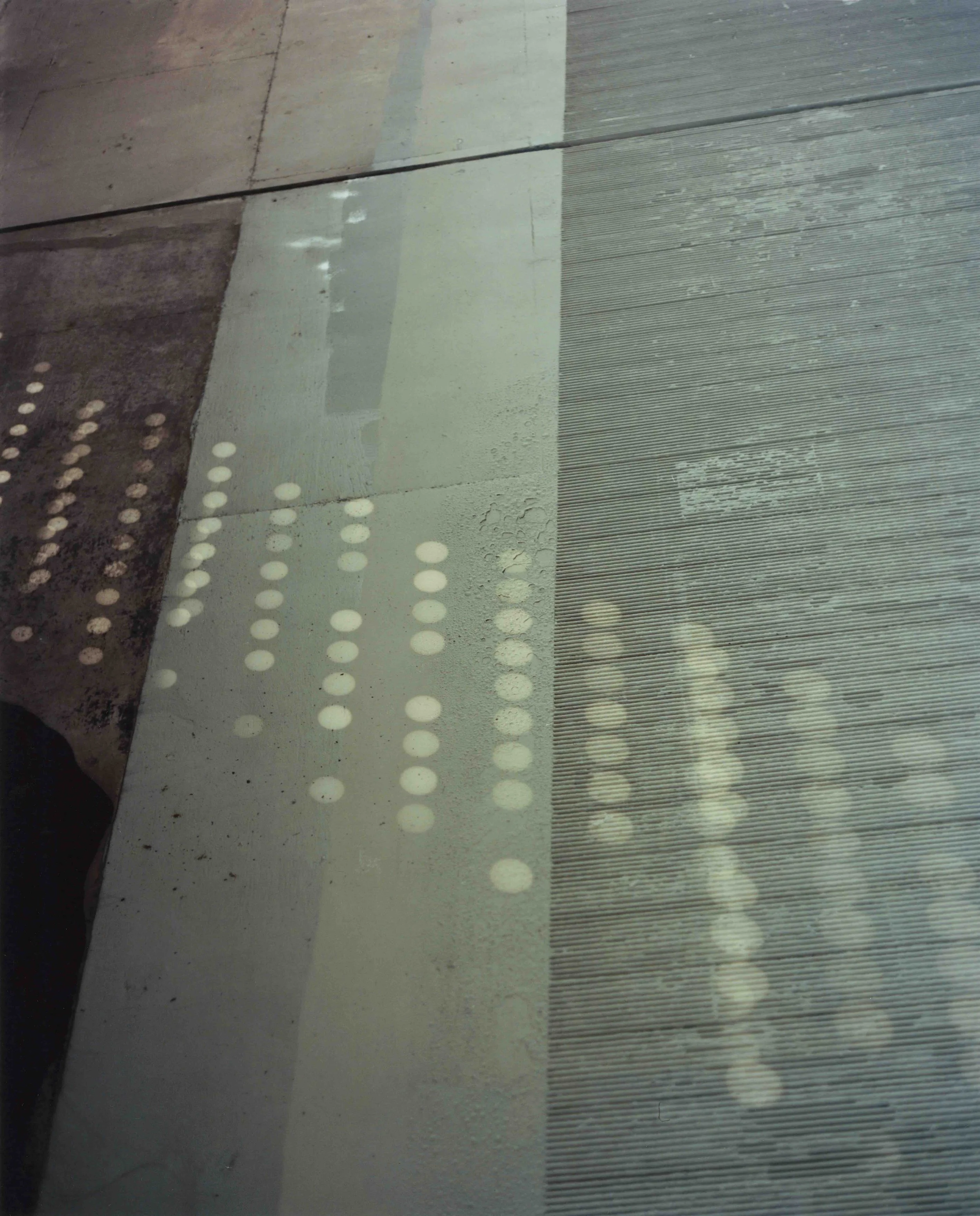
Adali Schell, Echo Park, 2025. Image courtesy of the artist.
ETHAN One thing kind of unfolded after another.
ADALI It was along the 110. It was the first freeway in the country, and there's a two mile walkway. The only thing between you and the highway is a chain link fence. My friend wanted to go paint there, and I was down to photograph. It's a very freaky spot.
ETHAN We were with a bunch of people.
ADALI At a certain point we decided to drive to Mount Wilson, and we all watched the sunrise over the mountains.
ETHAN We're celebrating one year of friendship with this conversation. Artistically, we are opposing. Our practices are so different, so we can bounce off of each others’ disparities.
ADALI Even though we live on opposite sides of the country, I think I spend more time with you than anybody else. You are the most committed artist that I’ve met in my life so far. Seeing your practice and commitment to painting is very moving for me. For over half my life, photography has been a daily, obsessive [practice], so it's been a cathartic experience to know you. Photography has this nature to self-isolate, and it has a hard time entering discussion with other mediums. When I go to a photo show, I’m going with photographers. If I go to a painting show, I'm seeing every kind of artist—people who are interested in all kinds of artwork. There are examples of photographers who can break through the periphery of the medium—out of its own limitation or [mode of] engagement—and that's been a very exciting thing. You are my first best friend who's not a photographer.
ETHAN It's not the loveliest thing in the world to dedicate your life to art.
ADALI It’s mostly kind of awful.
ETHAN It's mostly very frustrating, but there are these moments of breakthrough that keep incentivizing you. I don't want to know what the next idea or challenge of mine is going to be. I'm going to toil. I toil.
ADALI When we started hanging out, you shared with me how frustrated you felt in your practice. I had also run out of gas. You were working on your recent show, [Second Thought Best Thought, 2025] at Entrance [gallery in New York]. I don't think you knew what the show was going to be.
ETHAN Not at all.
ADALI You hadn’t made the work yet; there was a show on the horizon. You pledged to yourself that you were going to paint your way through—paint your way out of this funk. That was such a beautiful affirmation to me. As artists, we can get so burnt out on our own method of making work, but the way to get out of that is just by working. The Kryptonite to your practice—the thing that makes you spin out—is also the solution. Seeing you commit to your work definitely brought me back into mine.
“It’s not the loveliest thing in the world to dedicate your life to art.”
ETHAN You also hold such a high standard for yourself. There's so much of a process behind making pictures behind the beautiful materials of photography and c-prints. You were willing to be vulnerable and tell me about that. Beyond “I don't know what to photograph,” it was, “I don't know why I photograph these things, and I don't know what the point of these photographs are. I just know I want to keep taking pictures.” It was a funny coincidence, but when we met, you had been taking pictures for seven years, and I had been making abstract paintings for seven years.
ADALI Right!
ETHAN In a marriage, after seven years, it’s a critical point. It’s either, “Let’s call it quits,” or, “let’s forge past this and die together.”
ADALI My seventh year involved thinking back to when I first became interested in photography. I felt really set in my work, and that crashed right when Ethan came into my life.
ETHAN Right.
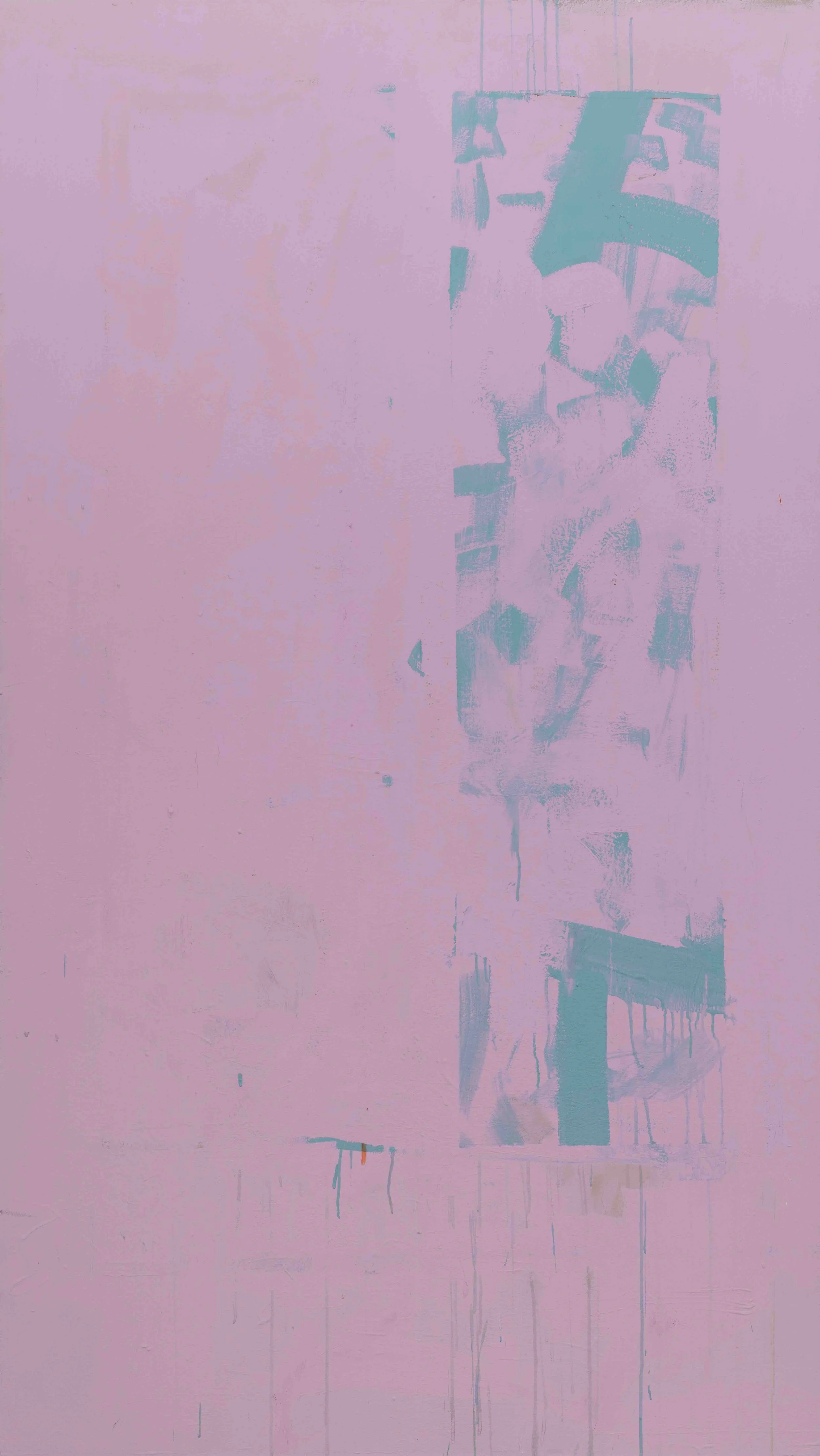
Ethan Kramer, Great Regular Flavor, 2025. Image courtesy of the artist.
ADALI Photography is self-reflexive—I'm casting people in my world. I started with street photography; I was drawn to these fleeting instances. Once I learned about the autonomy that comes with the camera and the way that it could help me step back into my life in a uniquely personal way, photography became so much more interesting to me. Looking at artists like [Philip-Lorca] diCorcia or Nan Goldin, I find there's something amazing about surrendering to the qualities of your own life. Why look anywhere else when I have all the stories I could need at any given moment in time? I felt like I'd gone deep enough into my psyche. I made work in Ohio with my mom and her family. There was a divorce and she moved back to go care for her dad, who died last year. It was tragic and exhausting, to photograph actual births and deaths of people in my life, especially after seven years of photographing strangers on the street. I had also just graduated UCLA, and I felt so beaten down by photography. But consequently, I learned of other mediums and expressions. Ethan is a great abstract painter. What a breath of fresh air it is to work without photography and without personal themes—to get into true abstraction. I could feel free from these really overwhelming personal narratives.
ETHAN The essence of street photography is that there is no plan—it's off the cuff. I feel the same way about painting, but it’s less dynamic and more in my head. I'm not basing my work on a reference. There's a freedom to abstraction where you're just coming up with it.
ADALI It's improvisational.
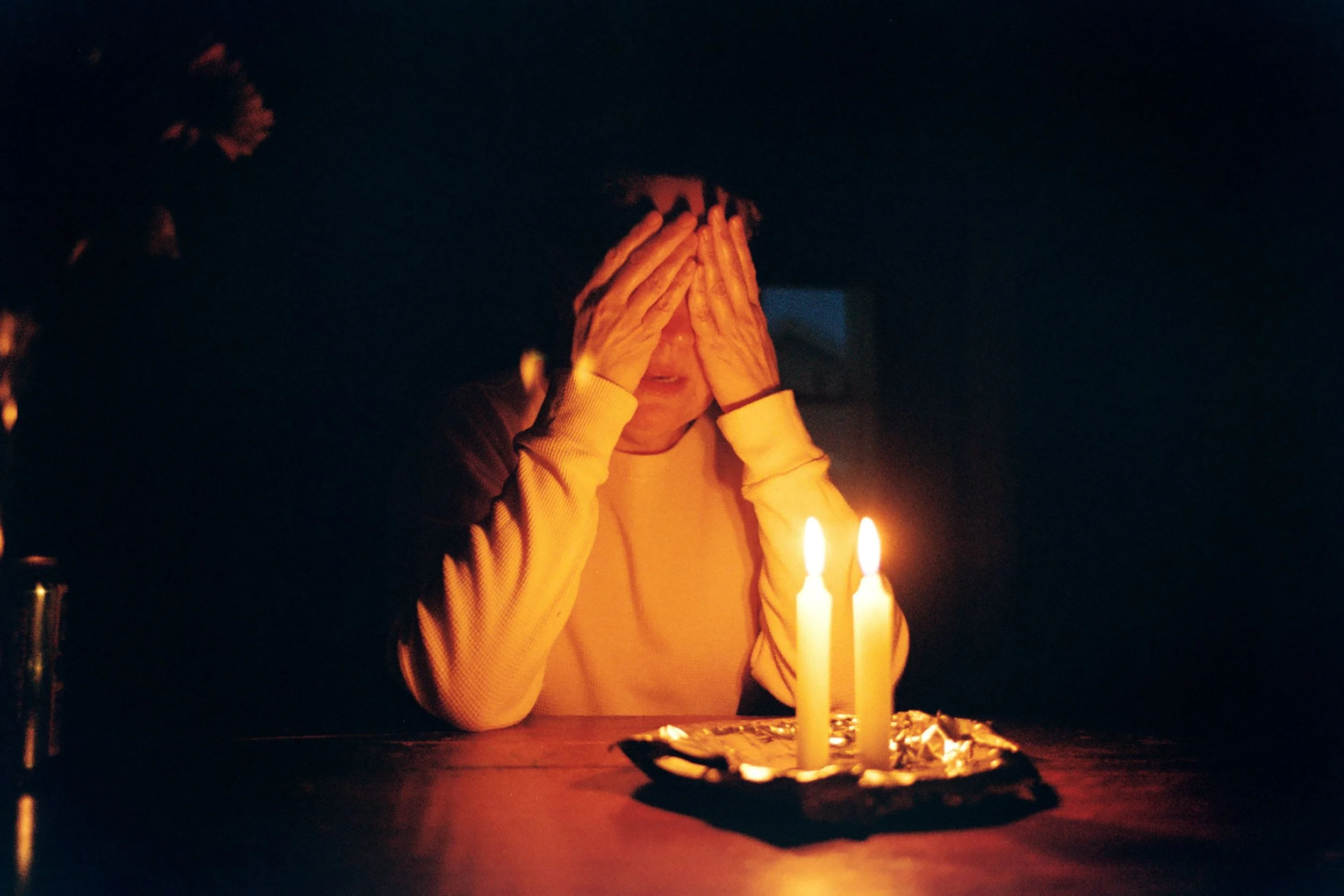
Adali Schell, Angela, Eaton, 2021. Image courtesy of the artist.
ETHAN I have always taken pictures on my phone, never with the intent to recreate something, but with the intent to remember. But every once in a while, on a flight, I'll look through “I find there's all 130,000 of my photos. I find great stuff, save it, and bring it into my studio.
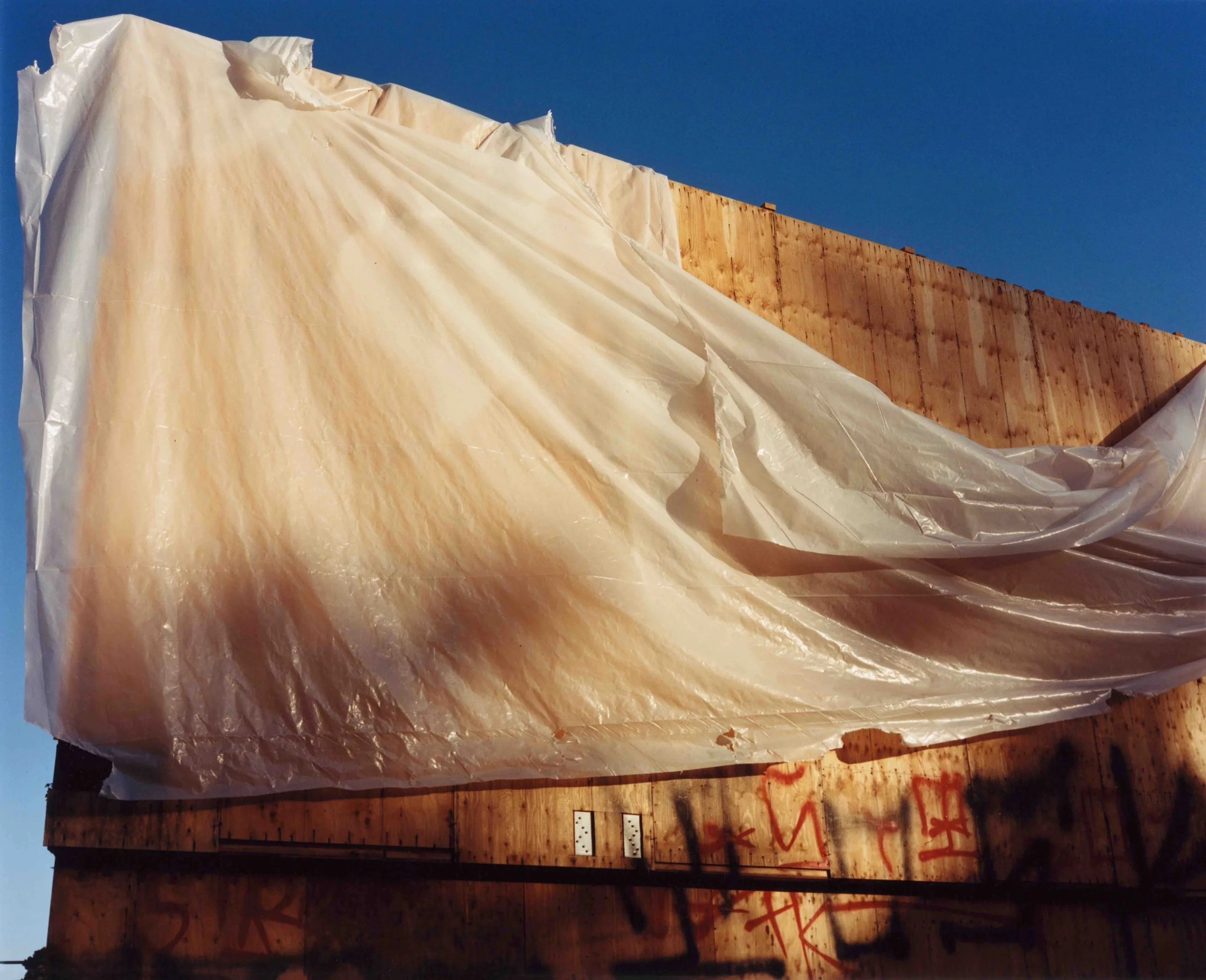
Adali Schell, Mid City, 2025. Image courtesy of the artist.
I think there's nothing more abstract than copying something almost exactly and then flipping it upside down, or changing one thing about it. It's like a completely new ecosystem. My paintings are changing. I’m trying to capture a material or a composition at the same speed that you might take a photo. I'm less interested in paint; I'm using stickers and magnets and things that I don't have to paint. They move quicker than me, and that's the whole idea of photography. How can I make a process that surprises me? That's my favorite part about you and the dark room, Adali. When you print a photo, there's always going to be something surprising about the negative. I wish painting could do that.
ADALI I watched you paint a significant portion of your [Entrance] show. I was in the studio with you for many of those pieces. It was a magical experience, because you made these strokes that all looked great to me, and then went over them, almost erasing those markings, working it down to a
point that's hardly reminiscent of what it once was. That's where you leave it. For me, I can't paint, because every stage of painting seems okay to me. Every time you work over something, I'd get this horrible feeling in my stomach, thinking “That was really good.” It's so nauseating to watch, like you're on Jeopardy with $5,000 and a chance to double it.
ETHAN I’m always gonna double it.
ADALI And you give it to the next person!
ETHAN I always will.
“I find there's something amazing about surrendering to the qualities of your own life. Why look anywhere else when I have all the stories I could need at any given moment in time?”
ADALI My eyes have gotten kind of soft from watching Ethan paint. I can just look. I'm less interested in the decisive moment of photography. I don't know how much street photography I’ve seen of, “Oh my god, you caught this perfect moment.” That became uninteresting to me. It’s trying to be clever. I don’t want to be clever. I want to reject wit; it’s cocky. The experience of living in Los Angeles is not these [perfect] moments. There’s no street irony—just dead space and sun-bleached infrastructure. I ride my bike most days, and that experience has moved me towards thinking about composition and color. The work that I've shared has been so utterly dependent on human subjects, whether they are strangers or my mom or my friends. It is exciting and challenging and risky moving away from that, seeing if I can make a photograph that can lift off the page or your screen in the absence of some metaphorical gesture made by a person. It's so easy to resonate with people, because they are vessels for this connection.
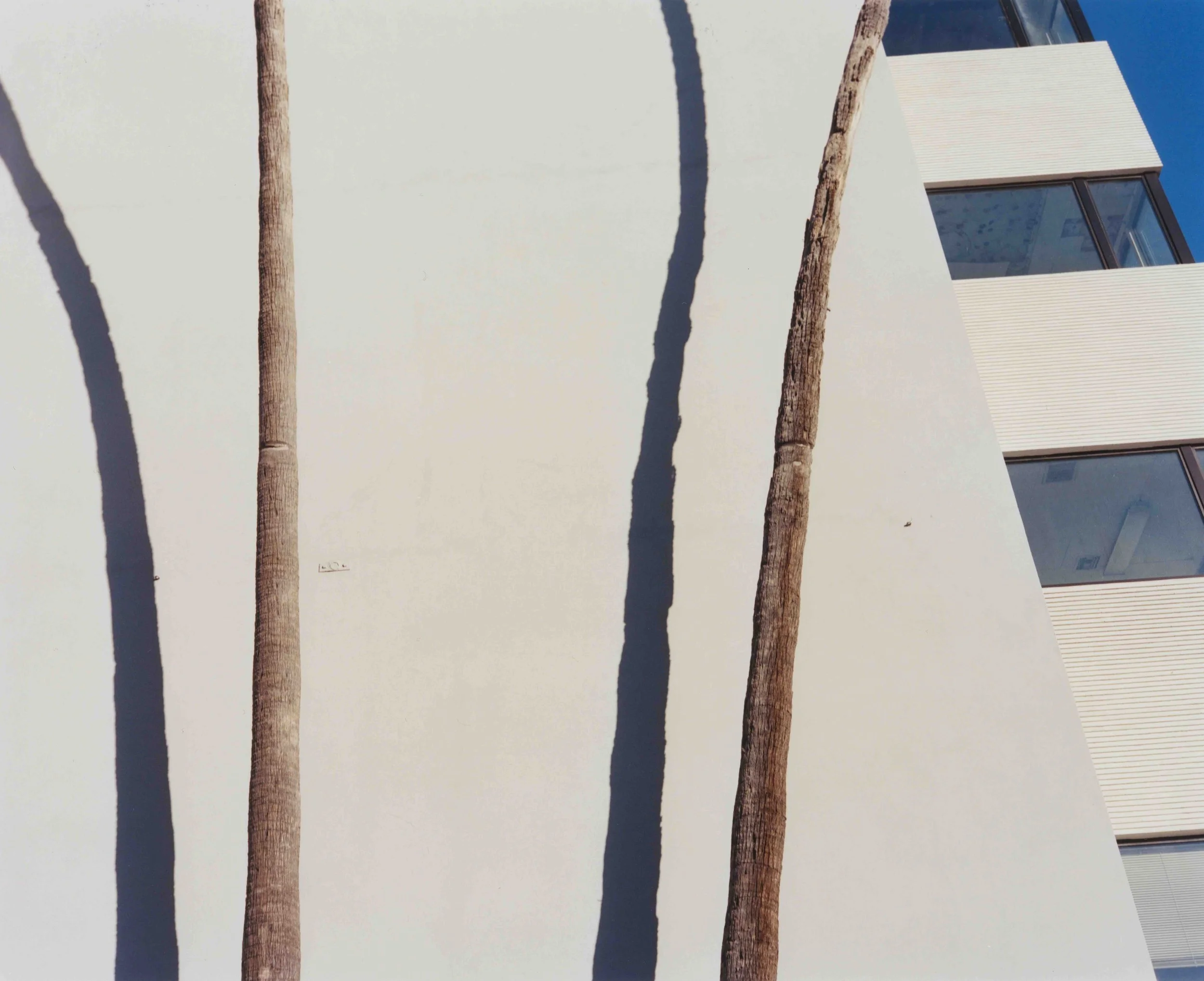
Adali Schell, Miracle Mile, 2025. Image courtesy of the artist.
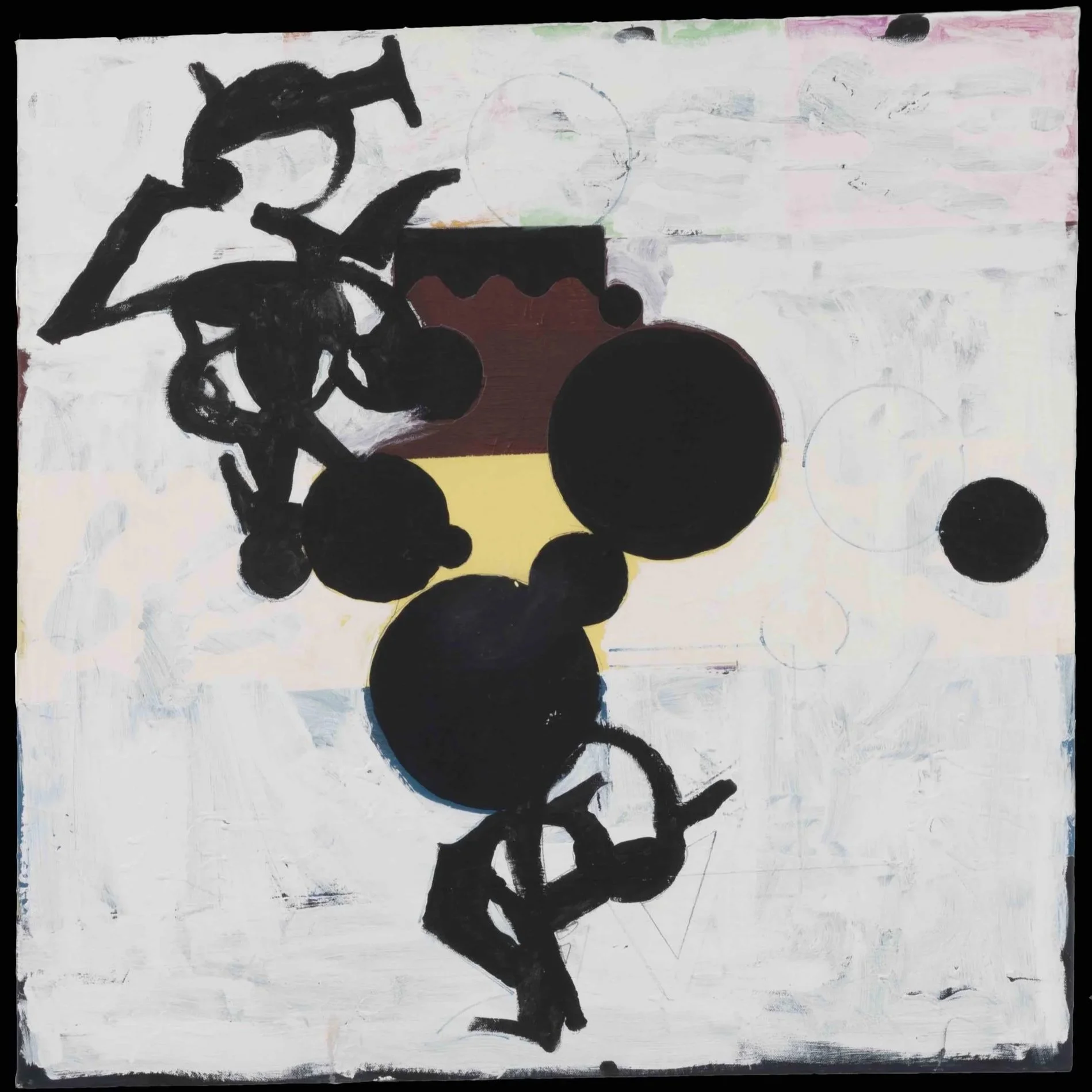
Ethan Kramer, Ozempic Sniper, 2025. Image courtesy of the artist.
ETHAN Some of my favorite pictures of yours are the new, abstract photos of billboards. They are covered in plastic tarps, like monuments. The scale in these photos is hard to translate. You're asking questions about shape and color, and that could be very boring.
ADALI There are two accepted ways of making photos. Portraiture or landscape. Those are the big two. The Shaq and Kobe of photography. Landscape photography tends to call for some sort of formalism. The horizon is somewhere in the frame, and you're trying to render space in a way that you can understand. It’s very rare that I look at a picture and my eyes don't know how to focus on it, or I don't fully understand the scale of the thing I'm looking at. I feel like I have loosened my retinas just enough. Los Angeles is full of wall space. [Agnès] Varda’s movie Mur Murs (1981) is a two hour documentary where she comes to LA and realizes this whole city is just walls. It's walls and what we do with walls. In Los Angeles, whether you’re driving or walking or biking, you are looking at wall space. It's not like Manhattan with incredible light bouncing through reflective windows or gorgeous brownstones that really absorb light and texture. Los Angeles is concrete and advertisements and billboards, and I find myself looking up at these surfaces. I’m using a camera that is predominantly for landscape photography. There's something valuable in rejecting the horizon and making a more two-tone image. It’s like what Ethan mentioned about the building covered in a kind of opaque tarp, and positioning the camera in this way where that's the entire frame. You talk a lot about the frame [of an image] and what lies beyond the frame and how it doesn't entirely matter. The picture is not the action. You are creating the action. Your action is creating the edges of the frame.
ETHAN Right. I don't think that's unlike the way that you paint. When you're painting you're not making an image of the world that's recognizable. I'm trying to reject the part of photography where, after you make a picture, suddenly you’re a part of that thing, whether it’s a population of people, or an environment. My work is not about the thing I’m pointing to, but rather the shape of it.
“My work is not about the thing I’m pointing to, but rather the shape of it.”
ADALI I've also been thinking about the frame of a painting and the conditions of a painting that painters all agree upon. We accept that every painting is something that's stretched between four corners, so an interruption to that would look like stretching canvas on something else, or stretching something other than canvas, or creating a different shape. But it's all in reference to the idea that a painting is a frame. We are all given this challenge of historical conditions, and we follow the same set of rules to then push up against and riff with it. It’s a very exciting set of historical parameters.
Ninety-nine percent of my practice is dealing with a 2x3 aspect ratio rectangle. Maybe that’s nerdy to specify, but it totally matters. In thinking about distilling anything to a ratio, there's a weight, balance, composition, and a formality that the shape calls for. With my new work, I have been making pictures on a new camera whose [aspect ratio] is 6x7. And coming from 2x3, the shape of this rectangle was so different.
I didn’t have the courage to look at my new work until Ethan came over. He started to pull out negatives and that gave me permission to go print. As a photographer, I've had the privilege of working with editors who are really curators, making selections from my archive. That's been a system that I have loved. Now, here's my best friend, who's an abstract painter, who's making these picks for a totally different kind of reason. I've been so daunted by my [new] work, unable to look at it because it's so different, because it’s in this aspect ratio that I don't identify with. I'm looking at an entire new body of work with an entirely different rectangle and subject matter. I feel like I’m this other artist that Ethan has helped will into the world.
“These are growing pains. As an abstract painter, I'm given more license to mess around. It’s all about play.
ETHAN It's awesome to look through your stuff and pick for you, to look through your eyes. You have so much work. I am a very patient person and I want to find the marginal, weird [images].
ADALI These are the weirdest.
ETHAN You're weird, Adali. I love it. I am too.
ADALI You are.
ETHAN I know that there are opportunities for weird in your work. It could be abstract or figurative. Ultimately, we are digesting something right now. These are growing pains. As an abstract painter, I'm given more license to mess around. It's all about play. With you, Adali, it's like pulling teeth trying to help you expand this definition of what you do.
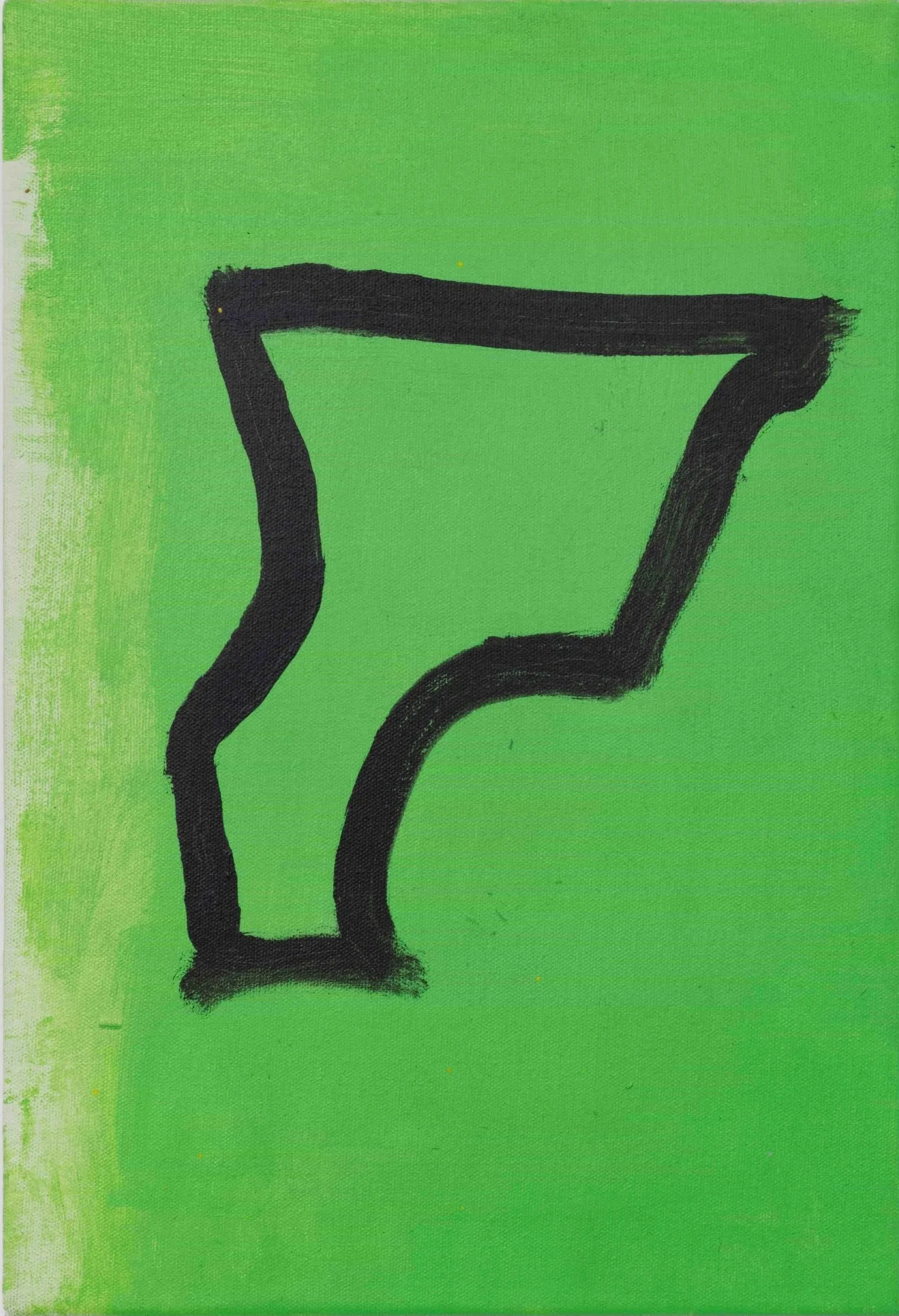
Ethan Kramer, The Kevin Effect, 2025. Image courtesy of the artist.
ADALI There is a deep conditioning that comes with loving photography. All of my favorite photographers, who have been so successful, each landed on a recipe that made them identifiable. Like Sage Sohier, who's so brilliant, or Bertien van Manen, [Garry] Winogrand, and [Lee] Friedlander. Their subject matter floats around, but generally they have a consistent sensibility. When I started to look at [John] Divola's practice, I saw every different way that you can make a great picture. Stylistically, there's huge vastness in between his bodies of work. So it is like pulling teeth. It's like I'm coming out of Catholic school. There's a whole new world of self-discovery, and I'm trying new outfits that defy the primary motivation of being a photographer, which is to just find a way to make work and do that forever.
ETHAN The older we get, I think the less we should associate with the notions of, “I've picked this [style] for myself.” I am attracted to photography, sculpture, and conceptual art, in the sense that I don't understand a lot of it. I'm interested in something that’s confusing and recognizable, historical but contextless, and John Divola is this perfect example. He's created theaters and scenes that only exist in these photos, but they also have a relationship to painting, drawing, and vandalism. He's taking a picture of this experience that he's creating through the terms of photography.
ADALI Right.
ETHAN I can't pin myself down—that is my goal. I think that's everyone's goal: to use painting in a new way. All my paintings have such a short shelf life. I might like my painting one day, but by tomorrow, it falls flat.
ADALI It's interesting to look at what work has a longer shelf life than others. You have such successful paintings which you then paint over.
ETHAN I’m chasing the dragon. I know what it feels like to finish a painting I know is good. When I finish a painting and it's like, to be continued, it’s a cliffhanger. I want a perfectly unresolved resolution. You also don't want your photos [to be] resolved.
“Paint is just like gravity.”
ADALI For sure. Everything I've done so far is a kind of autobiographical or documentary style photography that is so resolved. For years I have been trying to package something up to be written about. With you, Ethan, there is this balance of irresolution and it's in all of my favorite paintings that you've done.
ETHAN We have the same favorite paintings.
ADALI Right, we do.
ETHAN I don't see similarly to anyone.
ADALI There's a dissonance that rings. Those are your most successful paintings. It's as if you write a great essay and get an A, but then you go back and edit it to a barely passing grade.
ETHAN I love that.
ADALI Just above a failing grade.
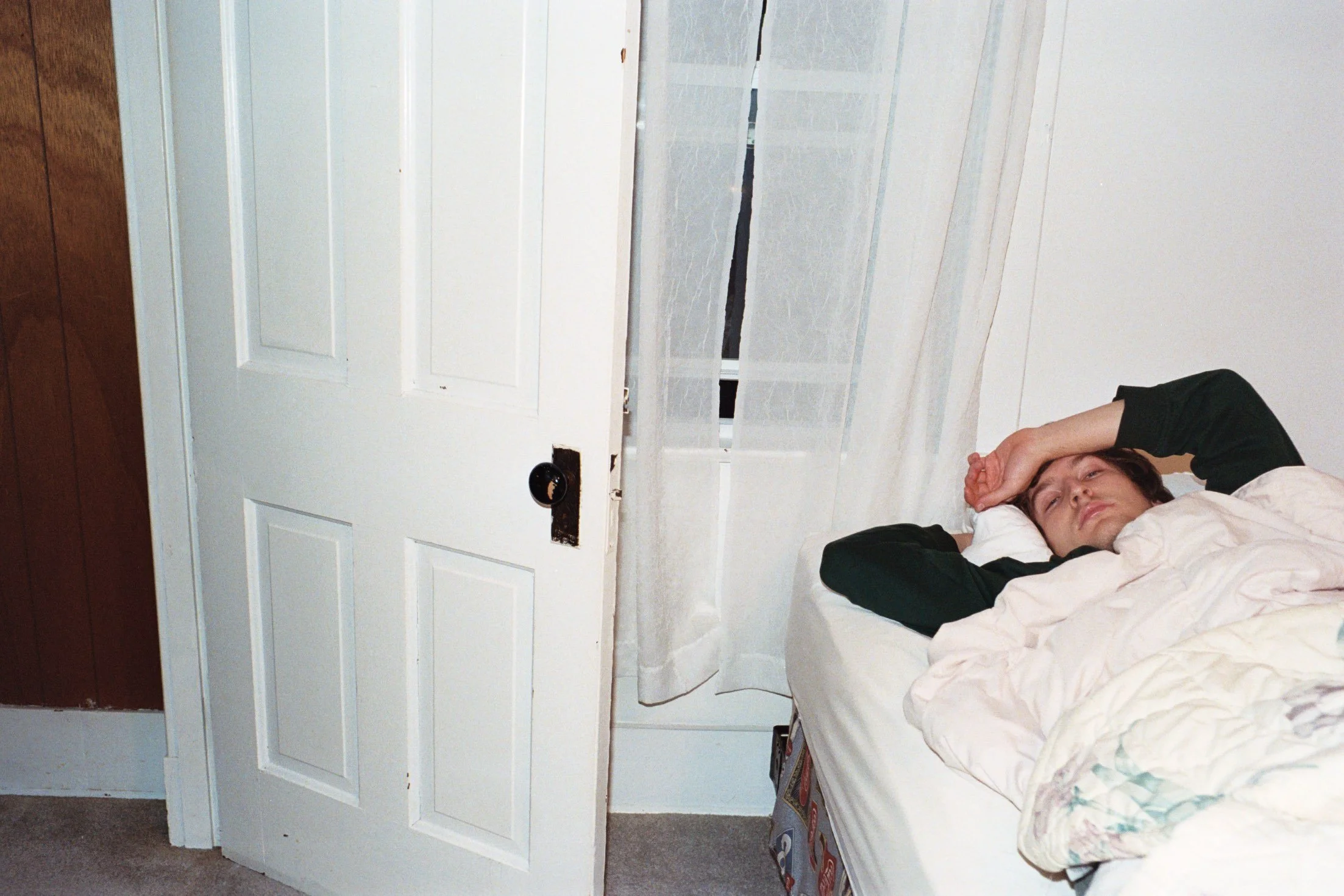
Adali Schell, Self Portrait, New Paris, 2024. Image courtesy of the artist.
ETHAN I think every painting with one or two brush strokes is a passing grade. Every single one. I'm skeptical of what paint does. I used to be fascinated with it—I gave it so much of the benefit of the doubt. You take pictures of your world and your every day. You can't escape every day, and I can't escape gravity. Paint is just like gravity.
ADALI You have a privilege in the new work that you're doing, of creating a new reverberation and abstraction beyond paint—involving more than just paint.
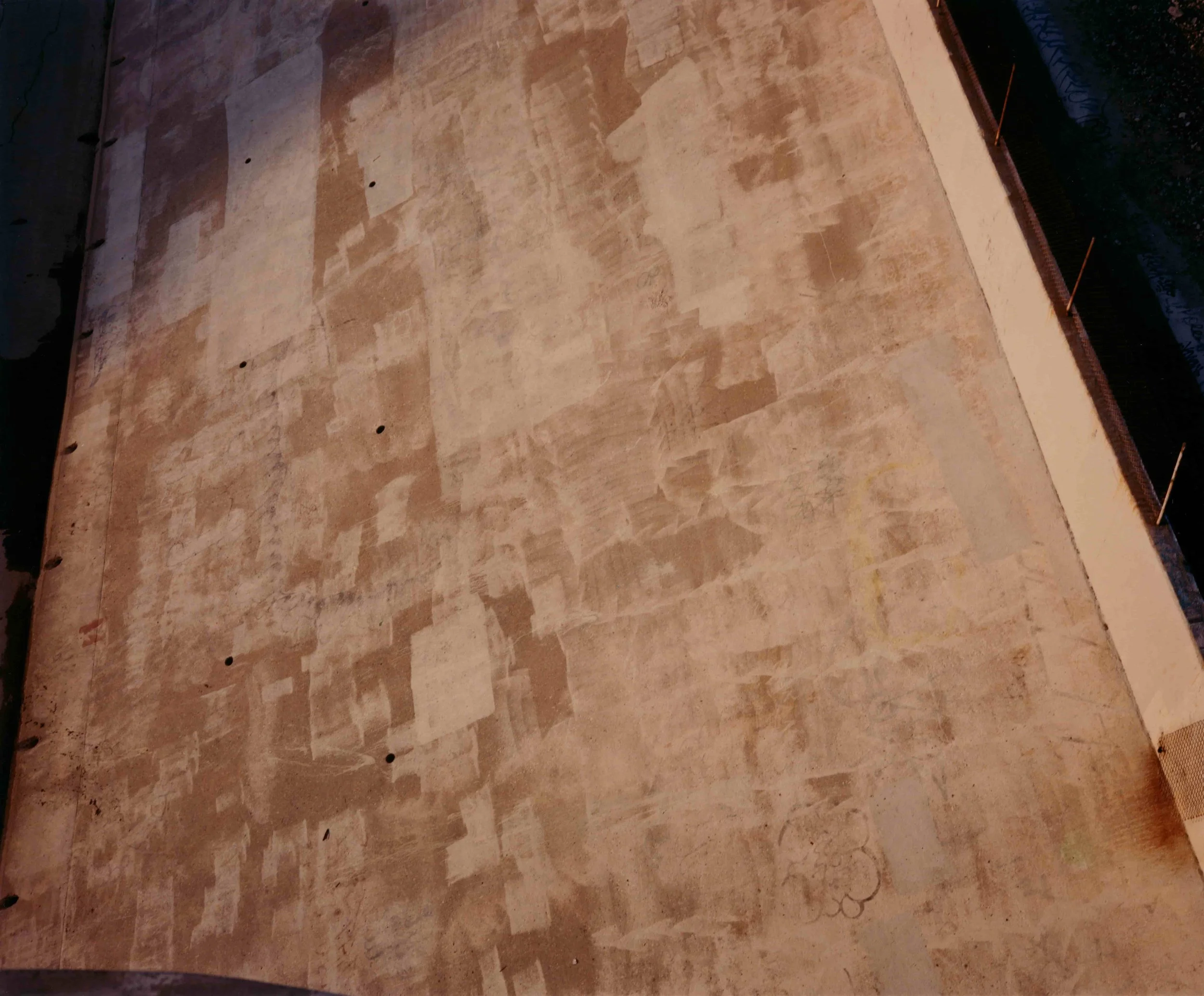
Adali Schell, Dogtown, 2024. Image courtesy of the artist.
ETHAN I think we all have artistic practices that we flirt with for years before we're ready to make it official and go steady.
ADALI And you don’t want to jeopardize it because it’s so terrifying.
ETHAN Especially if you're known for being a painter or an editorial photographer.
ADALI Right
ETHAN I just want to ruin you.
ADALI That is how it has felt making this work a little bit—like a career suicide.
ETHAN No, it's not, because you still have such a soft and beautiful touch in your photos. It’s like how you can’t smell your own smell. You don’t walk into a room and think, “This smells like Adali’s apartment.” But I can do that.
ADALI Yeah, yeah.
ETHAN When you see a fucked up photo of yours—abstract and weird— there is still this a beautiful light and deliberate composition. It's your hand.
ADALI That's how I feel about your iPhone pictures. We go on walks and you're making these incredible photographs. You identify shape and form, because you're an abstract painter. The whole world is open to you. On top of that, you have this broken camera with splotches, which only accentuates any kind of abstraction that you already carry.
ETHAN I'm always looking for something out of my control. That's why I love photography, because I never know what's around the corner on the street. And my camera just gets worse and worse.
ADALI Your practice is not neat. I think so much abstract painting almost feels like an iPhone wallpaper or something, like it's so perfect. It's so formal and so symmetrical and like hotel art. But your work doesn't carry that at all. That's been a very motivating factor for me to go to a really uncomfortable place.
ETHAN People use abstract paintings as a way to decorate rooms. My relationship to abstract painting is: how can I speak to the nature of a room? Abstraction is so specific, but its [essence] is to relate to sensation or to shape. Shape is a universal thing; we all live with shapes. We are weird objects ourselves. We’re heavy. We're going to die. We remember these things when we look at abstract paintings. We look at a [Mark] Rothko and we cry. I look at a Cy Twombly and it gives me license to relate so that I can create a composition. You don't just find compositions or build them.
ADALI Relate is the right word. I do feel that way. There is something about Los Angeles—the vastness of the space and the materiality, with the concrete structure, the lots, the highway, the dead space, and the weird pockets of greenery. Los Angeles is so industrial and also suburban and kind of horribly ugly in so many places.
ETHAN There's always a view of the mountains [above] this sort of suburban hell. That's a uniquely West Coast thing. In New York, I'm so subconsciously inspired by the geometry of the city. My lines have become straighter, more fine. Living in the city has brought me closer to geometry.
ADALI For sure. My instinct to make abstract pictures doesn't exist at all in Ohio. The space [there] just doesn't have the same effect. Maybe there's something about Los Angeles’ man-made structure and deterioration. There are parts of Los Angeles which are, to me, the most obviously beautiful places, like El Sereno, City Terrace, or Boyle Heights. But there's parts of the city that I've never been moved to photograph, like mid-Wilshire or Beverly Hills.
ETHAN That’s funny. I love Miracle Mile. I love where you live.
ADALI I live in a part of LA that I don't find scenic. In these new pictures, rather than photographing the picturesque LA River in golden light, I wanted to photograph these fucked up, gentrified apartment buildings, with obvious stimuli. The picture of a white damaged building with two palm trees casting their shadows is such a horrible image to me because I hate this building and the symbol of a palm tree. But to be working in these spaces that I find to be less beautiful is a great push towards abstraction.
ETHAN I have been thinking about representation, and I love that you, Adali, have been thinking about abstraction. My goal is to figure out what is so visceral about abstraction. Why am I so interested in anchoring [my paintings] in something that nobody will ever recognize? Why is that so much more interesting to me—to riff off something that already exists—than trying to create something that does not exist?
ADALI Something is happening with this new work. I don't know how to talk about it at all. It scares me.
ETHAN Me too.
“My goal is to figure out what is so visceral about abstraction.”
This story was first published in Bias Cut 03: The Signature Issue in Spring 2026.