
The Club Where Only Artists Get In
Artists Ava Kalitowski and Ellie Hill created London’s young and inclusive Art Club, where emerging creatives from around the world are given free reign to showcase their work, funded by bake sales and drawing classes at their local pub. As their collective finishes out its first full year, the founders and best friends reflect on their first year together at its helm.
By JANE LEWIS
Photographer SHENELL WELLINGTON
Stylists HANNAH COHEN and ITALIA MINCHELLA
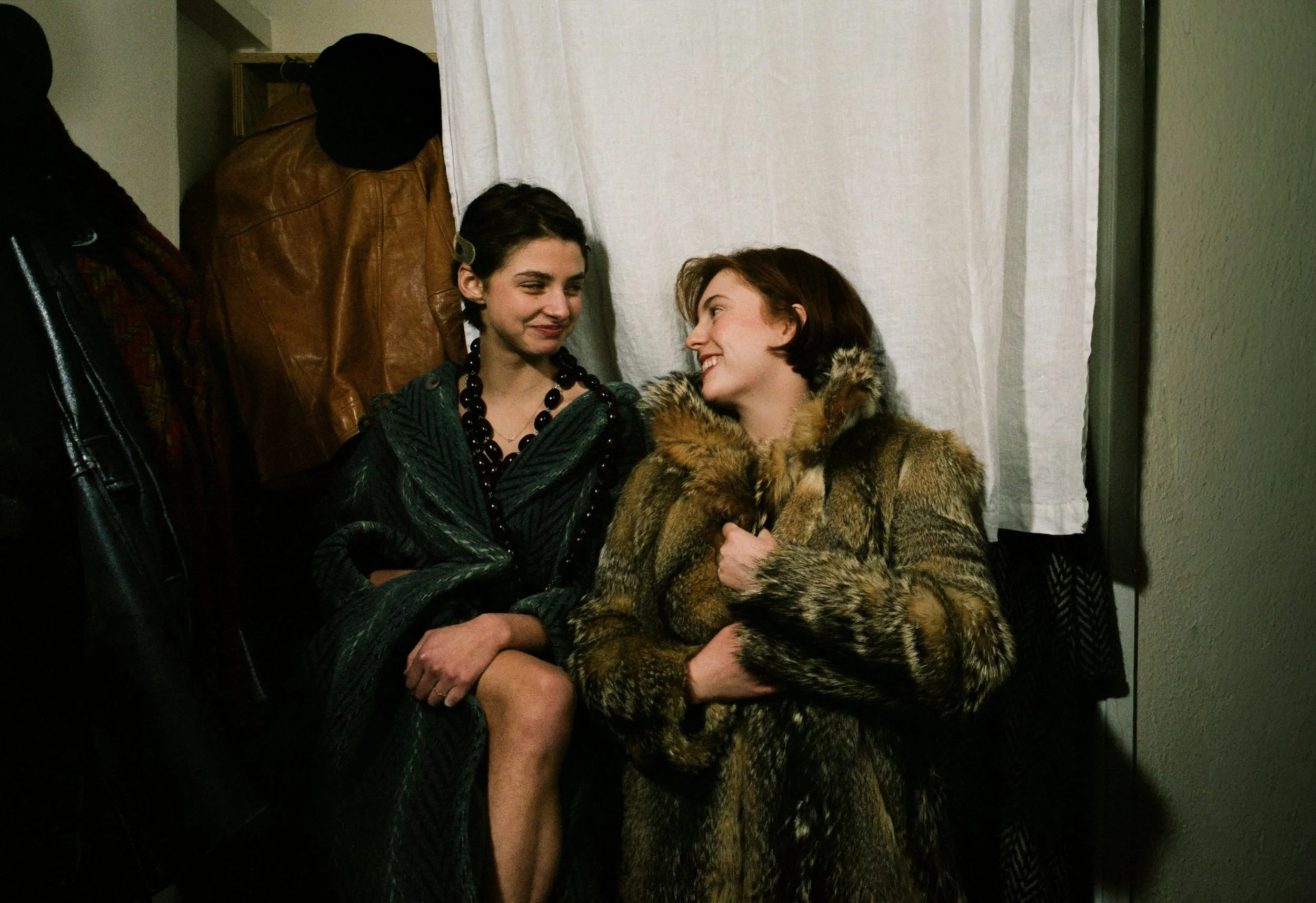
JANE LEWIS: When did your partnership begin? How did you two meet?
ELLIE HILL: Our parents tried to make us friends when we were children. We used to not like each other.
AVA KALITOWSKI: You know when your parents have family friends, and they have a kid that’s your age, and they put you next to them at the dinner table, and you just don’t get along? That was us. We’ve known each other for a very long time.
ELLIE: You’ve seen me at my lowest. I think you’ve yet to hit rock bottom. I’m always the one that seems to hit rock bottom over and over again.
JANE: How does your close relationship inform the roles you each take in Art Club?
ELLIE: Ava runs social media, and I have a spreadsheet for everything.
AVA: We run the email quite equally now. You keep track of, “This person’s here at this time, they’re bringing this, they’re doing this.” I do all the social media, dispersing information, that’s my background.
ELLIE: When we were running our exhibition at Peckham [Rye Station], it was a bit difficult because I’m still a university student. Ava would text me and be like “We have a meeting at 9:00 a.m.,” and I’m like, “What? I actually have a crit at 9:00 a.m.”
JANE: Do you both have personal art practices?
ELLIE: I study sculpture at Camberwell [College of Arts]. So I create a lot of art. But you, Ava, are also an artist.
AVA: I’m an art school dropout but I’ve been artistic my whole life. I went to London College of Communication for a degree in art direction and I dropped out in four weeks. I’ve continued making stuff on the back burner since I’ve been doing Art Club, but my full-time job is on social media. I do a lot of fashion-based work with clientele and whatnot.
JANE: What prompted your desire to drop out?
AVA: When people start a degree, they don’t know what their aesthetics are, or their visions, or what they want to explore. They’re like, “I need to try everything.” We’d do group projects and I’d be like, “I know exactly how I want this to look,” and everyone else is up in the clouds, not knowing. I found it frustrating, and I knew I was going to get bored. I don’t really learn via [traditional classroom] education.
ELLIE: That’s where we’re really different. I love being in education.
AVA: I had a really bad experience throughout all of my schooling, especially because I’m dyslexic. I was always held back because of that. I just never had a good experience. I forced myself to learn by throwing myself into the deep end of life and just trying and doing things. I went to my professor and said, “I want to drop out,” and she replied, “I think you should drop out,” and I was like, “Brilliant. See you later.”
JANE: What prompted you two to start Art Club? What did you feel was missing in the London art community?
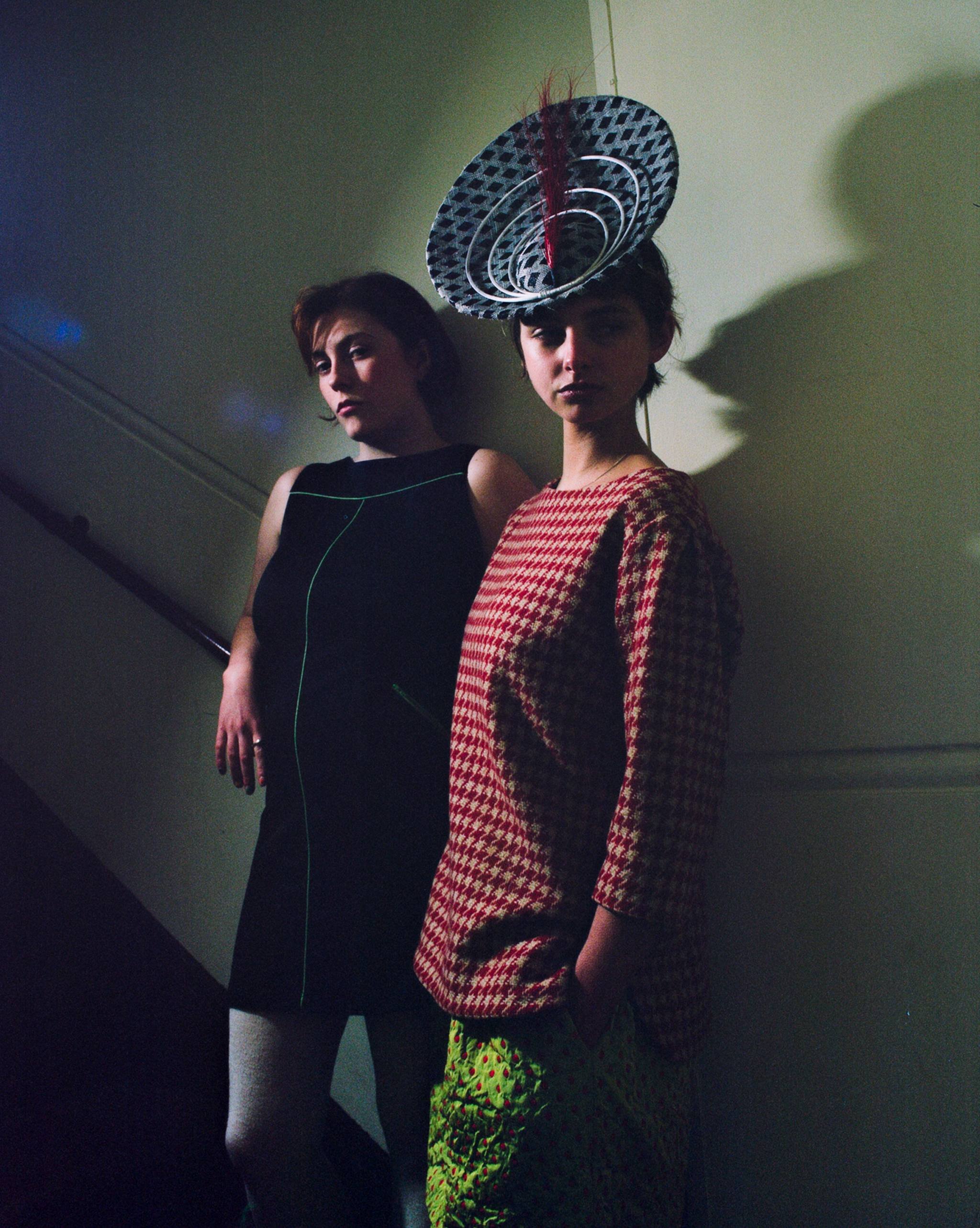
ELLIE: As an art student, I want to show my work. Most artists want to share their work with other people—not just to sell it. I was looking into so many open calls and applications to submit my work to shows, but you have to pay to apply. I don’t have any money. So I said to Ava, “I really want to do this exhibition with random artists.”
AVA: Well, that’s not quite how it went. Basically, Ellie was my videographer assistant on a job. I was sitting there editing. It was 3:00 p.m., and I had a strict deadline at 4:00 p.m.. And she said, “Ava, I want to do an exhibition,” and I responded, “That’s brilliant, but leave me alone. I’m working.” And then the next day we were having a drink, and I was like, “By the way, I was actually listening to you, and I really want to do it.” Literally that day, we put a deposit down for a gallery, did an open call, and started an Instagram account. We were like, “We actually have to do this now.”
ELLIE: No, no. We did an open call, then we picked a space, and then once we paid for it, we said, “We do actually have to do it.” Because we can’t afford to not do it.
AVA: We wanted to display our own work, and we put our own work in the first show, which we didn’t do for the second exhibition.
ELLIE: Then we said, “Why don’t we host a bunch of artists?” Maybe some friends, and some random people, just to see what an open call could do.
AVA: We had 150 applications.
ELLIE: We grew quite quickly because we knew what social media could do. We selected 27 artists for the first exhibition.
AVA: Twenty-five, plus ourselves.
ELLIE: For our most recent show, we had 300 applications.
JANE: Is it difficult going through them all and choosing?
AVA: Everything starts looking really bad. So we would do 30, then have a long break, then sort into a “maybe” pile and a “not this time” pile. Then we narrowed it down to 150, and then went through again.
ELLIE: We had to go back. It took about three weeks. We narrowed it down to 51 artists, which was the exhibition we did [at Peckham Rye Station in November of 2025]. We can’t afford to put on these mass exhibitions.
Ava: Artists are not cheap.
ELLIE: Printing labels, buying tacks…
AVA: This was the stuff we didn’t think about on the first one: how much time and money it takes.
ELLIE: It was a learning process.
AVA: It was also just the two of us.
ELLIE: We put the deposit down and we were like, “Now we need to raise money.”
AVA: We did a bake sale.
ELLIE: We baked for three days. It was like when you spend too long cooking a meal and then you’re not even in the mood for it anymore.
AVA: I sold half my wardrobe. We sold like 40 bottles of Budweiser. We dragged everything in suitcases—
ELLIE: Neither of us can drive. So we could either Uber everywhere or carry 50 beers in a suitcase.
AVA: That was our first fundraiser. For our second show, we did a few others: We screened Four Weddings and a Funeral [1994] at a small cinema in London. Very sweet. We did a life drawing class in The Devonshire, the most famous pub in the world.
ELLIE: It has this private room in the back. There are no cameras, it’s filled with art, just staff and friends and family. I was like, “No cameras… let’s do a life drawing class.” So we did a ticketed life drawing class as a fundraiser.
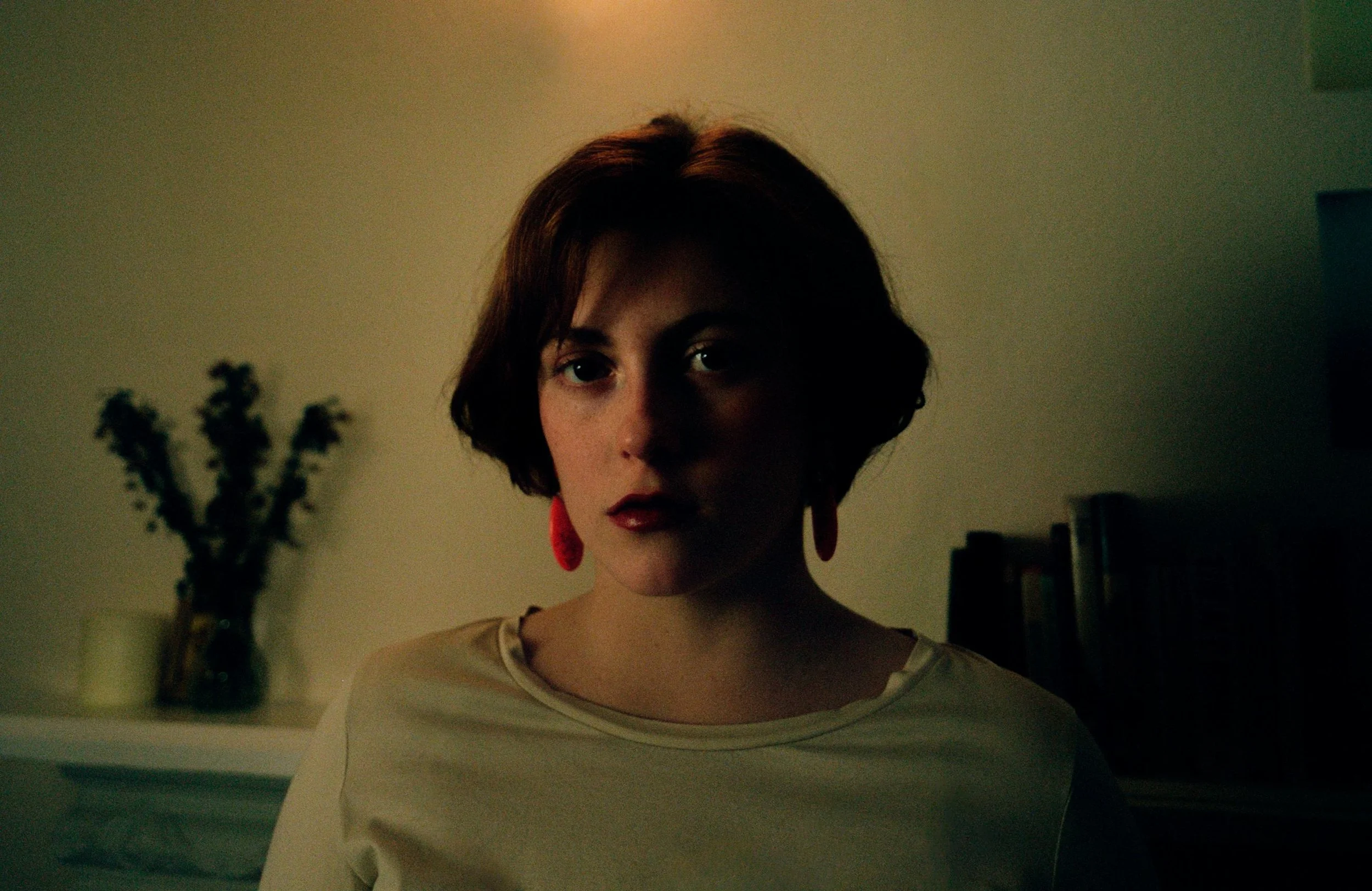
AVA: Which was really good, actually. We’ve had a lot of requests to do another class.
ELLIE: We did a paint darts night. Have you seen Princess Diaries [2001]? You know the scene when Mia [Thermopolis] is with her mum and they’re throwing darts at balloons filled with paint? We did that. We charged 99 pence per dart.
JANE: It seems like you both have the end goal of making an exhibition, but along the way you really know how to engage with your audience.
AVA: We want it to be accessible to everyone. Obviously we’d love to have everyone in an exhibition, but it doesn’t work like that.
ELLIE: There are challenges. There was an amazing artist, Giulia [Chauvistré], who was in our first exhibition and came back for the second. We really wanted a sculpture from her, but she lives in Turkey, and there was no way we could afford transport. We hope one day we’ll have funding to give artists unlimited freedom to create their work and get it to London.
JANE: I’m curious what access means to both of you and what that looks like in the art world.
ELLIE: So much of the art world is unnecessarily prestigious. There’s a definition of an “emerging artist” and it just refers to how much you can sell your work for. If you can sell a piece up to £3,000, you’re an emerging artist. Once you sell a piece for £3,000, someone will buy it for £5,000. The numbers start to mean less.
AVA: The fact that it’s all about money is pointless. We give artists the opportunity to sell their work, and we won’t take any commission from it. On the application to be featured in our shows, we only ask for a portfolio and nothing else.
ELLIE: We don’t look at who the artist is, age, gender, or race. Even where they come from globally isn’t an issue. That comes after acceptance. We say, “We want to exhibit your work; let’s work out how to get it to London.” Another thing we found hard at the start was identifying the difference between personal taste and talent. There are things I like that Ava doesn’t like, and vice versa. I had to remove my personal taste from decision making.
“Artists want to share their work—not just sell it.”
AVA: When you’re hosting these mass exhibitions, you have to remove that personal level.
ELLIE: That’s where the curation came in: what looks amazing together?
AVA: What bounces off each other or contrasts each other in a beautiful way?
ELLIE: One thing I learned is you must ask for exact dimensions. Some artworks arrived and I was like, “Oh my god, it’s way bigger than I thought.” There was one painting we thought would be this enormous portrait, but when it arrived, it was tiny.
JANE: So you choose the space, and then decide where pieces go before you receive them?
AVA: All the artists arrived the day of the private viewing, and we installed everything in less than a day. We were like, “We’ll just go with the flow.” We only opened half an hour late.
ELLIE: I did cry.
AVA: We worked with a production company called Scott Fleary, who built the frame in the middle of the station. Maybe you saw photos.
JANE: It was incredible. I’d never heard of or seen art exhibited that way.
ELLIE: The issue with the [historic] space was we weren’t allowed to drill into any of the walls. We were only allowed to drill into these tiny planks of wood in the window frames.
AVA: In the corridor you could see flashes of artwork as you walked past. We worked with a lighting company who gave us all the lights for free. Scott Fleary built the frame for free. It was generosity from different companies that made everything work.
ELLIE: Doing this made me realize how willing people are to help just for the purpose of being part of something, the movement we’re building.
AVA: The way we’re exhibiting artwork isn’t necessarily happening right now. Some people compare us to the YBA [Young British Artists] movement, which I get has a similar style, but it’s not the same. Art Club fills a hole in the market. People are willing to help.
ELLIE: One of my professors, he’s older, said this is the first time that many of his students have been this enthusiastic about the art world in 10 to 20 years. Not just making art, but displaying it and doing it with other people. He said there was a lull, and it’s all coming back.
“One day we’ll have funding to give artists unlimited freedom.”
AVA: I agree. There’s more happening. To start a movement, you need to promote it. That’s a massive part of getting people to see it, invest, and engage.
JANE: For your recent exhibition in the waiting room of the Peckham Rye subway, or tube station, what was important about choosing that space?
AVA: I said once: “I want to curate an exhibition with 50 artists in one room.” I wanted a challenge.
ELLIE: Ava and I are both from South London, and I grew up ten minutes from Peckham. I’ve lived here my whole life. A lot of people didn’t understand that—they thought we were just taking over Peckham. I was like, “No, I’ve been here for years.” It’s nice doing this somewhere we’re familiar with.
AVA: It helps that if we need screws, we know where to go. If we need lunch or coffee, it feels like home.
ELLIE: It’s nice to go to a great pub after. All our mates are already there.
AVA: Ellie and I work so hard, we don’t stop. We haven’t stopped since we started.
ELLIE: I’ve had a week off.
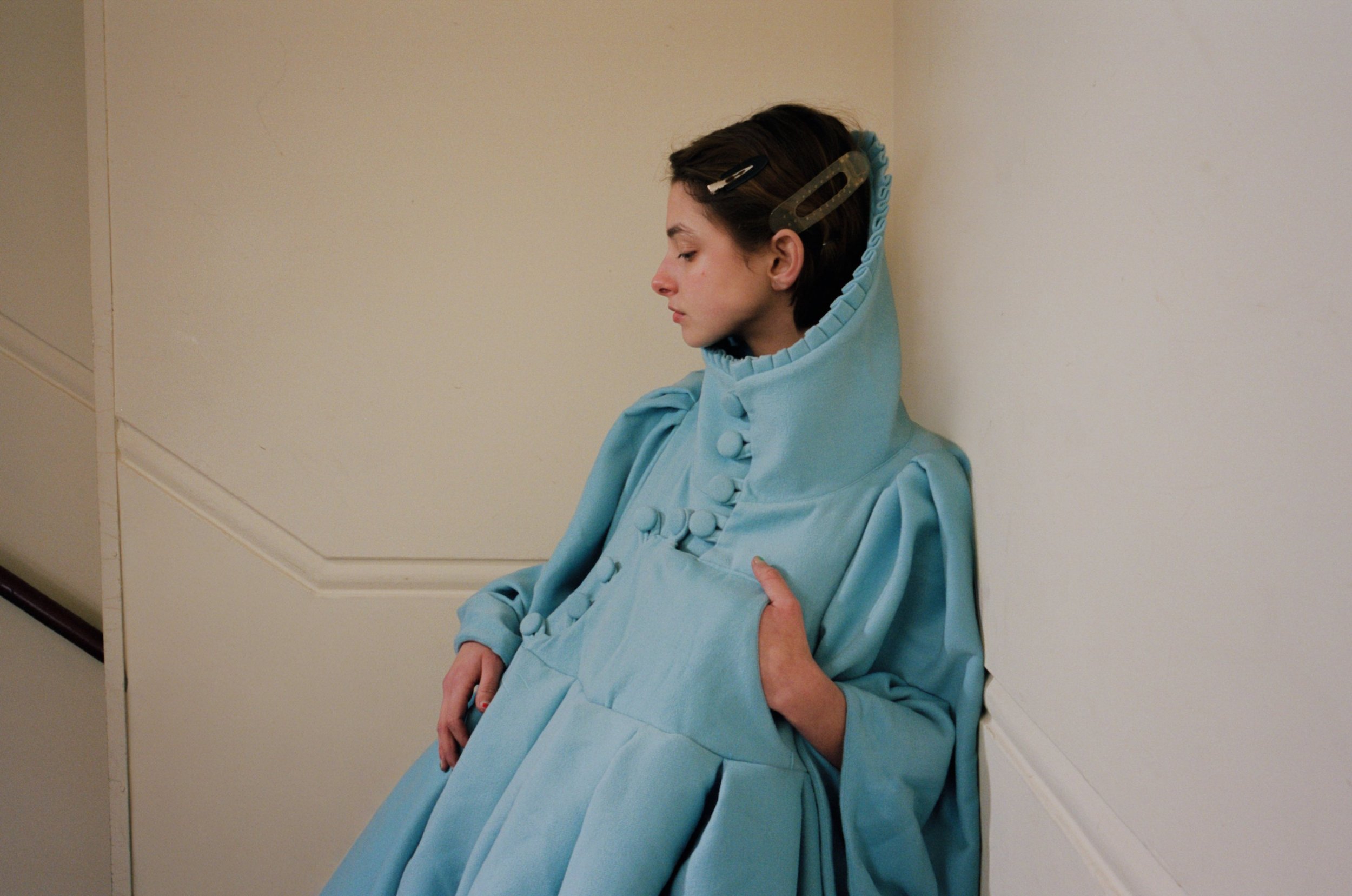
AVA: We live by “work hard, play hard.” We know how to have a good time.
ELLIE: Work hard, play harder.
AVA: Exactly. Play much harder. Even on the first install day, I knew it would be the longest day ever, and we were like, “We’re definitely going to have a pint after, debrief, then start again tomorrow.” That’s our relationship, we work hard and we’re best friends.
JANE: I’m intrigued by the mission statement you put out before your show at Peckham. “This is a spectacle of no brief or theme.” What did you mean by that?
ELLIE: A lot of group exhibitions have a brief and a theme, like “light and dark,” or “classic masters.”
AVA: We pick artists solely based on the work. We had a complete mix of contemporary art, classically trained drawing, classical styles, sculptures, and textiles.
ELLIE: All of it could be viewed separately as individual themes within each person’s work. We did put things together that had the same energy, but nothing was picked because of a theme. It’s a spectacle of art.
JANE: Allowing artists to exist exactly how they want.
ELLIE: On the installation days, when artists came with their work, we did want to give each artist their own agency to install. They know how their art should exist.
AVA: We can look at it and say, as curators, “Actually, we know how to elevate it even more.”
ELLIE: But quite often the artist is right.
“We got resourceful. It's what we do.”
AVA: It was really lovely, the environment and the collectiveness that we built, hosting so many artists of different mediums. Everyone was interested and conversing and bouncing off each other. It’s addictive for us: that moment where you look at a room of young—or not even young—but just artists who are emerging and excited to be in a space, and excited about their work, and excited to learn about other people’s work.
The private view was so special because it was all of the artists with their plus ones, whether that was a partner, another artist, a friend. On top of that, the space was filled with our art teachers, some press, and quite a few galleries and curators, and friends and family. We had about 300 people at the private view.
We had a Spanish violin and guitar duo playing throughout the night as well, the atmosphere was so lovely. I remember guests saying, “I don’t often see a private view like this where people genuinely aren’t afraid to talk to people.”
I go to a lot of openings and private views, and they can be really intimidating when you walk in. If I'm by myself, I usually just stand in the corner of the room, or I look at the art and I leave because it’s quite scary to discuss, or talk to someone.
JANE: It’s a culture of inclusivity that you guys are building with Art Club.
ELLIE: It’s just people who aren’t afraid to give it a go. It can be really intimidating, putting yourself out there. Because we can’t pick everyone, we always say, “Please, please, please don’t stop applying and sending work to us.”
We also like to have a bit of fun. Not everything is serious. The events and the fundraisers we put on outside of the exhibitions are fun and they’re cheap. Our mission isn’t to make profit. It’s to have real fun.
AVA: “I’m an artist.” It’s so scary to say that, to give yourself that title, even though it is a practice. You create, you make.
JANE: Why is imperfection such an important part of the Art Club ethos?
ELLIE: In the first exhibition, we said, “We need our manifesto.” We need a huge piece of cardboard from the side of the road to write a manifesto.
AVA: And, “Who has a Sharpie in their back pocket?” That’s literally how we ran the first exhibition. We got resourceful. It’s what we do.
ELLIE: We had some amazing people helping us, but sometimes no one knows how to use a drill and you’ve got to put stuff into the wall. That’s where the imperfect side comes into it, because we’re not hiring people. We did a helpers open call about a month before the exhibition. We got 50 people emailing us saying, “We’d love to help.” “I go to secondary school in London and this sounds like a brilliant opportunity.” We had so many of these really young, amazing people who, yes, didn’t know how to use a drill, and that’s where the imperfect part comes from. The first exposition was very much, “Let’s put a show together. We don’t know how to do this.”
AVA: That’s also just our characters. Ellie and I are pretty laid back, which is why we always say to people, when we’re arranging meetings and stuff, let’s get a coffee, let’s go to the pub.
ELLIE: Ninety percent of our meetings are at the pub.
AVA: People want to dedicate their time to us, and they’ll be more generous because they enjoy our charm and our laid-backness, and how easy we are to work with.
ELLIE: It’s surprising how much people do for you and want nothing in return.
AVA: We can offer exposure and [an opportunity] being part of the movement, and a lot of people see that as enough.
JANE: What do you want tomorrow’s art world to look like? How are you informing that with Art Club?
AVA: One thing I want to maintain with Art Club, as long as we can, is for all open calls to be free to enter. In London—I don’t know how it is in New York—exhibitions can be expensive. Simply seeing art is becoming £25.
ELLIE: Going to see art in London is extortionate. That’s why my university does field trips where they buy our tickets, but they’re once a year and you see a small fraction of what’s showing.
AVA: I do understand that selling tickets or application fees can be necessary.
ELLIE: We just like to find money in different ways.
AVA: The first thing that comes to mind about what I want the art world to look like is—it feels like it’s becoming more prestigious, so, so, so prestigious. We’re trying to slowly edge out of that.
ELLIE: I want people to be less afraid of making art. People will be at the pub and you’ll say, “Sit and draw with me,” and they say, “No, I can’t.”
AVA: People think they’re bad at art, so they don’t even experiment with being creative. I want to see more confidence in creating. You don’t see exhibitions like the ones we’re putting on, which feel more accessible and more laid back. So hopefully that feeds into the art scene.
JANE: What’s next for you?
AVA: We’re going to make an eight-month plan.
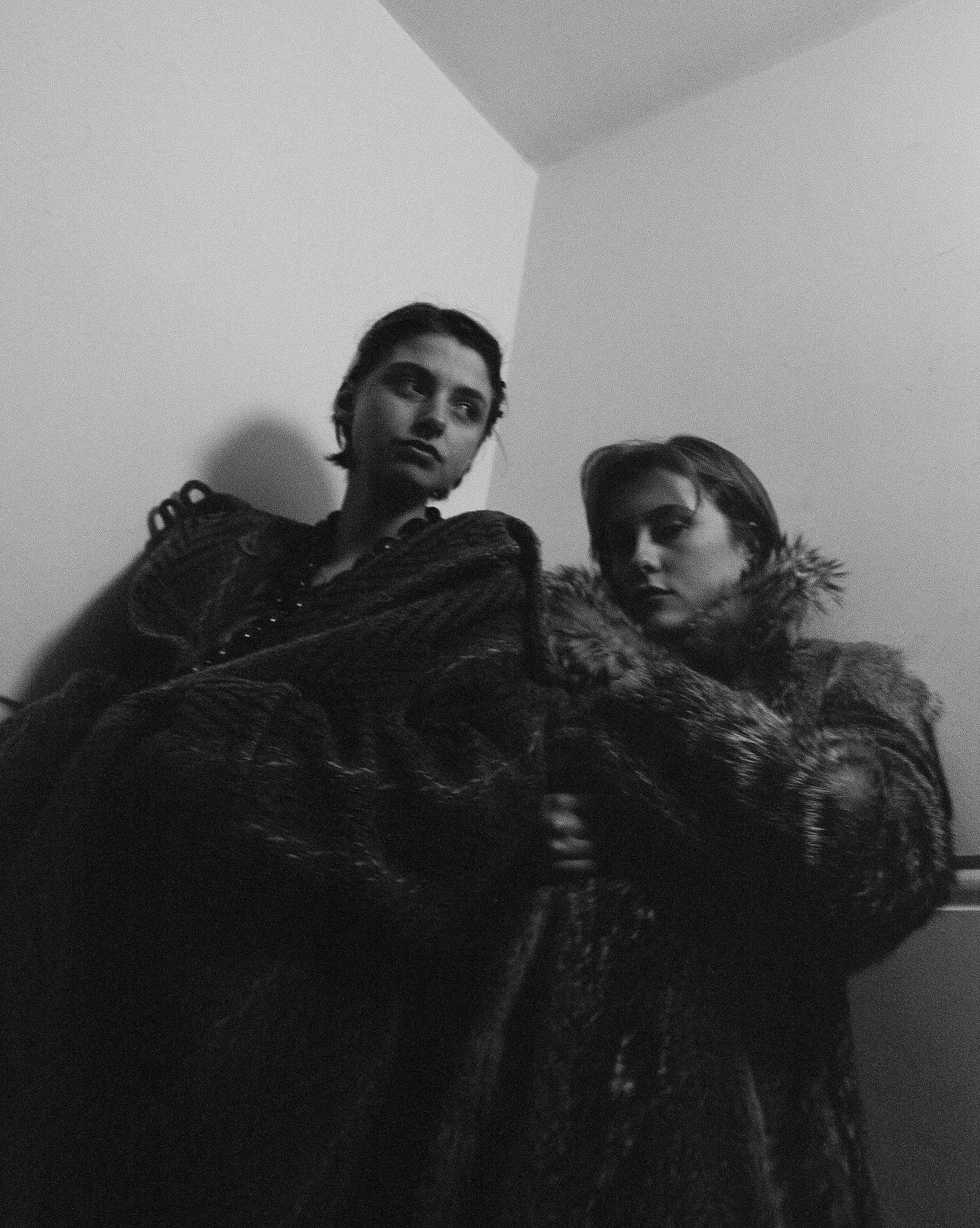
ELLIE: We want to host an event in New York while I study abroad there, because I think it’d be really interesting to expand into a new place. Also, lots of people we’ve worked with or talked with are based in New York.
AVA: We have a similar connection to Paris, so we would love to expand. The next big exhibition we’ll do in about six months. Maybe eight. For that exhibition we’ll do the call-out quite soon to give people a deadline of about a month and a half or two months to submit work. I think we’ll expect more applications than the last one.
ELLIE: We have lots of different directions we could go in. The issue is that we want to do everything. We need to decide which ideas to tackle first.
AVA: While Ellie’s away, I’ll continue meetings and probably run some events and classes in London.
ELLIE: There are loads of people to meet in New York.
AVA: We’ll do what we’ve done between the last two exhibitions: collaborate with other spaces, people, and movements. We’ve had a lot of interest from different people in London now to put on events and curate. So we don’t have a plan, really. You’ve caught us right before we make our plan.
JANE: Keep it a mystery.
“The issue is that we want to do everything. We need to decide which ideas to tackle first.”
AVA: The future is big, and it won’t stop anytime soon. We want to expand. Another thing I’ve been pitching to Ellie is eventually expanding Art Club to be more of an artist agency, representing artists.
My model of what Art Club could be in five years, once we have more connections and we’ve scouted artists we genuinely think have potential, is to continue hosting these super accessible open-call mass exhibitions—but also represent artists and manage them, help with exhibitions, sales, transactions, rates, things artists don’t know how to do on their own.
ELLIE: This is one thing art school does not teach. Teachers tell us, “You’ll be poor forever, and some of you will be back here teaching in 20 years because you’ll have no money.” I’m like, “That’s encouraging.”
AVA: I have experience being part of an agency. I’ve been signed to multiple agencies and worked with managers. I’m currently signed to an agency. It’s something I’d be really good at. I see Art Club going down that route.
We’ve had other ideas about hosting an exhibition where we say, “Line up outside this gallery,” and the first 50 people in the queue get to showcase their work.
ELLIE: We had this idea when we were in Paris in a wine bar, so it’s not happening.
AVA: All the big ideas come when you’re having a drink. We were in Paris playing poker at 2:00 in the morning with three French art dealers, and we thought, “God, this is a really good idea.”
It would get a lot of social engagement, media and press, because it’s about accessibility: giving space to whoever shows up. It would probably be a shitshow, if we’re being honest, but it’s about the experience. We’d want to work with a proper, well-known gallery.
JANE: It sounds like a performance art piece.
AVA: That’s exactly what it is.
ELLIE: How I’m seeing it is, “Yes, put it on my spreadsheet.”
AVA: That’s exactly our relationship. I’m like, “I have this huge idea. It’s brilliant.” You’re the one who says, “Yes, but we have to organize it.” It’s worked out quite well. There’s so much written in the stars for us.
JANE: Do you see a concrete, brick-and-mortar Art Club gallery space in your future, or do you prefer to keep it more fluid?
AVA: That would be lovely, having a storage room where we have everything we need, and we could just say, “Come to the space,” and we’re prepared. Instead of turning up in the morning and being like, “Is there a ladder? Is there a bathroom that works? Let’s turn on the lights for the first time.”
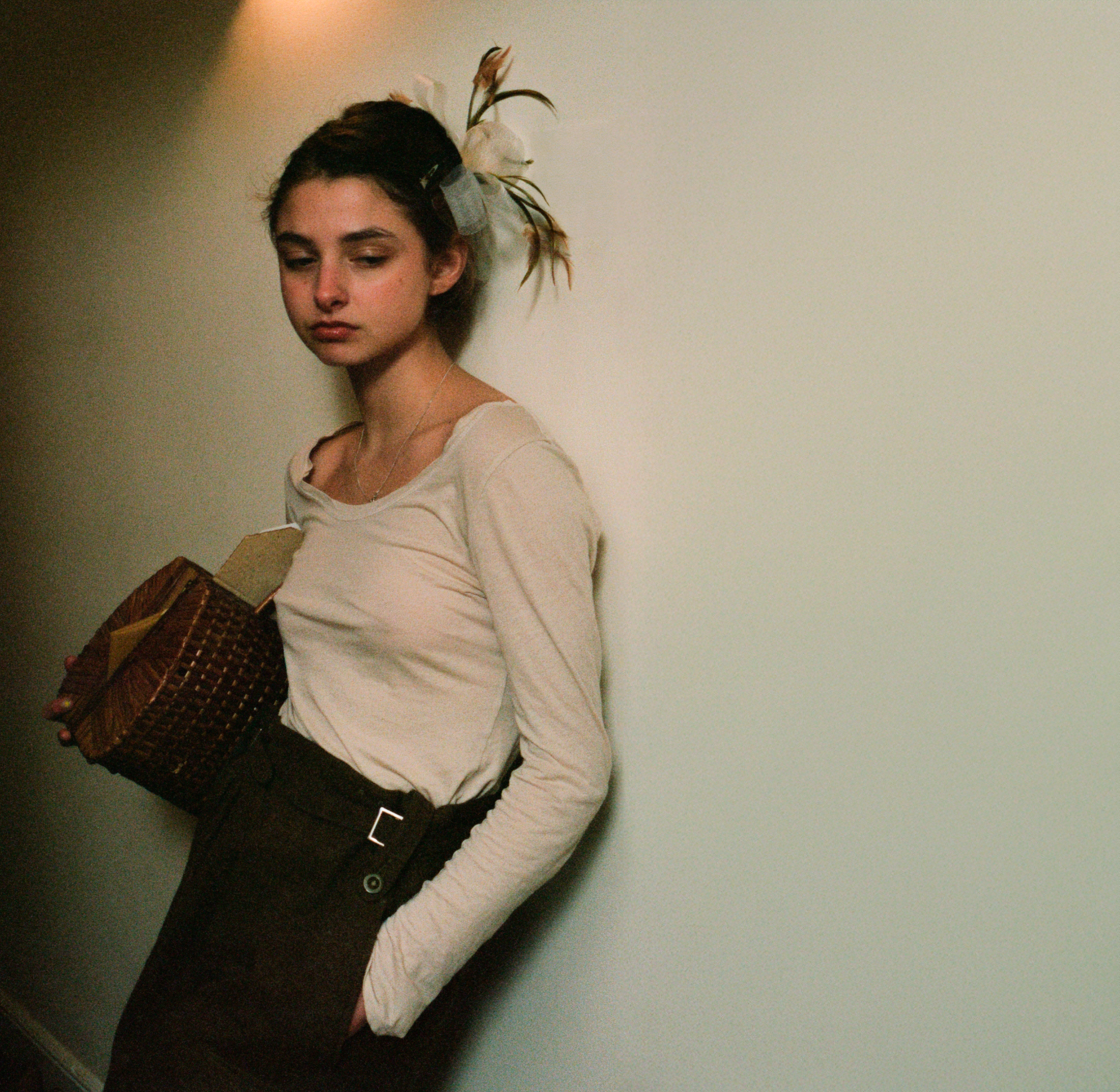
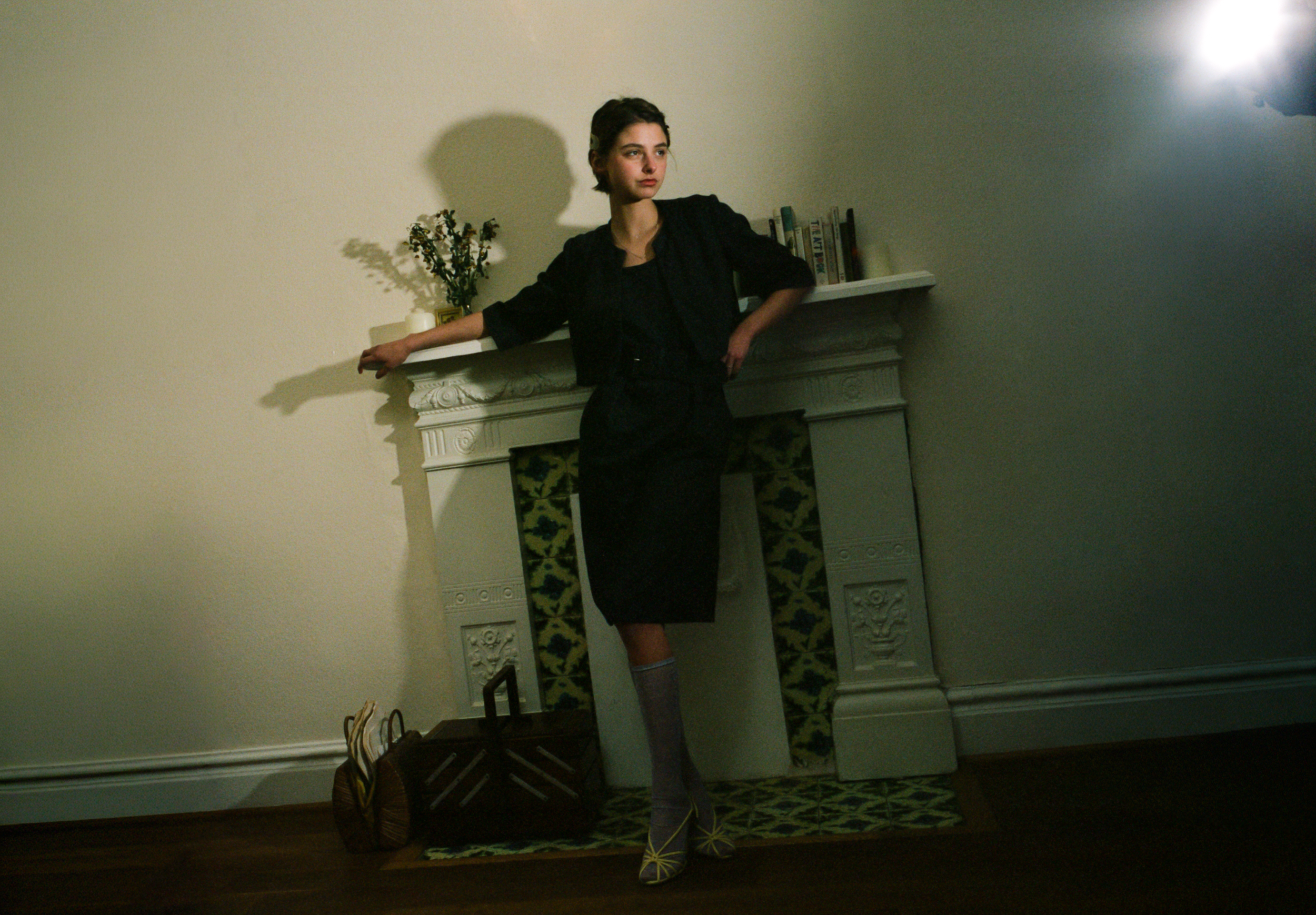
Photography Assistant ALLEGRESSE MUYA.
Light Technician EZRA ALEXANDER.
Light Assistant ENOCH ALATISE.
This story was first published in Issue 03: The Signature Issue in Spring 2026.