
Photographer LEXI HIDE
Stylist KARALYN HOSIER
Halle Robbe’s beloved Instagram account Girls Carrying Shit began with a photo of two Red Bulls, a phone, a wallet, and a set of keys. It grew into an online archive of the everyday rituals of womanhood, and, eventually, into pinky, her literary magazine. Now, Halle is preparing to expand her world with a forthcoming book on body neutrality, an exploration of how to exist in one’s body without constantly thinking about how it looks. As she enters this next chapter, she speaks with Ione Gamble, who has spent over a decade building Polyester Zine into something that is simultaneously a magazine, a zine, and a community.
Though their projects began years apart, both grew from the same Tumblr-era impulse to create spaces where people define themselves without being told what they should look like, want, or be. As Halle looks toward her first book, Ione offers the wisdom of someone who has already made the transition from DIY media to traditional publishing. Together, they reflect on the permanence and intimacy of the page, and what happens when projects grow beyond their scrappy beginnings.
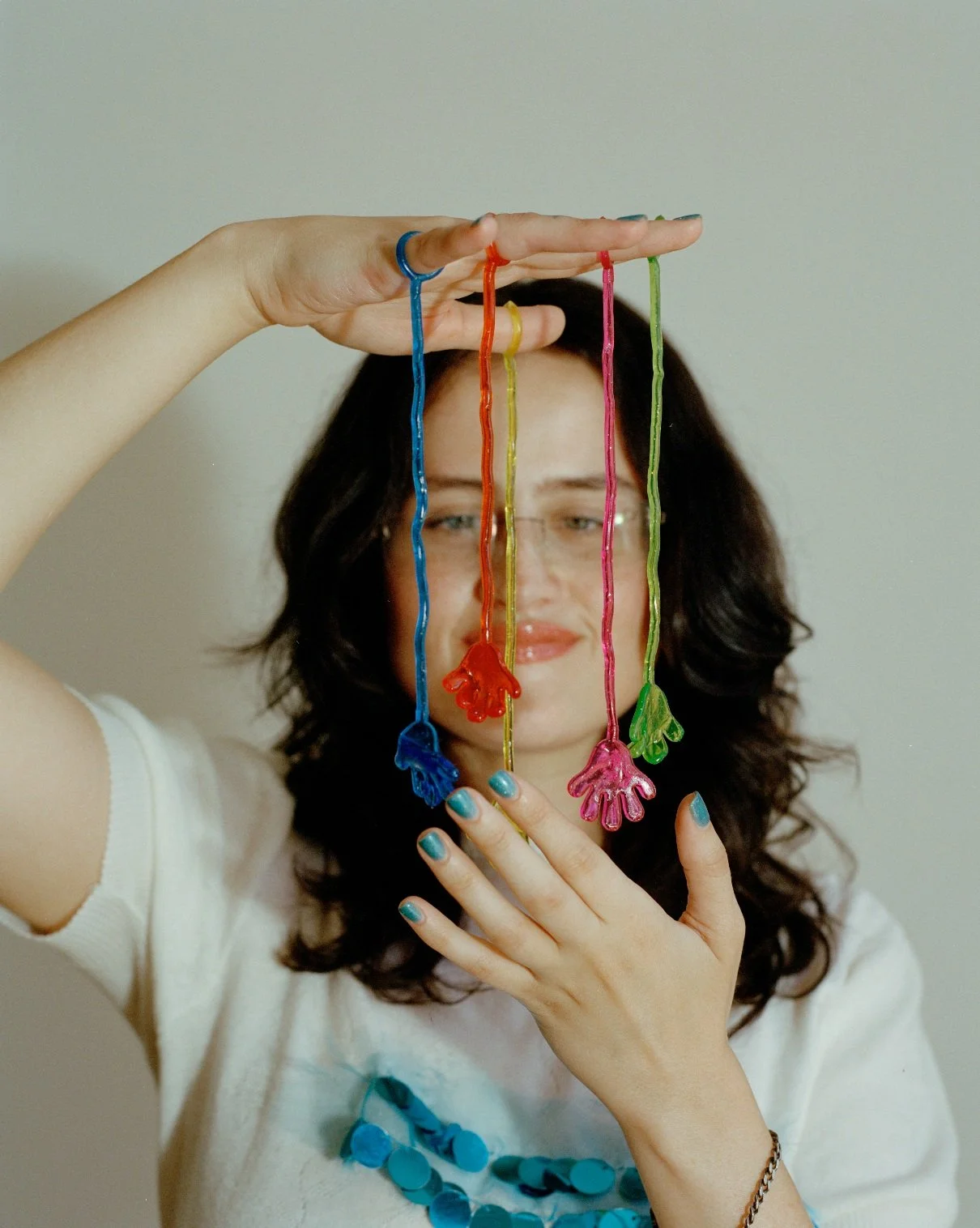
JANE LEWIS: Halle, you're about to celebrate five years of Girls Carrying Shit. Ione, you’ve been running Polyester Zine for 12 years. What was the beginning of each project like for you and where you are now? What kind of worlds have you built?
HALLE ROBBE: There is a lot of similarity between Girls Carrying Shit and Polyester. We’re both very girl-oriented, girl-forward.
IONE GAMBLE: Something that I was really interested in and loved when I started Polyester was the Tumblr feminism of 2014, and specifically how artists on Tumblr were using overtly feminine aesthetics in order to expose the absurdity of femininity. I started Polyester in 2014 while I was studying fashion journalism because I felt dissatisfied with how I was being taught about the industry.
“I was burnt out from having my face, someone else’s face, or someone else’s body be the centerpiece of every photo online.” -Halle Robbe
Polyester was very DIY for the first six years. During lockdown we started to get more brand and commercial interest, and we also launched our membership platform. The mission statement has always remained the same, which is to provide media and a platform that is not preachy, not built on exclusion or telling people what they should like, what they should wear, or what they should listen to. Instead, it’s built on inclusion and a zine ethos of open submissions and community. We platform people that are systematically excluded from the media: people of color, queer people, trans people, and working class people.
HALLE: I started Girls Carrying Shit five years ago. I had built the social media department for a digital marketing agency where I had become a director at 23, but it was very boring and very corporate. I ran out of the office one day to grab some caffeine and I picked up “two for one” Red Bulls—obviously if there's a deal I was going to get both—but I hadn't brought a bag. So I had the two Red Bulls, my keys, wallet, and phone all in one hand, and I took a photo of that and I put it on my personal Instagram story and captioned it, “After hundreds of years, this is what I can do.” All my friends swiped up on it saying, “I do this too. Let me send you a photo of me doing it.” It was a very organic discovery of this specific experience of womanhood—something that we all do in our everyday lives that goes unnoticed. The aesthetic is also rooted in Tumblr: candid, a little grimy—maybe there's a smudge on the lens. I was also very burnt out from having my face, someone else’s face, or someone else’s body be the centerpiece of every photo online. So I thought, “Let's just focus on what we can do instead of what we look like.” That's the ethos of the page.
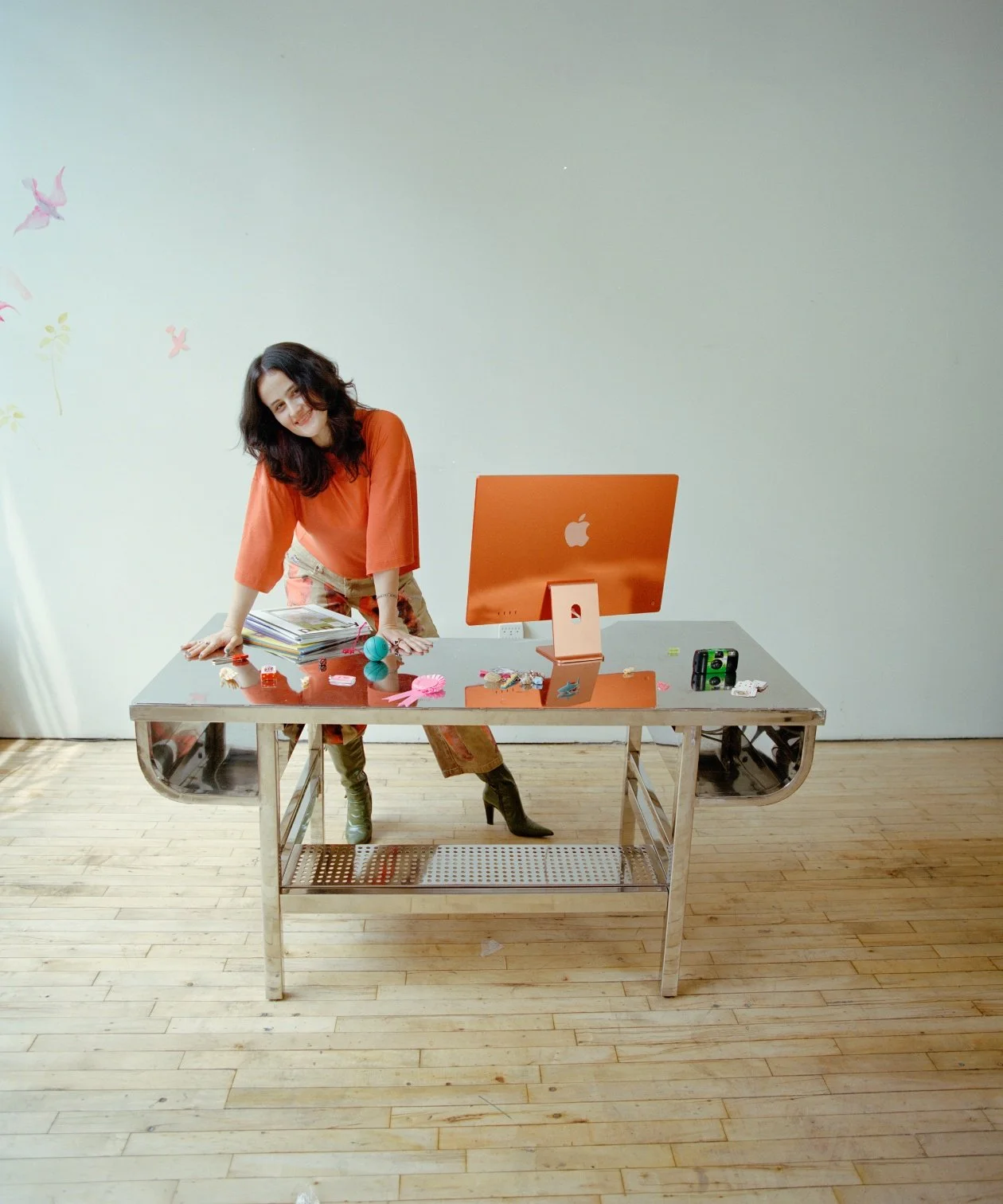
In 2023, I released the first issue of pinky, which grew out of an interest I had from working in magazines for most of my life and serving on a teen literary magazine committee in high school and college. I had all these self-taught Photoshop skills from the Tumblr era and nowhere to use them. I was itching for a creative outlet and simultaneously, I was becoming more and more aware of the deeper conversations being had around the idea of Girls Carrying Shit. People would submit photos and say, “I’m carrying the weight of the world on my shoulders.” There was something for me to unpack there, and I wanted to explore it through print. I also wanted to create a space that, similar to Polyester, was more inclusive and extensive than some of the magazines I had grown up with. When I was young, there were aspects of mainstream print that made me feel alienated in a way that I didn't fully understand because I didn't know that I was a lesbian yet. The magazines read, “Five ways to get him to call you back,” and I thought, “Why isn’t this landing with me?”
JANE: GCS is not about the body or the face, and Polyester is a collective of so many contributors that it's not just about one person. What is the importance of removing the face as a brand for both of you?
IONE: 2014 was a time rife with individualism, and a lot of people started print or media projects as a launch pad for their personal brands. That was something I always resisted. I don’t think you can make anything that's truly collective and speaks to a lot of people if you [as an individual] are front and center, because the project becomes about you. I wanted to create a publication that I didn't have growing up. I really admired the Riot Grrrl movement and Rookie Mag, projects that belonged to the founders but became much bigger cultural moments. When I studied journalism in 2012, we were taught not to center ourselves or our practice when interviewing someone—it's [considered] bad journalism. But I love a personal essay. I also despise when an editor uses their own pictures in the magazine and does every single interview and becomes the sole personality of a publication. I just find it off-putting and egotistical—the opposite of what I wanted Polyester to be.
HALLE: I wanted to create a space where women didn’t have to think about what they look like and could view photos they relate to without making a subconscious comparison to someone else’s face or body. The page was anonymous for about two years. I only added my personal Instagram handle to the bio last year. I agree with you Ione, that if you're trying to build a community, it can't be about just you. My fingerprints are on everything—the aesthetic, the stylization—without my face being there, which is my ideal situation. I do brand partnerships, and there have been moments where I was the model, but I realized I didn’t like that and so now I’m exclusively behind the camera. The work is already so enmeshed in me, I just don’t want to be the centerpiece. Girls Carrying Shit is my thing. When I talk to people, I say, “I run pinky and I run this Instagram page.” My life revolves around it even though it doesn't revolve around me.
“DIY is the love of making something happen by any means necessary.” -Ione Gamble
JANE: Polyester and pinky are both physical magazines that also exist on Instagram and a website. What has it been like for you building an online community for a print publication?
IONE: We benefited so much from an early version of the internet that was used purely for discovery. One of the reasons I made Polyester was to quote-unquote legitimize the Tumblr community into a print publication. Historically, print has been used for radical means, as with photocopied zines used to distribute information. Now, print is an archive in some ways. Polyester is flexible. Our first touchpoint with someone will likely be Instagram. We have to figure out how to build on that [initial online interaction] to create something that's meaningful for people.
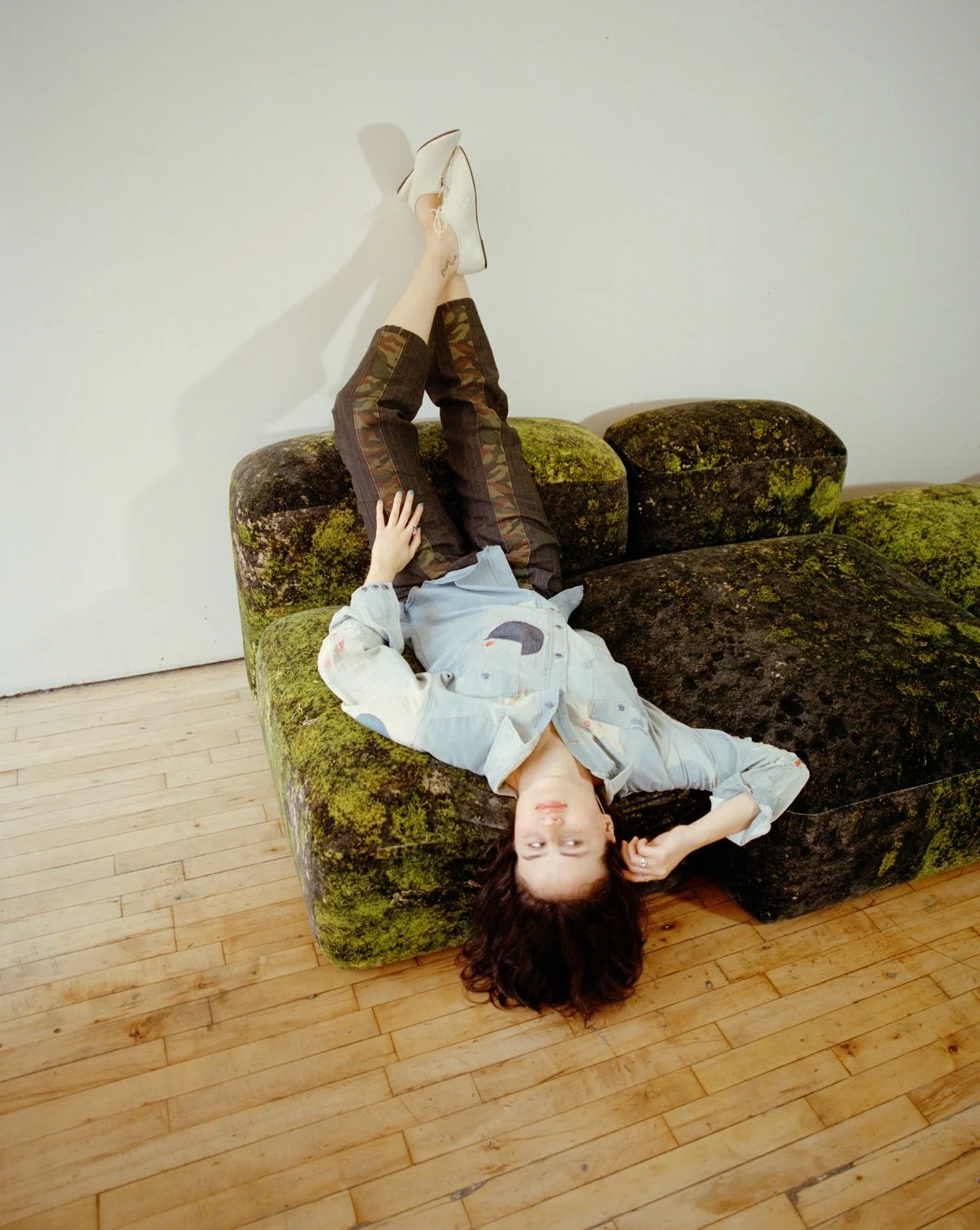
I made pinky its own Instagram last year because I do feel a pressure to be digitized. I want it to reach as many people as possible because the topics we're talking about are important. But I also want to keep the print stories special.
IONE: It's a juggling act because you want print stories to have a long lifetime. We started to build out our digital presence to be more reactive, whether to discourse or to talent. Print is where we highlight a person who will be perpetually interesting.
JANE: You’ve both interviewed other people and been interviewed. Is there a question you wish you were asked, or topics that you're constantly asked about and don't want to speak on anymore?
“I just want to exist, and that’s how I landed on wanting to talk about body neutrality.” -Halle Robbe
HALLE: I get asked why the page resonates with girls and women and I feel like it's a bit obvious. I wish people would ask me more about the style of the page. People underestimate how many photos I go through, why things are cropped a certain way, the facelessness, all of which I put a lot of thought into. Some think that in order to be attractive to a wide audience, work must be generic. In actuality, people resonate most with specificity.
JANE: What does DIY mean to each of you now versus when you started?
IONE: DIY is the anti-establishment choice, the unconventional route. Oftentimes it's the least capitalist route. What interested me when I started Polyester was this tension between DIY's history of being a physical, tactile form of creation, and the access we have to endless resources on a computer. I was learning how to code in HTML and use Adobe. But surely, that is DIY. It just looks more polished than DIY has in the past. That's a tension we still play with. How can we create a photo shoot that looks high-production on a shoe string budget? For me, DIY is the love of making something happen by any means necessary. That's where the most interesting work exists and that DIY attitude is also why a lot of the people that we feature in Polyester are drawn to being featured. When we shot Sofia Coppola, she said, “This is the first time since the early 2000s where there are only three people on set and it feels like making things with my friends.” That's what we love to do and where we thrive.
“The underlying spirit of scrappiness will always be part of what I'm doing.” -Halle Robbe
HALLE: With GCS, I thought, “I'm just going to see how far this can go,” and to this day that's still my attitude. When I started the magazine, I had never used InDesign before. I had never been in charge of doing the layout for a publication. My first issue was staple bound and didn’t completely shut because it was made of really thick paper. I misspelled “commit” on the very first page. I took all the photos myself and all the essays were written by my friends. Now, I always encourage people to try writing something for the open call and submit even if they're not an official writer. In that way it still feels very DIY. But the underlying spirit of scrappiness will always be part of what I'm doing.
JANE: Now, Halle, you're entering a new period that Ione has been in before—thinking about your first book. Tell me everything.
HALLE: People have been asking about a GCS coffee table book since I started the page in 2021. But if I'm going to sell something to my community, I want it to feel like it's expanding [the world I’ve built]. I don't want to regurgitate the Instagram page. It’s not respectful of my audience to just churn stuff out. I met a book agent who mentioned that I talk a lot about body neutrality and [the rise of] Ozempic ads. I realized that it’s the topic that resonates the most with me. Even though I'm not shouting from the rooftops, saying things like, “This is a faceless, anti-thinspo page,” that was a conscious but unspoken motivation that I want to have more conversations about. I've been very hesitant to talk about my body or other people's bodies. If I start talking about my body, everyone's going to start looking at my body. I just want to exist, and that’s how I landed on wanting to talk about body neutrality for my first book.
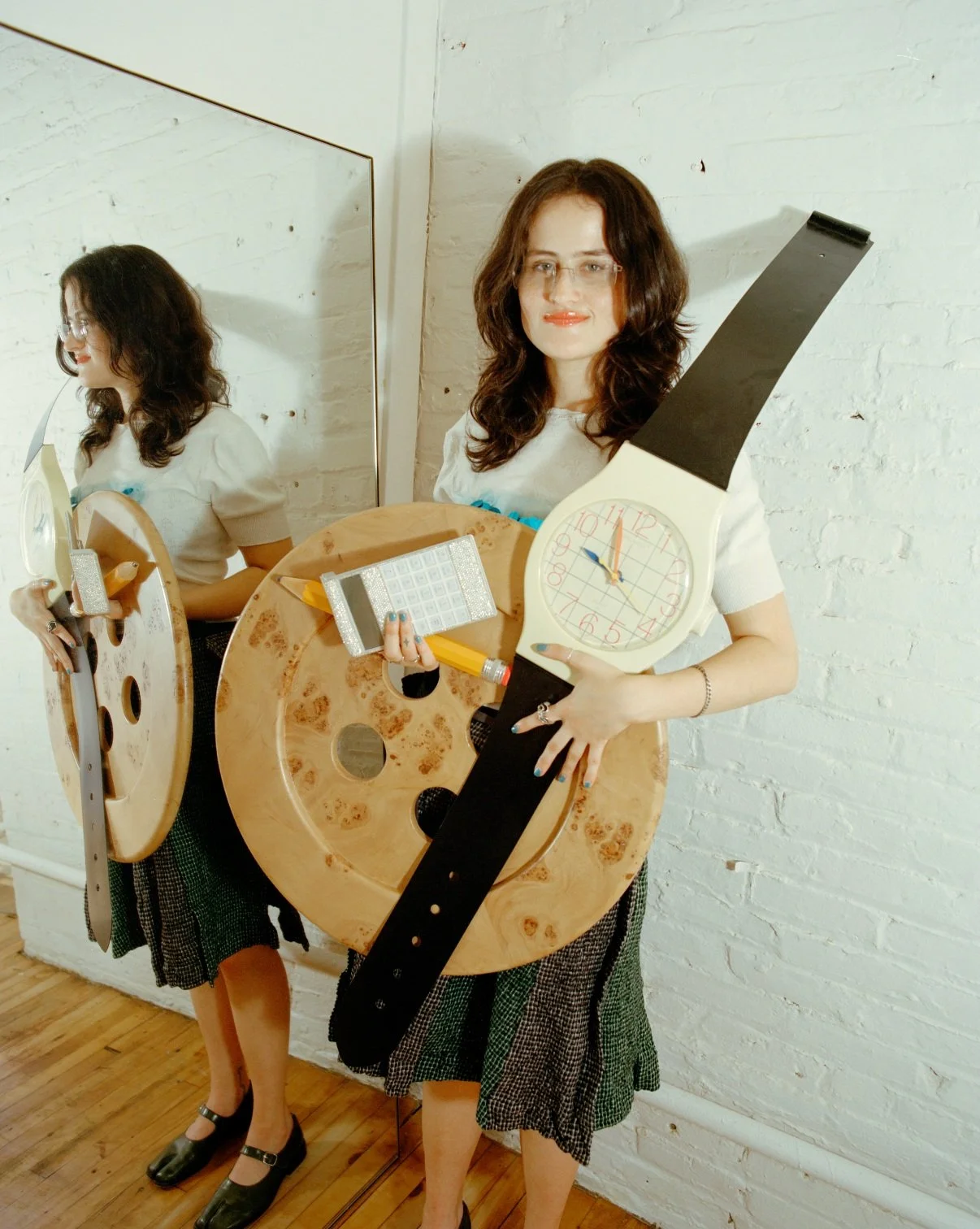
JANE: You want to discuss the body as a completely neutral entity, neither negative nor positive in appearance, and focus on the capabilities of a body rather than how it looks.
HALLE: I'm definitely going to share my own experiences—I think I have to in order to gain the reader’s trust and establish myself as an authority on the topic. I don’t want to say, “Stop having an eating disorder,” without talking about my own eating disorder. I want to conduct interviews because those are my favorite aspects of running the magazine. I want it to feel like I compiled everyone's best advice on how to change your relationship to your body.
IONE: In my book Poor Little Sick Girls (2022), I zoomed in on my own experiences with chronic illness while examining culture from the 2010s through 2022, and how my illness, working-class background, and experience as a plus-sized person shaped the lens through which I saw the world. I grounded those experiences in research, framing it all through my diagnosis with Crohn’s disease at 19. I took inspiration from Chris Kraus and Viv Albertine, female memoirists that don't sugarcoat anything. My second book, [The Polyester Book of (Bad) Taste (2026)], took a lot longer than my agent and publisher expected and I felt a lot of pressure. I feel like I'm going the opposite direction with publishing: Legitimate to DIY. I've done the book thing and now I'm like, “I'll just self-publish everything forever.”
HALLE: I'm curious about how I will end up feeling about the formal publication process. I might be inspired by the structure and cadence imposed on me. On the other hand, I really love being able to do whatever I want.
JANE: I'm over one year into making Bias Cut. In you two, I feel like I’m seeing my future self. It makes me happy that you're both still independent because that's how I hope to be. Halle, what are you most excited about in this new project?
“Print is where we highlight a person who will be perpetually interesting.” - Ione Gamble
HALLE: I’m excited to explore a project where I feel free to ramble and talk at length about things that I've only sprinkled into my content so far.
JANE: How are you feeling five years into this project of GCS?
HALLE: I'm feeling really good about GCS and pinky, but I would love to delegate more.
IONE: That would be my one piece of advice: it’s good to delegate. And always have fun! Magazines are so important. They have such a storied history. Making them is such a joyous thing to be able to do.