
Back to the Ranch
Long before it turned into a luxury tourist town, my grandmother moved to Aspen, Colorado, where she established her own legacy in tandem with historic environmental preservation.
Words by HANA HARVEY
Photography by MAISY LEWIS
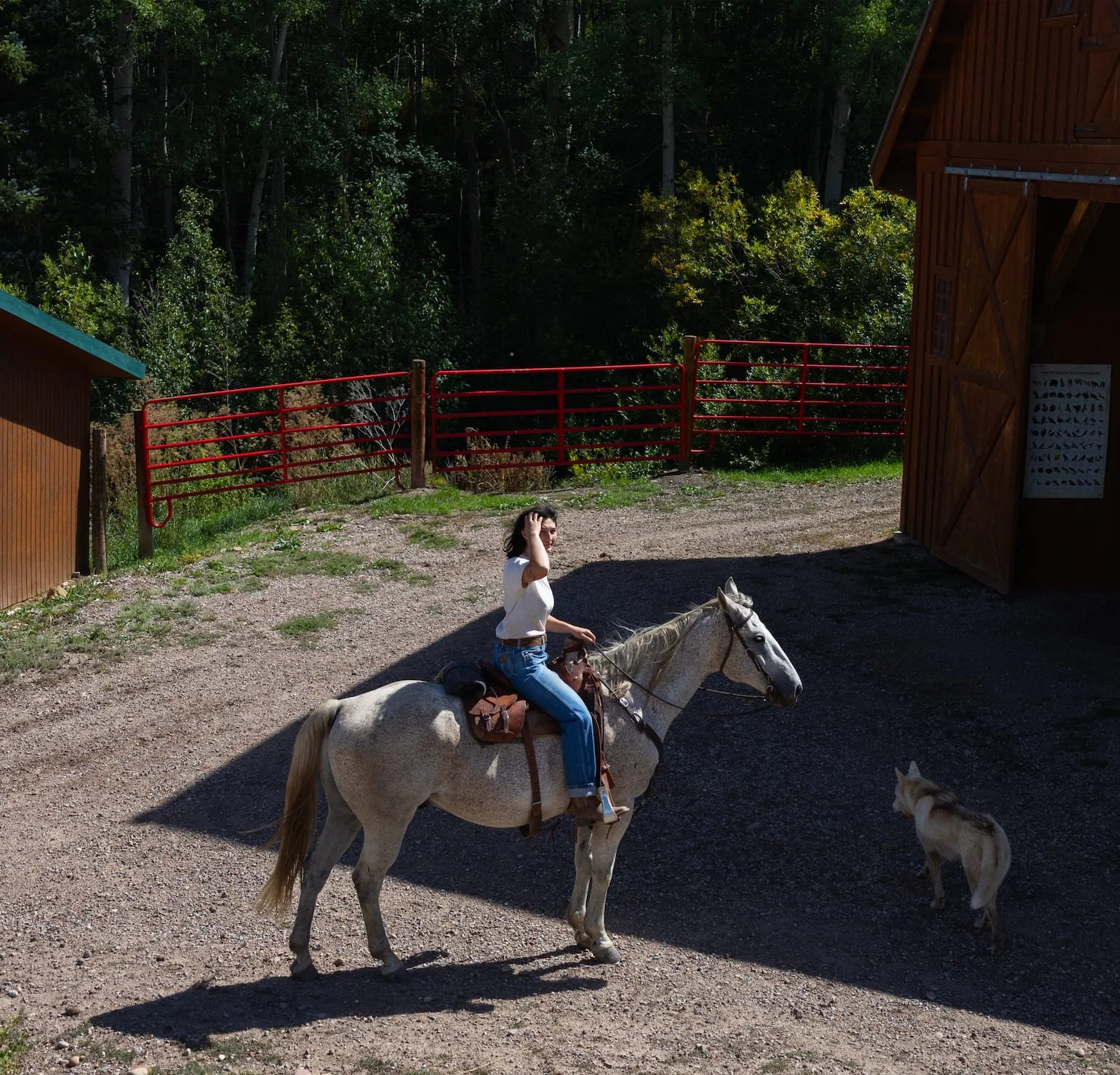
A blue street sign stands above a driveway just off of County Road 11: Harvey Ranch Road. A steep gravel driveway forks to the right and climbs up as I shift my car gears down, driving past the “No Public Access” sign. I am a part of the third generation of Harveys to cross the boundary. Aspens and evergreens line one side of the driveway and scrub oak dots the other. At the top of the first hill are two log cabin ranch houses, a patient line of heavy-duty machinery, and a corral where six horses stand. Early in the morning, the horses are still out in the grassy pasture further up the gravel road, where they would grow fat and wild if left out all day. Above the houses is one of the many gates that keep the cattle where they are supposed to be while they graze throughout the summer and early fall.
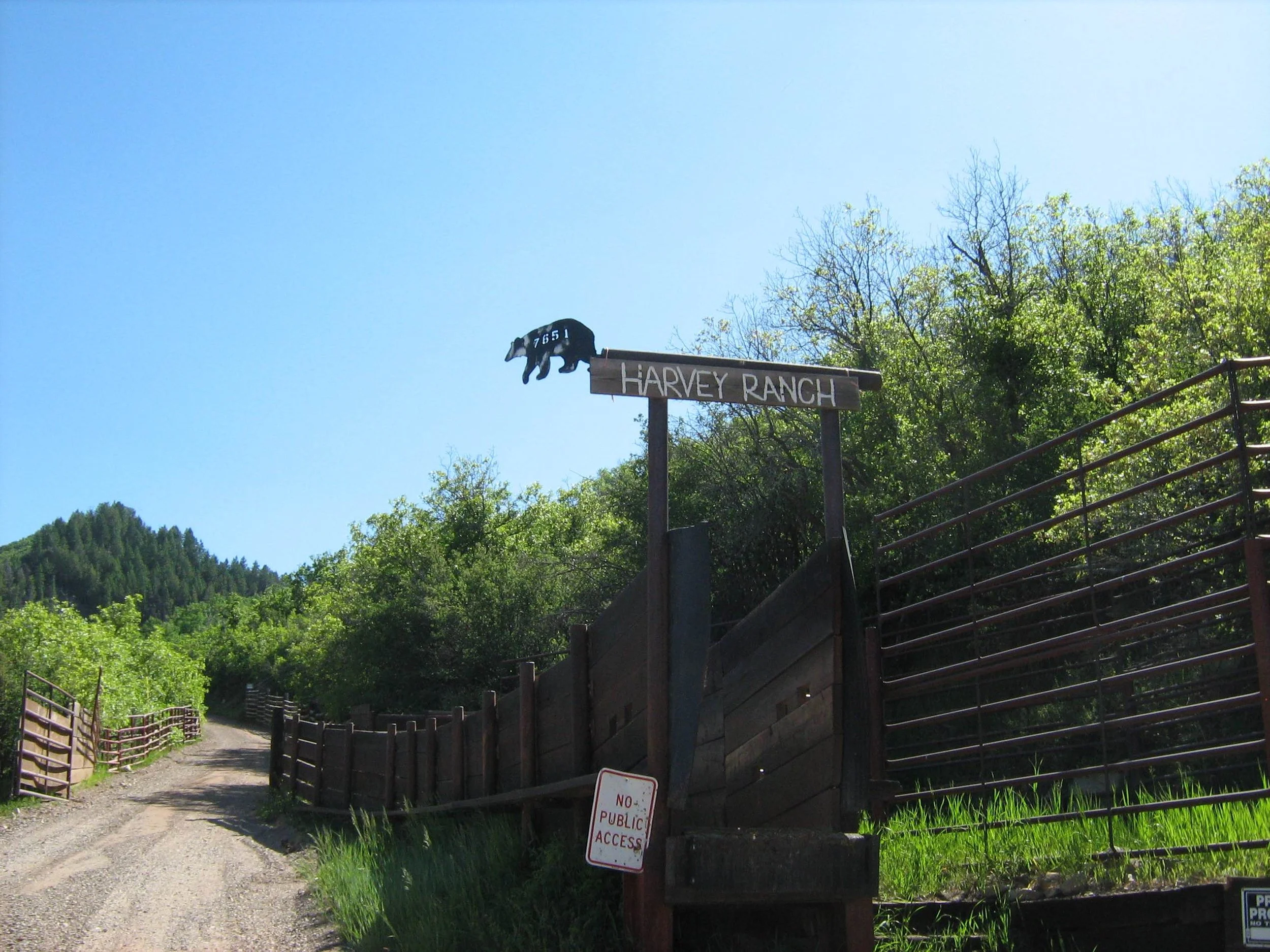
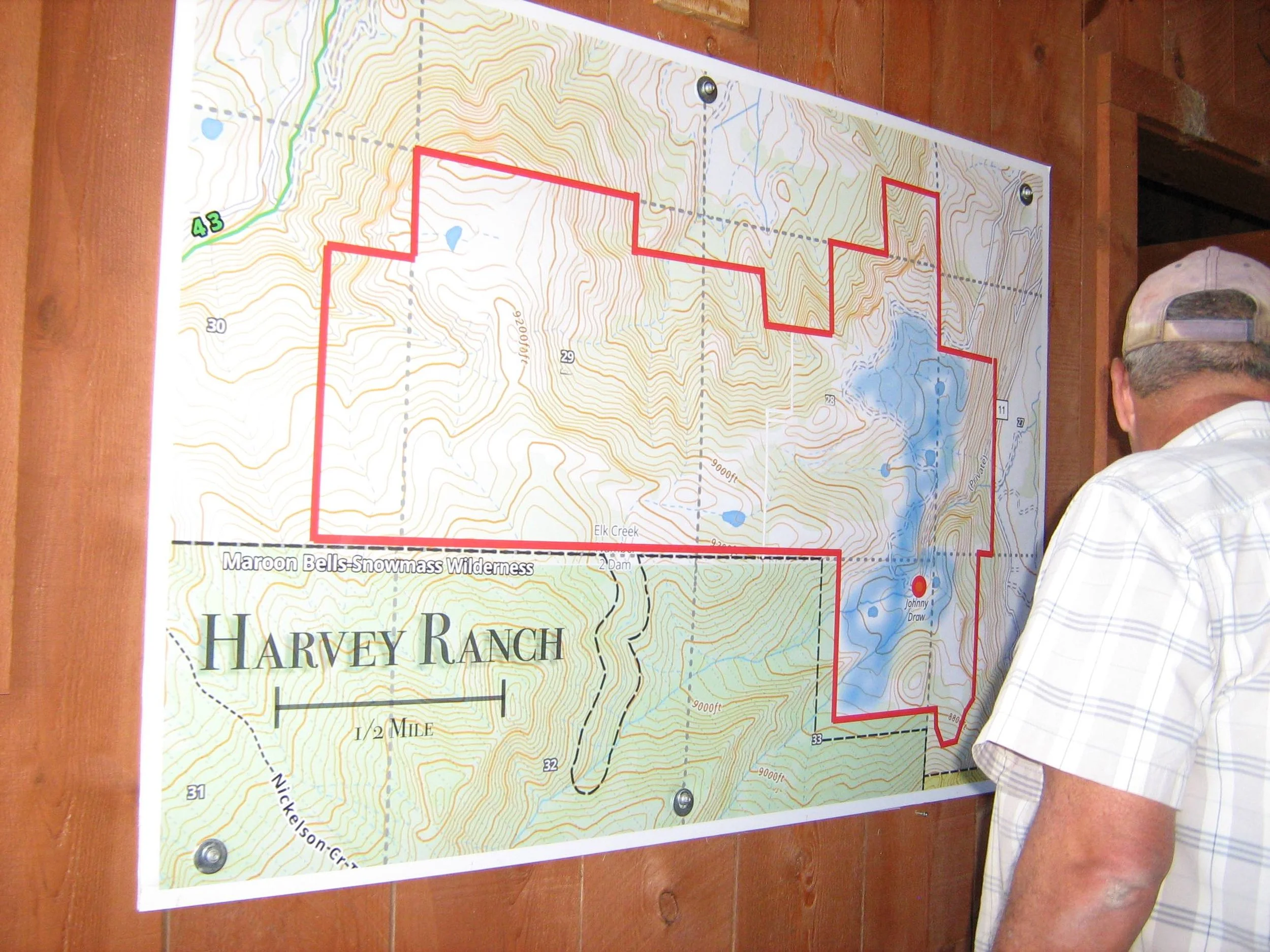
The Harvey Ranch is preserved under a conservation easement that my grandmother Connie Harvey and some of her children fought doggedly to acquire and maintain in the early 2000s. Under the easement, most of the land can’t ever be legally developed, in turn tanking the property value, something that matters only if Connie had bought the property with the intention to sell. She did not. Instead, she kept the ranch running until one of her sons took over the operations. Running cattle on the ranch fulfills the easement’s requirement that the land be used for some type of agriculture, as well as maintaining the senior water rights that came with the land—which, in the arid climate of the western United States, are not easy to come by.
The ranch is not the only piece of land that Connie worked to protect. After Congress passed the Wilderness Act in 1964, Connie worked with her friends Dottie Fox and Joy Caudill to expand the area of the already designated Wilderness in the Gunnison and White River National Forests of Colorado. They worked hard but they did not work alone, founding the Aspen Wilderness Workshop in 1967 to organize volunteers who walked perimeters of potential wilderness. These walks led to careful mapping of land that eventually became five Wilderness areas spanning across hundreds of thousands of acres of high country.
Connie bought the ranch in Old Snowmass in 1962, two years after she and her husband, Harold, moved to Aspen and bought a home on Maroon Creek for what would now be considered a shockingly low sum for anywhere in the country—let alone in Aspen. They raised six children, and around them Aspen exploded into a millionaire’s—and eventually billionaire’s—playground.
Aspen grew popular with tourists after the wealthy Paepke couple of Chicago visited in the 1940s and, completely enchanted, decided to turn the town into a cultural hub and intellectual escape from the hustle and bustle of metropolitan life. Walter Paepke founded the Aspen Ideas Festival, the Aspen Music Festival, and the Aspen Music School, attracting visitors who also fell in love with the town, which became the quirky artist-filled, ski bum paradise that Paepke envisioned. He invested in a certain type of Aspen: one where people would gather to share ideas and culture. But as the crowds grew, other investors had different ideas. Before long, the nation’s richest families were purchasing second homes and ski chalets, bulldozing historic Victorian-style houses to build modern, glass-fronted mansions.
Walking down the streets of Aspen today is like walking through a theme park for the one percent. The town is in the throes of commercial development after real-estate developer, Mark Hunt, entered the scene from Chicago in 2009. New businesses consist almost exclusively of high-end retail stores, restaurants, and hotels, which have been replacing decades-old cafes, bars, and shops at an accelerating pace. Passing through as a layperson is entertaining in its own right—it’s always fun to wonder what could be on a plate of pasta to make it worth forty five dollars and why a store that sells three thousand dollar dog jackets doesn’t require a copy of your tax records for entry. While it is entertaining, the town is also beginning to lack the soul that made it so popular in the first place.
My grandmother also invested in a different Aspen. She saw the immense human capacity to instigate change (for better and for worse), and while some people came to Aspen with dollar signs flashing in their eyes, she focused intently on using her time and privilege to preserve the land as it was, rather than seeing only what it could become. How did Connie become so conscious of the human capacity for reckless selfishness that threatened the land she valued so deeply? Although it’s impossible to say whether it was nature or nurture, her mother, Muriel Gardiner, shared Connie’s unwavering principles.
Born in 1901 to a wealthy family in Chicago, Muriel grew up with a keen perception of the privilege her inherited fortune granted her. In her teenage and college years, she became uncomfortable with the extravagance that was expected of her and sold most of her belongings, including her prized collection of books, the money from which she sent to Austrian students who were struggling to survive amidst post-WWI inflation. After graduating from Wellesley in 1922, Muriel spent two years in graduate school at Oxford.
Afterwards, she went to Vienna in 1926 hoping to be psychoanalyzed by Sigmund Freud. He did not take her on as a patient and she was instead accepted by a colleague of his. Her psychoanalysis took years. Afterwards, she earned her medical degree at the University of Vienna and became involved with the Social Democratic Party of Austria. The years she spent in Austria were politically turbulent, and as new parties took power, the Social Democratic Party was banned and all of its operations went underground. Muriel used both her financial privilege and the leeway that was granted to her as an American student and a woman, to assist the Party’s fight against fascism. She spent the years leading up to WWII risking all that she had to defend Western ideals of democracy: smuggling Jewish people and members of the Resistance out of the country when their lives were in danger.
Muriel had little reason to stay in Austria in those fraught years leading up to the war—beyond her own principles and moral issues with the rise of fascism as the country radicalized. She married twice there and had her daughter, Connie, with her first husband. Her relationship to her daughter was surely complicated as she sacrificed her time and security to aid the resistance. At the beginning of World War II, she fled with six-year-old Connie and her second husband back to the United States, where she continued her work to resettle refugees from Europe.
Muriel took some issue with her wealth. Before her return to America, she gave up the stability that people of her status tend to cling to so tightly, working with and donating to political parties that aligned with her own values. She identified aspects of the world she loved that appeared to be threatened by one force or another, and used her money and free time to battle those threats.
This ethos, passed down from Muriel to Connie, lives on at Harvey Ranch. The land sits adjacent to the White River National Forest,x which contains 800,000 acres of wilderness that Connie dedicated years of her life to protecting. Unlike the wilderness, however, the condition of the ranchland is at the mercy of the cattle and the people who manage them. Ranching is not inherently beneficial to the land, but between Connie and some of her children, an immense amount of attention has been given to maintaining biodiversity on the ranch and managing the cattle responsibly. Land, cattle, and ranchers form a web of dependence. If the land is healthy, chances are the cattle will be too, and good health literally pays off when it comes time to auction off the cows for finishing.
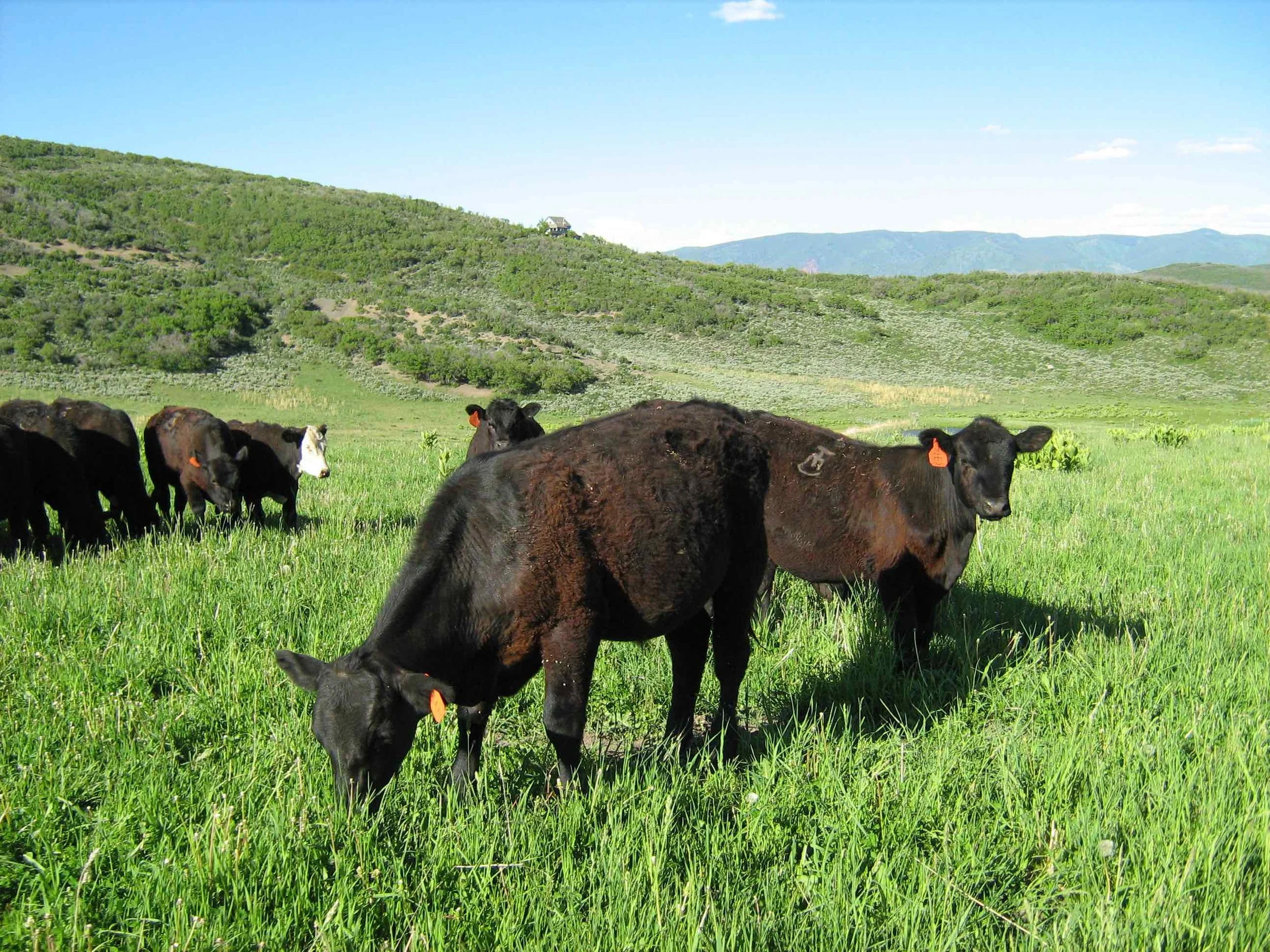
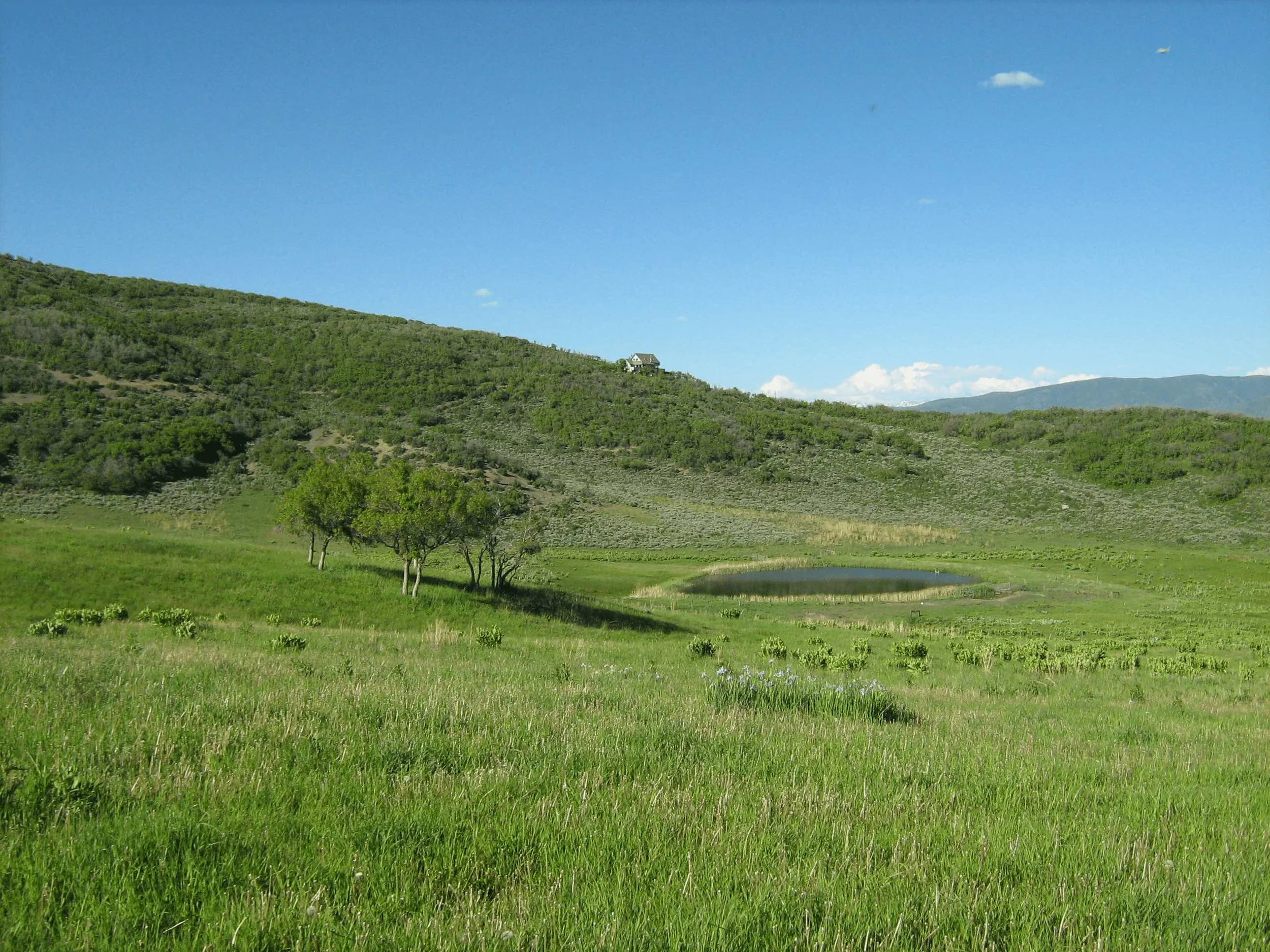
Not long after the conservation easement was placed on the land, Connie’s youngest son, Mark, began taking over ranch operations and is now in charge of management. On a horseback ride in late July, he jumps off his horse to pick fetid marigold, whose scent signals that fall is just around the corner, and hounds tongue, with its cleverly adapted burrs that guarantee the plant’s proliferation. He points out the yellow leaves on the scrub oak changing color unseasonably early. He says this is the driest summer he has ever seen and, during a ride in the white four-wheel-drive side-by-side, brings me to one of many ponds on the ranch. The pond was fenced off ten years ago because the thirsty cow’s hooves were degrading its banks, turning the vegetation at the water’s edge into a dusty circle. Now there is a solar powered pump that pulls water from the pond into the metal trough about fifty feet away, and the banks are once again lush with reeds and grasses. This is the first summer in Mark’s memory that the water level in the pond hasn’t been high enough to fill the trough, leaving it dry.
The West has a water problem—it always has and it always will. There are lawyers who specialize in water law and it’s no wonder: millions of people live in cities that would be uninhabitable if it were not for the ability to move water from the Colorado River to taps and toilets in Los Angeles and Phoenix. But they are not the only ones who count on that dwindling water supply. Every farmer and rancher in the West depends on water to make a living. The Harvey ranch is lucky to be located in the mountains where much of the water that eventually drains into the Colorado River first falls to the ground. The amount of water that is available to irrigate fields and fill troughs depends entirely on how much snow falls in the winter and melts into the creek that flows past the ranch, and then on how much it rains in the summer to maintain those water levels. This year is proof that the once semi-dependable water cycles are collapsing.
Sixty years ago, when the Wilderness Act passed, Connie—like so many others in her country—rode the wave of hope of preserving the land around her. The greatest threats to the land were easily identifiable entities who the government was capable of regulating with pressure from people who cared. Climate change was surely not on anyone’s mind as people were fighting for better futures and winning, but the wave crashed and flattened as United States citizens watched the brutality of the Vietnam War unfold on their televisions. On the heels of the war and the 1970s energy crisis, the country was in a state of moral disarray. President Jimmy Carter, in his famous “malaise speech,” tried to convince Americans that they held some responsibility for the fate of the country—which the population did not take well. Reagan stepped into office and his administration prioritized corporations over people, while citizens became little more than consumers in the eyes of the government. Much of the current leadership in the United States must now be convinced that people matter more than profit because under the current system, they don’t.
Today, as summer progresses, wildfires explode across Colorado. A smoky haze has settled on the Roaring Fork Valley, now characteristic of summer in the West. Environmental concerns have shifted from whether or not swaths of forest will be lost to chainsaws and dynamite to wondering if they will burn in the next unnaturally hot fire that rips through, taking other lives and homes with it. Rules can be enforced to protect the land from extraction, but once lightning strikes in a bone-dry field the resulting inferno can’t be regulated. The steady, crushing weight of life at the mercy of once preventable catastrophes exists not only in seeing photos of entire neighborhoods reduced to charcoal, but also in stepping outside and breathing in deep inhale a lungful of smoke. In one of the driest summers the Western Slope of Colorado has ever seen, many of us are likely thinking not if, but when.
The sterile, soulless streets of Aspen and the looming smoke that has settled over the town are both evidence of the blind greed fueled by the promise of wealth. Both Muriel and Connie grew up having this promise fulfilled, but they were not satisfied by sitting around and counting their dollars. They didn’t just throw money at problems either. Their instincts pulled them away from the quiet and unconcerned luxury they could have had, towards lives of action and organizing for the causes they believed in. They did not work or donate for recognition or to have their names engraved above library and hospital doorways. They each spent much of their time working against the very problems that have exploded onto the main stage of the United States today, from rampant extractivism to rising fascism.
One summer evening, my cousin held a birthday party at the upper ranch house, overlooking a vast meadow and the sand arena where horses are trained. Dinner is ranch-grown hamburgers and short ribs, cooked outside on the grill. We look over the land while we sit at a table on the deck and watch the mountains turn pink with sunset as an alpine chill sets in. I have a friend visiting who makes a comment to one of my aunts about the legacy of the ranch and their work to protect it. “Well,” my aunt jokes, “Connie really cared about four things: land, family, cows, and heavy duty machinery.”
We all know that in a place like Aspen, it would be much easier for the land to fall into the wrong hands and become dotted with McMansions than for it to remain exactly as it is, but, all jokes aside, money is nowhere near the top of Connie’s list. On her ranch, it shows.