
The Physical Plane
Los Angeles artist Clyde Corley has forged a new path. After a successful career in commercial art direction, he’s departing from what he’s known for and developing a new, subversive signature with sculpture.
By JANE LEWIS
Photographer ELLIE CARTY
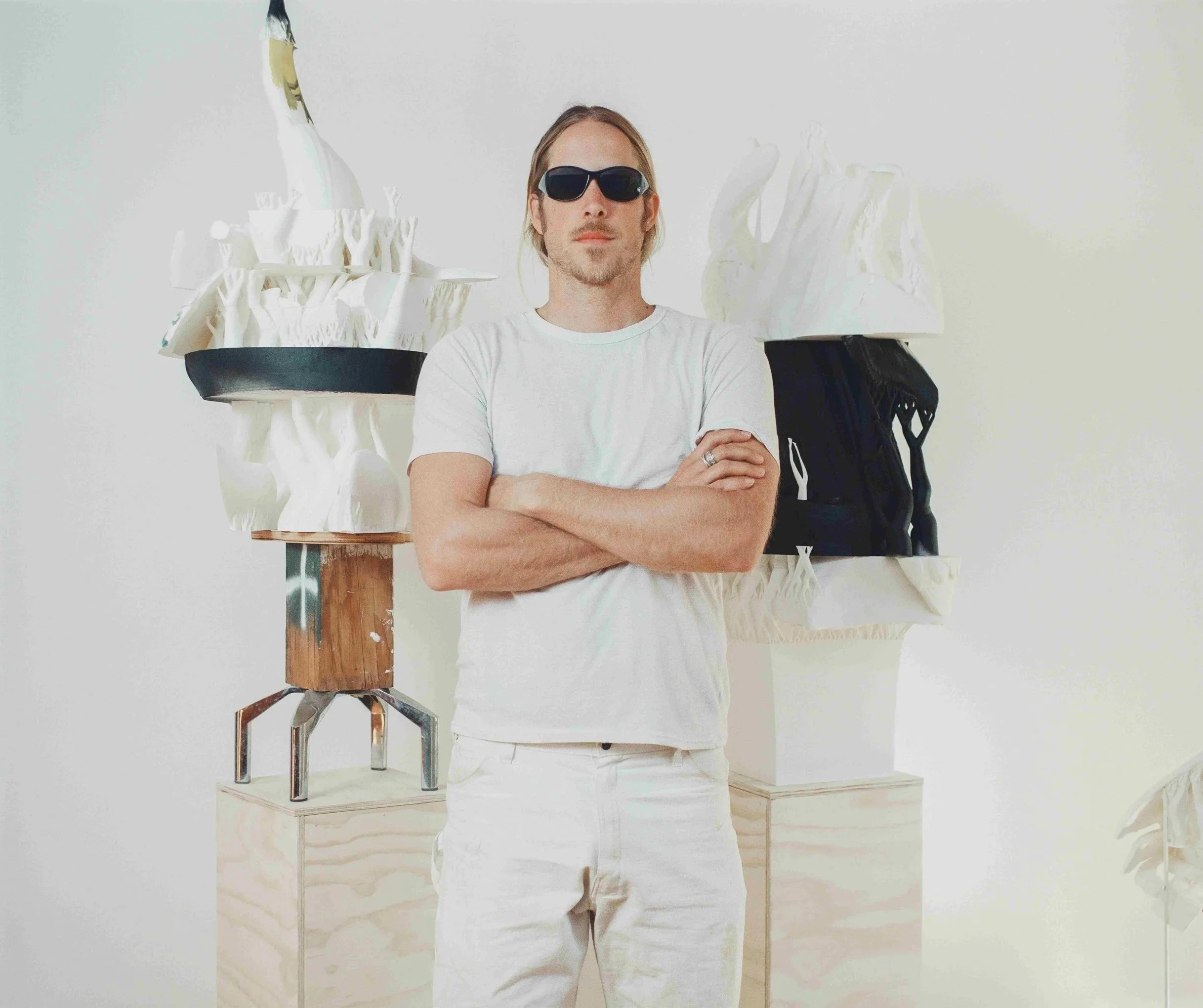
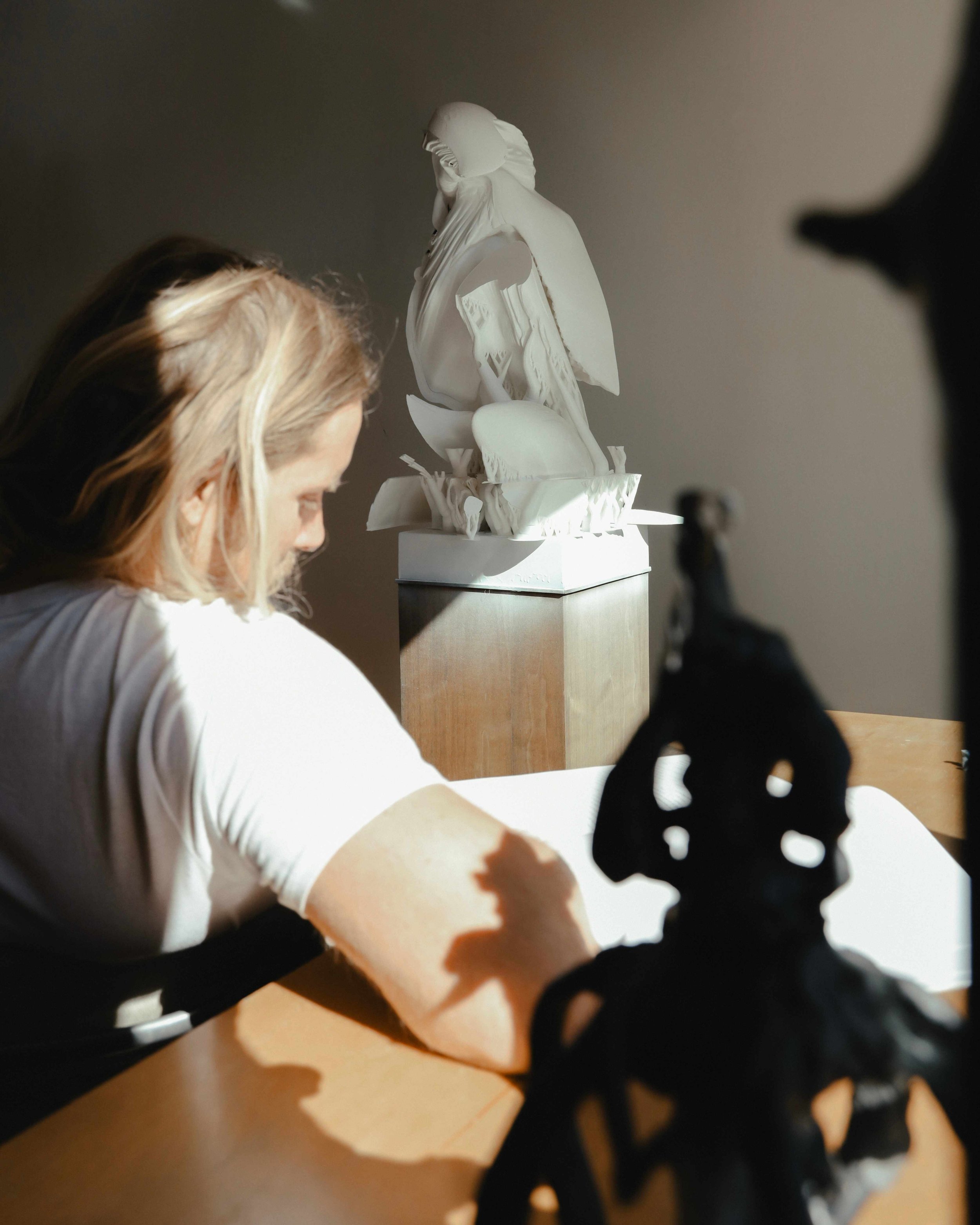
Reclined in his sunny home studio nestled right outside Los Angeles in the hills of Topanga, artist Clyde Corley is nearly out of breath as he recounts his life leading up to this point.
For the last ten years Clyde has been an art director, defined, in his words, as creating cohesion among visual collateral. He begins by breaking down each job into simple points; every project across art, fashion, and commercial spaces, has principles. One must consider visuals, literature, audience, and most importantly, concept. His clients have included household names of every industry: from Adidas and Birkenstock to Guns N' Roses and Takashi Murakami. Brands build intricately constructed worlds, and finding the balance between them has been the 34-year-old’s expertise for over a decade.
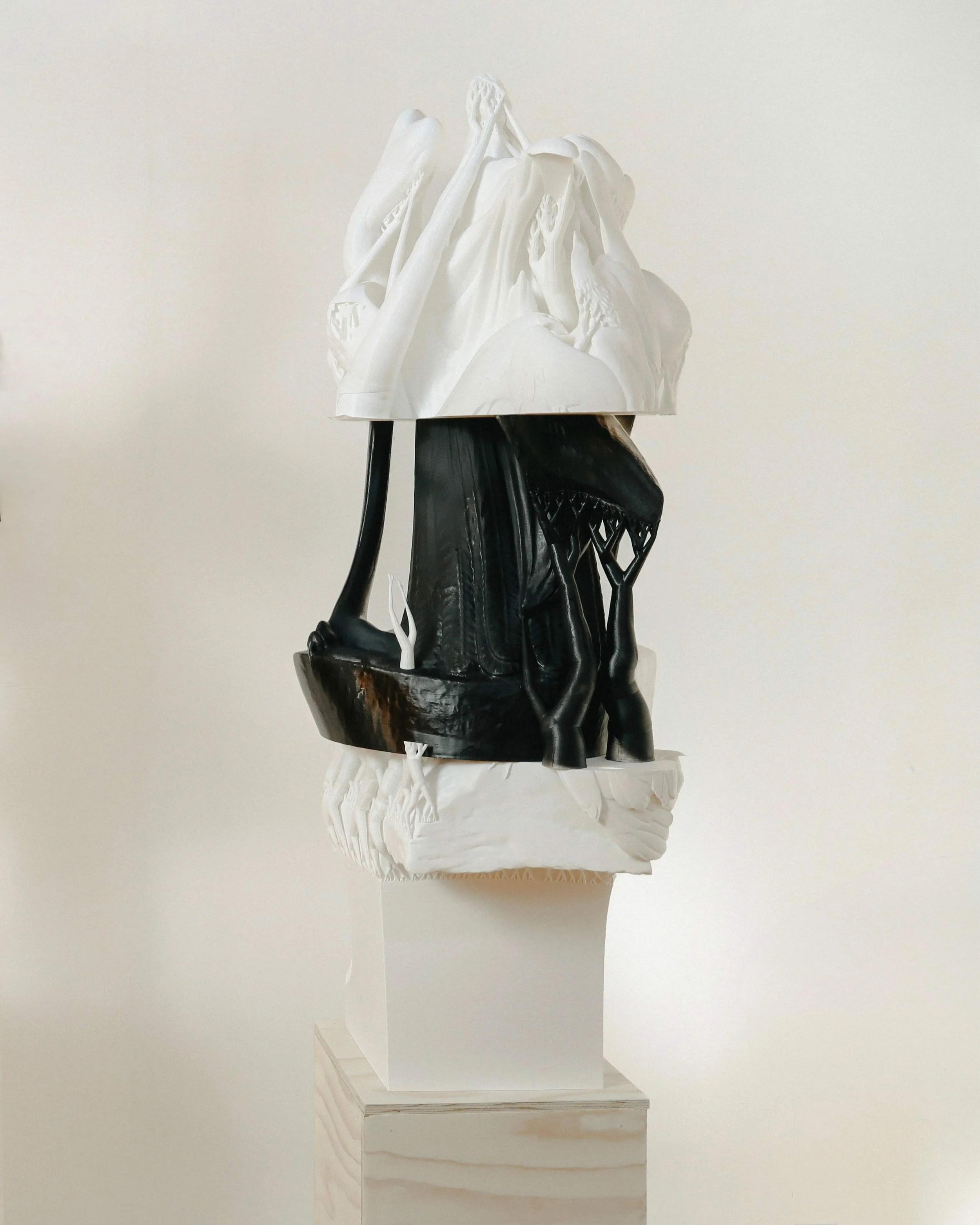
Now, Clyde shifts his energy into the next phase of his creative career. Really, it’s a return to the practice he started in his early 20s after enrolling in sculpture classes at Santa Monica College. Back then, his creations were carved from granite. Today, they’re 3D printed porcelain forms that are twisted, warped, and sprawling into ambiguous, animalistic forms. Feathers are a constant motif in his work, referencing a mythological fight that—according to Clyde—is within every one of us. “It's this ancient [Biblical] concept of an eagle versus a serpent, logic versus sexuality,” he explains. “These two fundamental concepts are a part of the human struggle.”
His creations capture this tension in mutated, winged forms. The delicate nature of porcelain results in cracks and imperfections in its surface. Despite this, he reveres his creatures as physical manifestations of a physique that persists no matter how many times it’s broken. After experiencing open heart surgery as a child, Clyde has felt a lifelong connection to a realm beyond his physical body. “Being a survivor can be ugly and beautiful, yet you can rip through life and emerge as this glorious being, even if you're a little tattered up and kind of gnarly,” he explains. His creations feel like biblical angels, the ones with wings splayed at every angle, eyes and limbs protruding from flesh: part animal, part human, part Clyde.
“It’s found object art, except now we find things in the digital space.”
As the artist sits at his desk, light shines through tall windows onto a wood-paneled wall. It’s the kind of Southern California sunshine that has fed the artist his entire life, raised in Los Angeles by his German mother and Missouri-born actor father. California is everything to Clyde: the food, the nature, and the wide culture of progressive, multicultural acceptance. He’s an avid surfer towering far over six feet tall with long blonde hair and bare feet—the perfect picture of a chill, laid back, LA man.
He speaks smoothly and casually, unafraid to follow his tangents to see where they lead. After leaving California to attend and subsequently drop out of Tulane University, Clyde became a sign painter, utilizing his steady hand and meticulous attention to detail for the lettering for delis and concert venues around the city. Simultaneously, he practiced as a graffiti writer, tagging LOOS everywhere he could as an ode to Austrian-Czechoslovak architect Adolf Loos—an inspiration to Clyde as an early pioneer of modernist architecture. Life eventually led him back to LA, where he enrolled in sculpture classes and fused his art and graphic design background, using it to break into art, music, and fashion circles. Art direction, Clyde describes, isn’t crafting products, but rather the aspiration surrounding them. “You're dealing in metaphysical principles of form and light, heroism and idolatry,” he explains. The playful, conceptual elements of the job are what excite him. They’re also what translate into his tangible artistic work.
Up to this point, Clyde has barely taken a breath since he began speaking. I’ve asked him how he defines art direction, now I must know how he defines art.
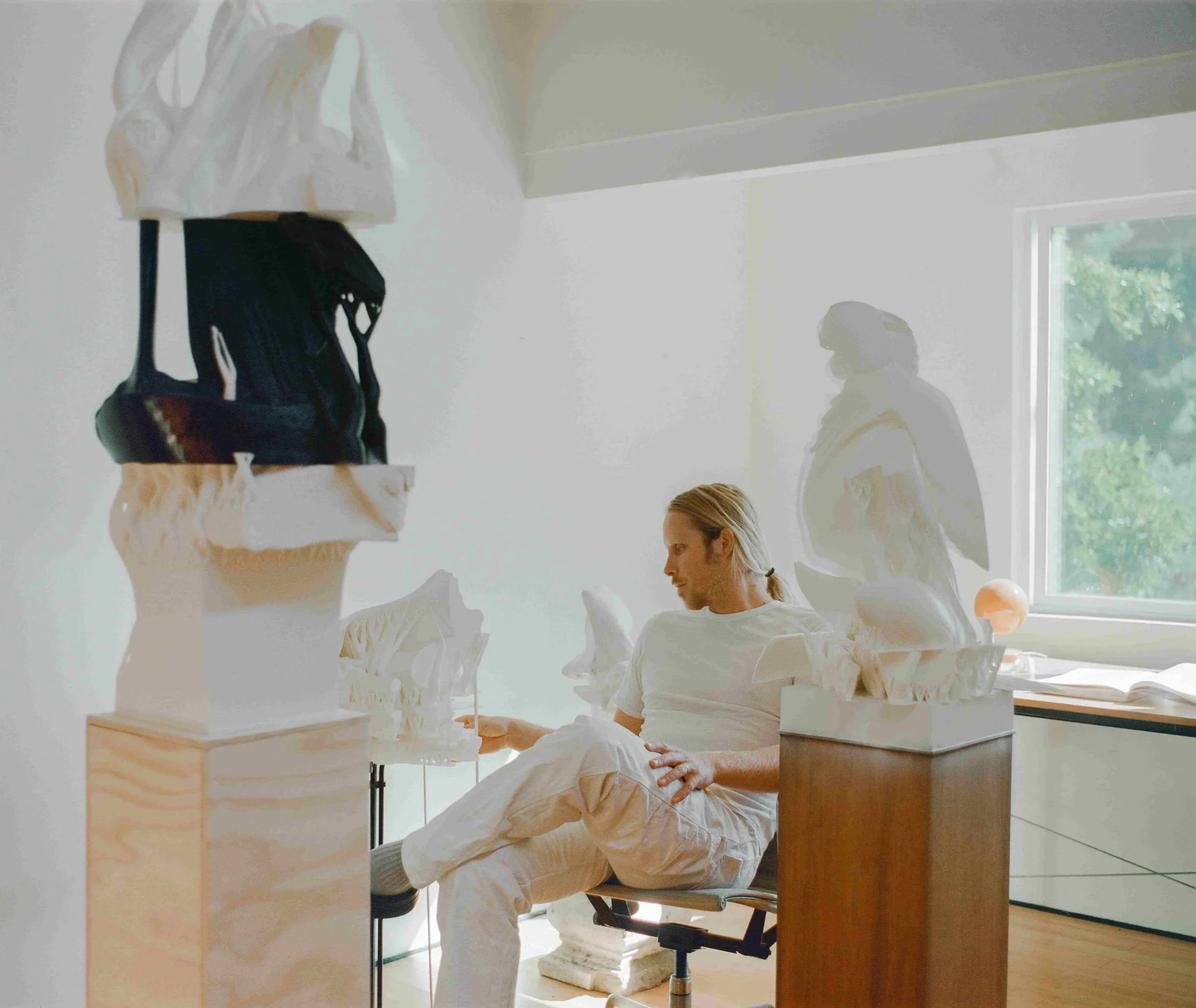
For the first time, he pauses, and we sit for ten slow seconds of silence between my prompt and his response. His chest rises and falls with his breath. He stares at something that isn’t there, something he can see that I can’t. “In this world, in this life, in the physical plane, I think art is a physical version of agreements that we've made with the spiritual world,” he answers. “The work I'm doing now is really about celebrating the antithesis of my art direction. I'm not selling something. There’s no inherent utility or function [to my work] other than what it can do in a physical space, what it can do in your brain.” No matter the discipline in which Clyde chooses to work, the prioritization of balance remains: nature versus technology, physical versus spiritual, instinct versus logic.
“I love showing the process as a product.”
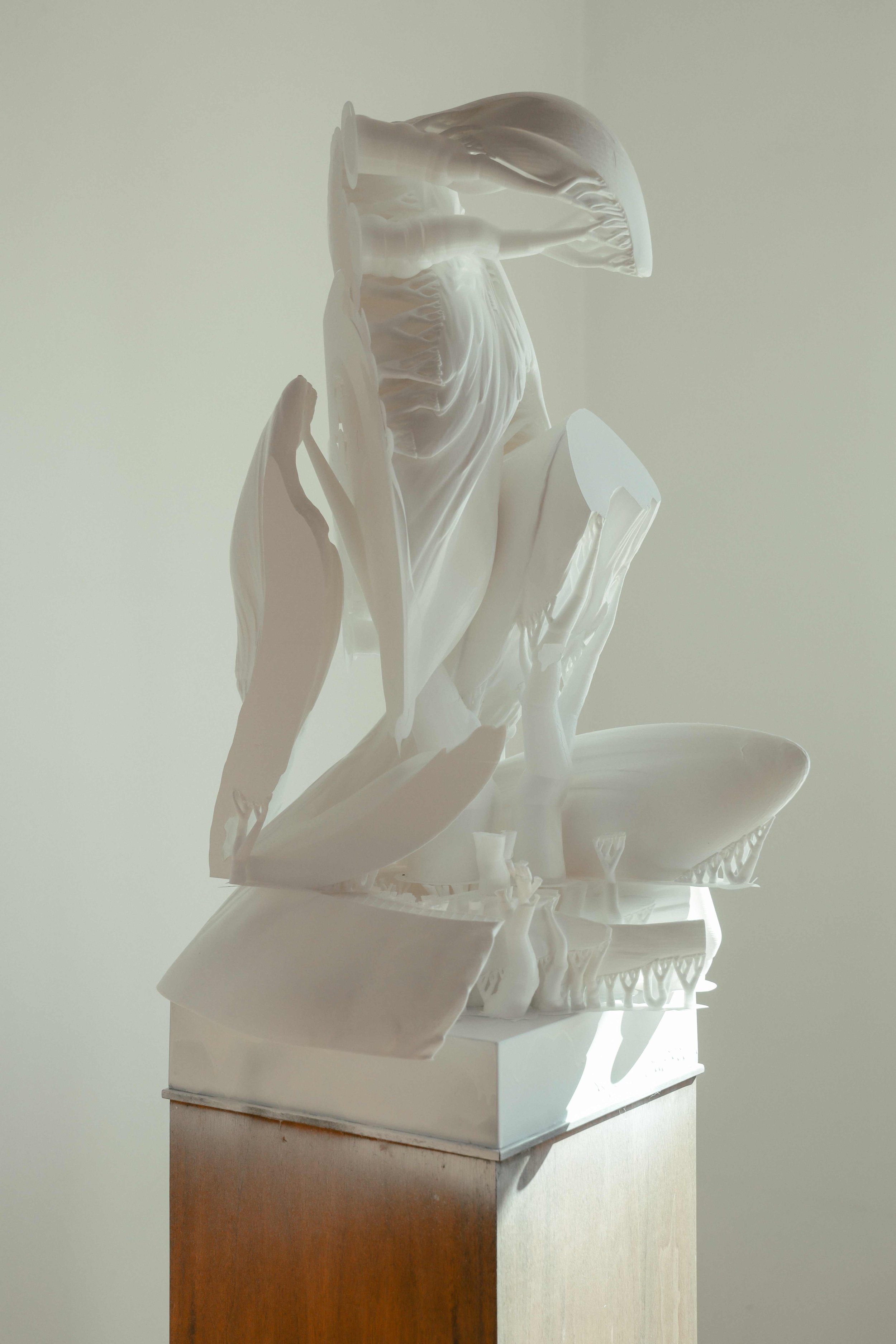
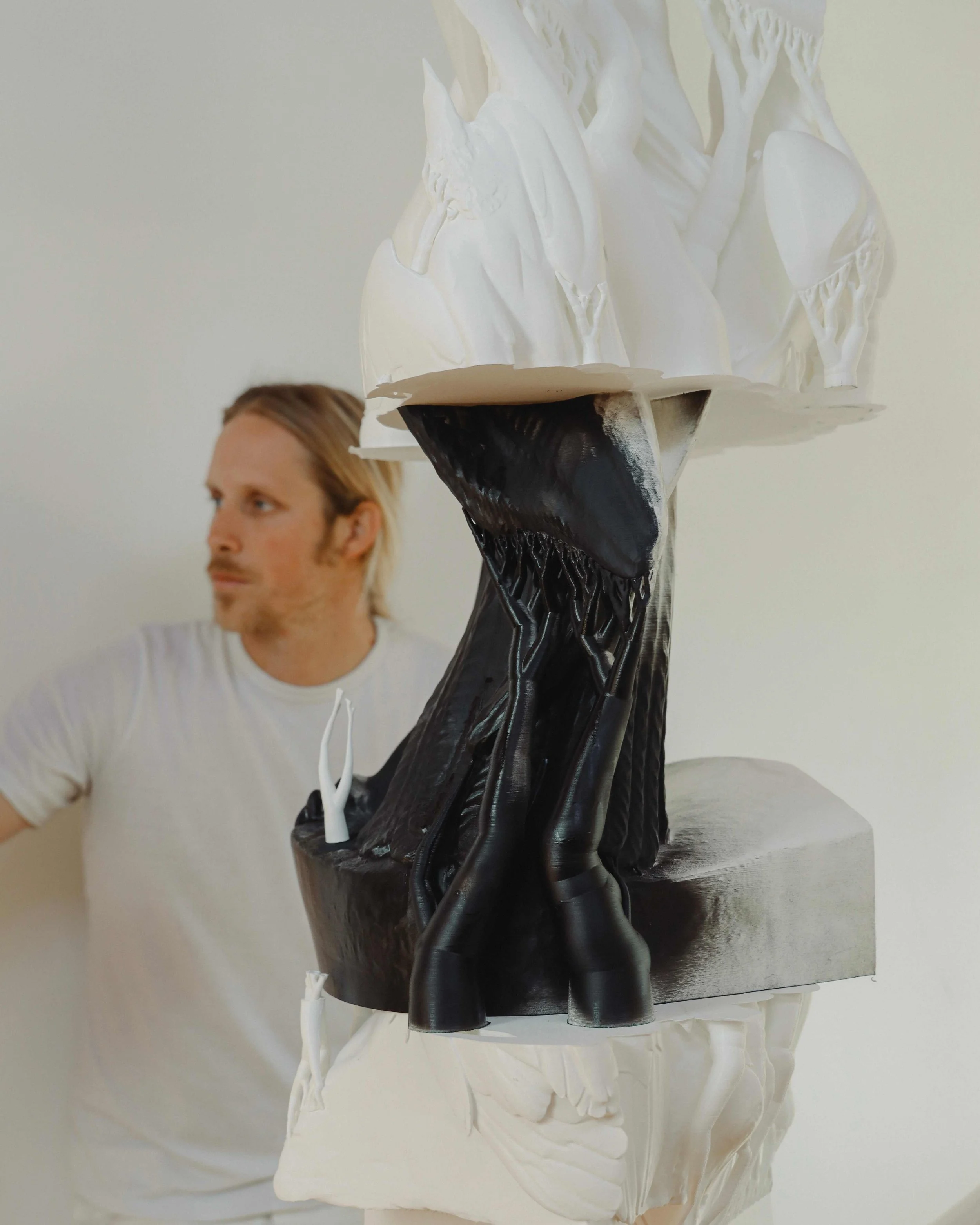
Porcelain—a 3,000-year-old form of pottery originating in China—is piped through the 3D printer, a machine invented just over 40 years ago in the United States. Even in medium and production, Clyde strikes a balance and plays in the contrast between modern and ancient practices. The printer is fed a digital 3D model file and funnels liquid material into thin stripes, building layer by layer, until the model is complete. But it comes with limitations. The printer is the size of a large cardboard box and cannot make anything bigger than itself. So Clyde severs his sculptures into multiple pieces to be printed and puzzled together. In order to prevent the material from breaking as it’s piped, the machine supplements by making disposable supports, meant to be snapped off when the project is completed. Clyde, however, is resistant to discard what is meant to be discarded. He often goes dumpster diving for found objects, recovering concrete plinths and items that he can incorporate into his work. Similarly, he keeps the 3D printed supports in his sculptures. “I think messiness is cool,” he grins. “I love showing the process as a product.” The supports conveniently resemble another motif present in his work. Tree roots—inspired by massive above-ground trees that twist around one another and plunge into the earth— appear in his sculptures as thick and thin arms, reaching, supporting, and distorting.
To make the 3D models that he programs into the printer, Clyde browses the internet for 3D scans, uploading them to the computer software Blender. He sources scans of taxidermied birds, falcon sculptures, furniture, nuts and bolts, and, crucially, sculptures of antiquity. “They're assemblages,” he explains, referring to the formal term for his method of making. “It's found object art, except now we find things in the digital space.”
He sees his work as his own propaganda. Ancient Romans deified their emperors in larger-than-life marble monuments, and British imperialists cast their conquerors in bronze. Clyde aims to entirely deconstruct the narrative that these historically revered statues embody. “I want to warp them. I want to break them. I want to show the cracks,” he vows. “In a way, destroying sculptures of antiquity is me wrestling with how I feel in the time we're living in, the components of the patriarchy, this ultra masculine control.”
“The whale doesn’t ask permission to breach the ocean. It just fucking goes for it.”
Clyde’s last solo show was held at Espai Souvenir in Barcelona in 2024, titled Men With Wings. Now, he launches himself into the art world once more with full faith in his work and a decade of experience across disciplines, “The whale doesn't ask permission to breach the ocean,” he tells me. “It just fucking goes for it.”
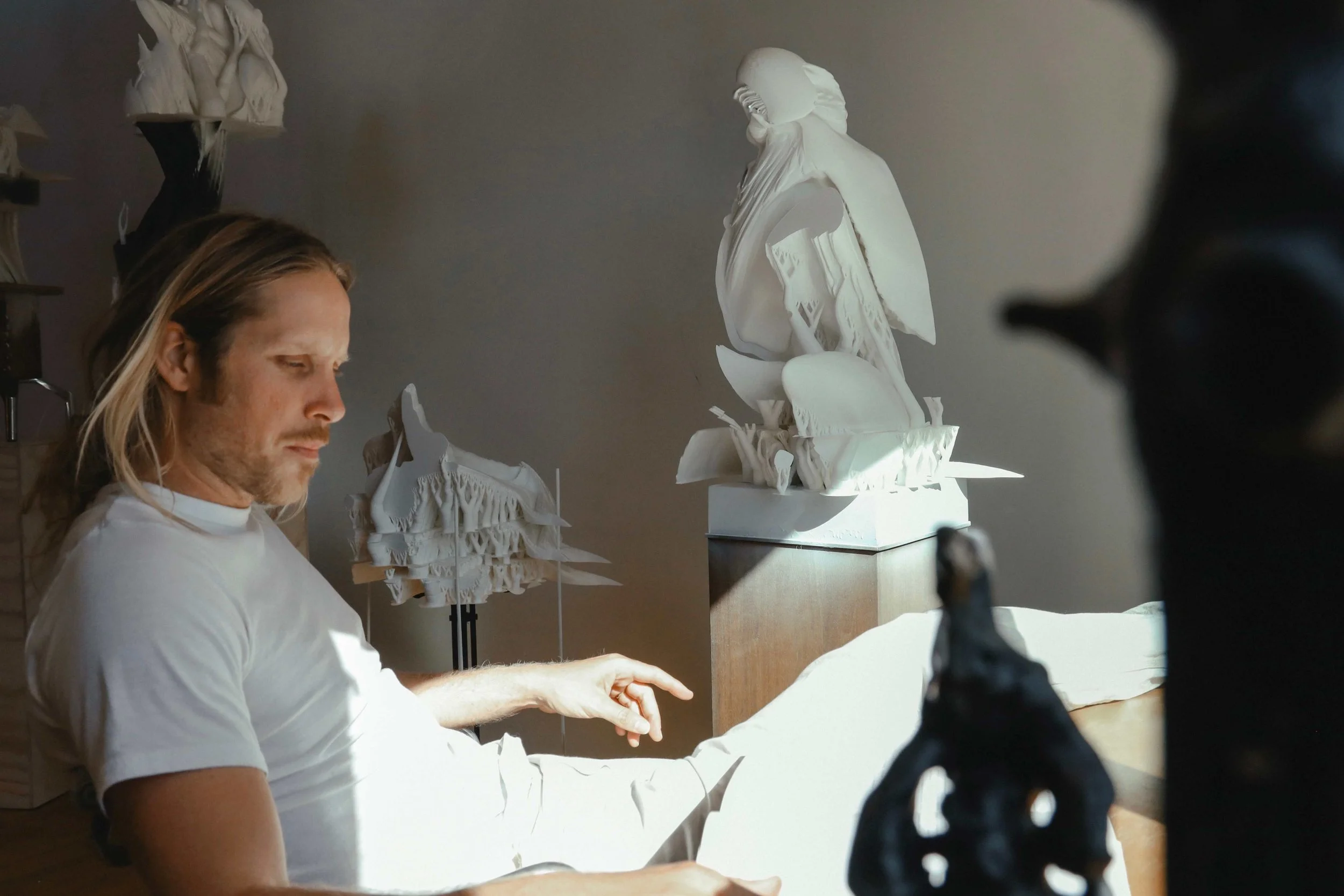
He believes that a sculpture must be all-consuming, occupy a large amount of space, and command a viewer’s attention. Perched on precarious plinths and other found objects, Clyde’s works resemble something washed up on a beach. It’s still breathing, and you are hesitant to approach or prod, so you observe from afar until the ocean carries it back out to sea. Organic yet synthetic, ambiguous yet precise. The balance persists.
In collaboration with Clyde Corley.
This story was first published in print for Bias Cut 03: The Signature Issue.