
Following the Thread
For artist Tess Crockett, growing up is a process of stitching together her memories to capture play in her colorful constructions.
By EMMA SCHARTZ
Photographer MAISY LEWIS
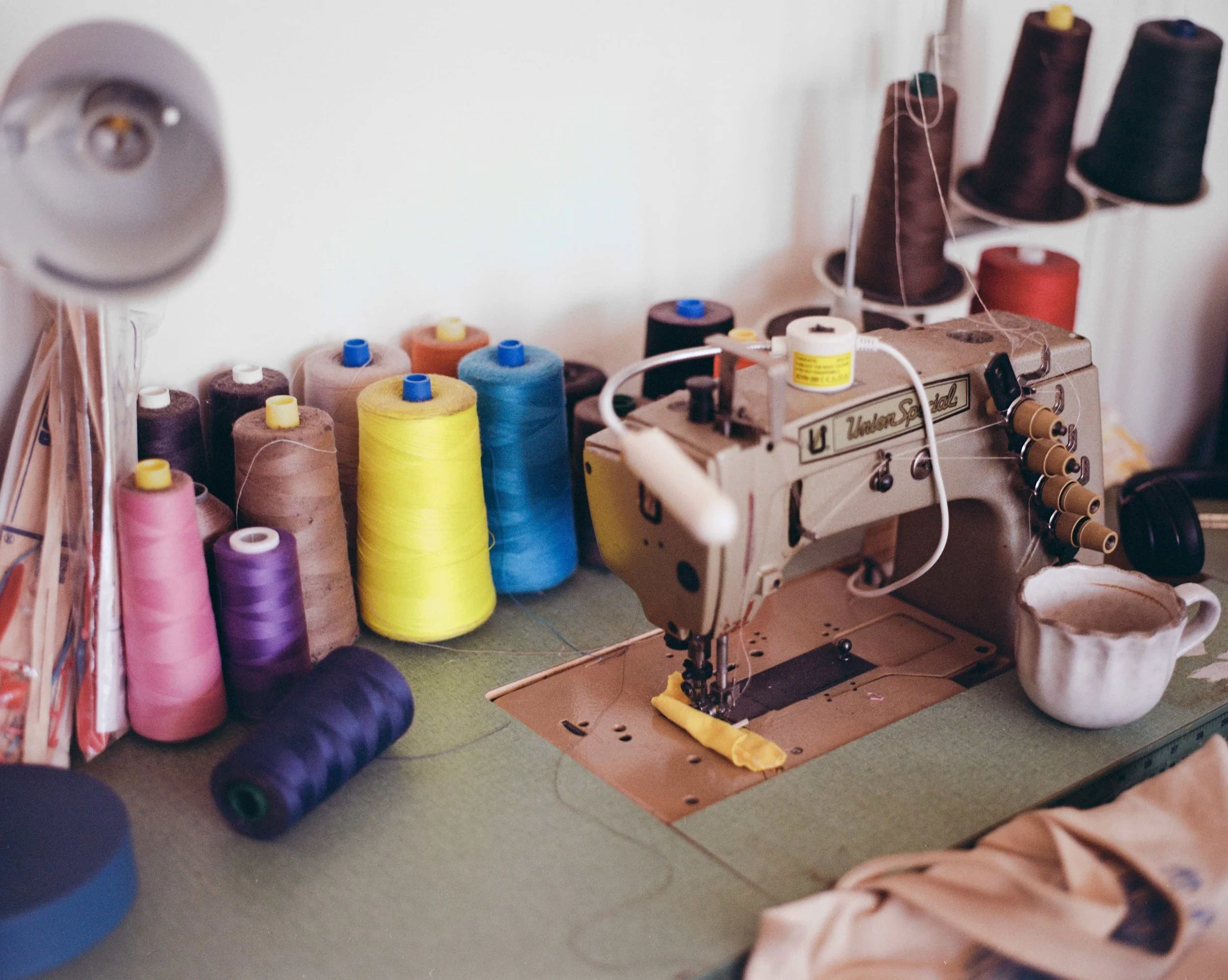
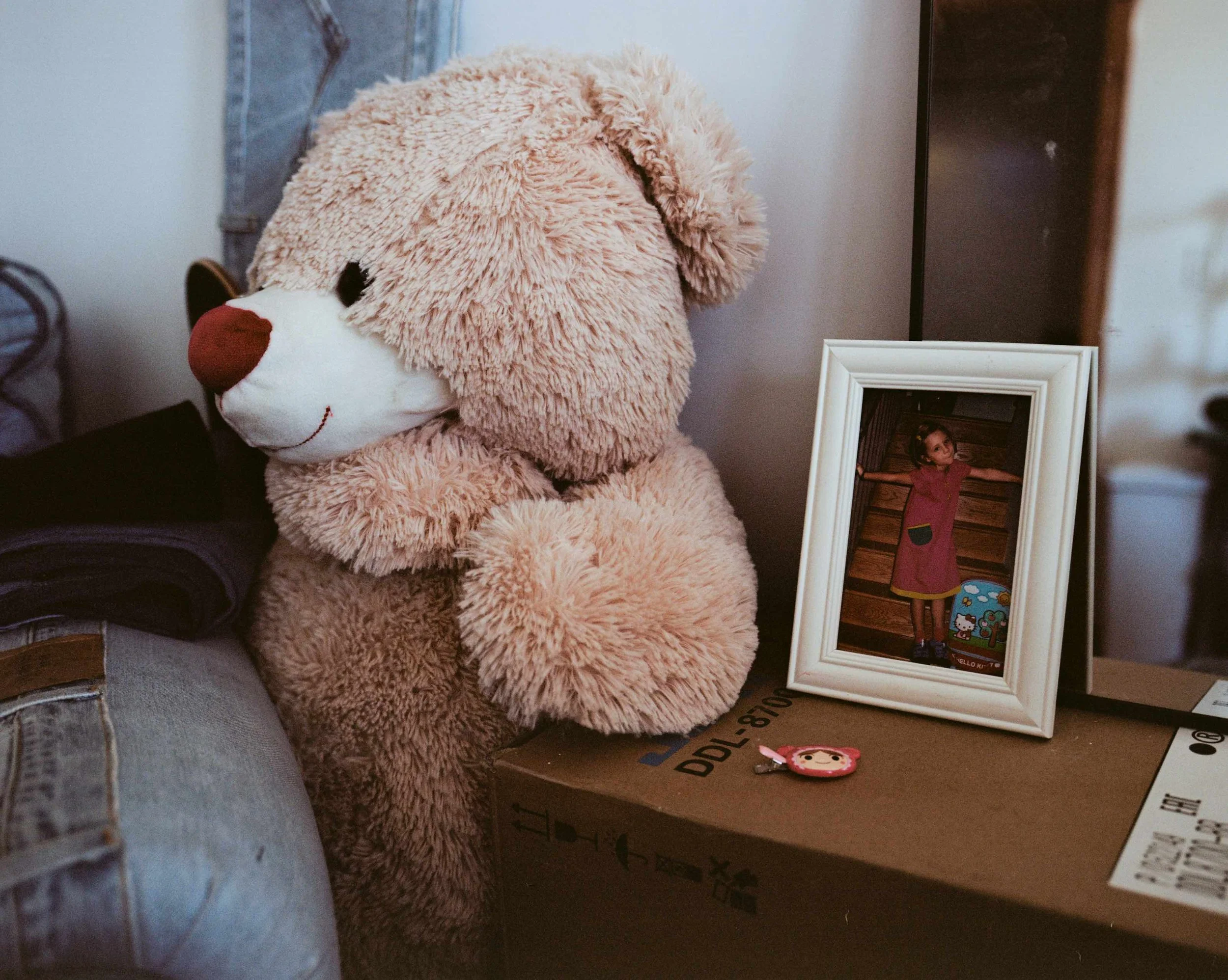
Before her first day of kindergarten, Tess Crockett threw a tantrum. One of those classic, screaming, crying, throwing-a-teal-Keen-shoe tantrums. Her mother sewed a neon pink A-line dress with bright yellow trim, dark green pockets, and two Crayola box buttons for the occasion, but “I remember hating it,” Tess recalls.
We’re looking at a photo of a five-year-old, matching pink socks and a Hello Kitty backpack, posing on the stairs at home. Her eyes aren’t looking into the camera, and I can almost see the levers and gears whirring in her mind, calculating how she’ll wiggle out of the dress into something prettier, comfier, or a better shade of pink.
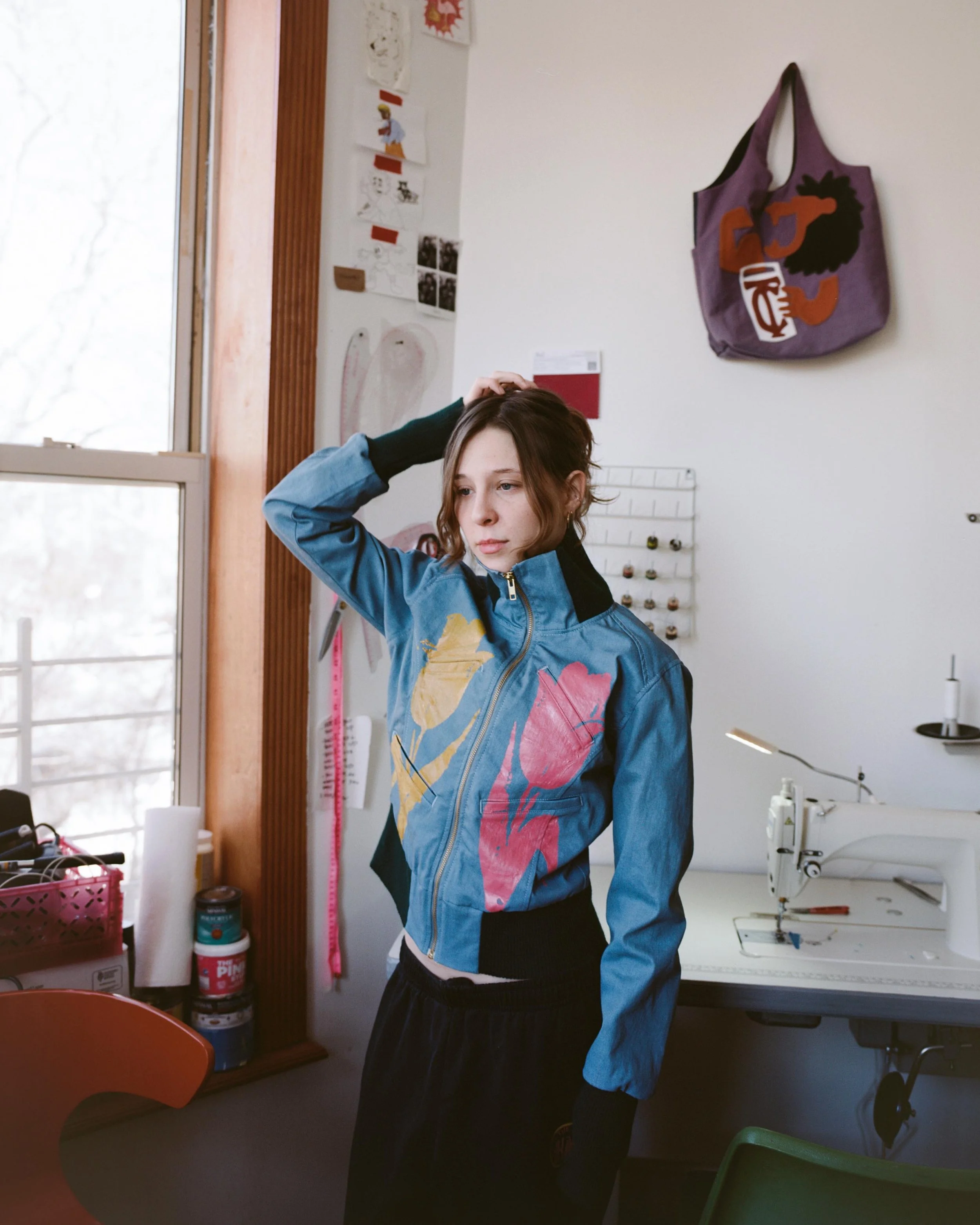
Seventeen years later, sitting in a cotton candy cardigan, she’s showing me the tantrum dress, now refashioned. The dress has grown into a structured patchwork overcoat with bigger pockets and a boxier silhouette, featuring the same clashing colors and tight lines that have come to define Tess’s textile work.
“When you’re younger, your parents or whoever takes care of you, have the opportunity to preserve certain memories,” Tess says. “What I’m remembering now are these specific garments and not other things.”
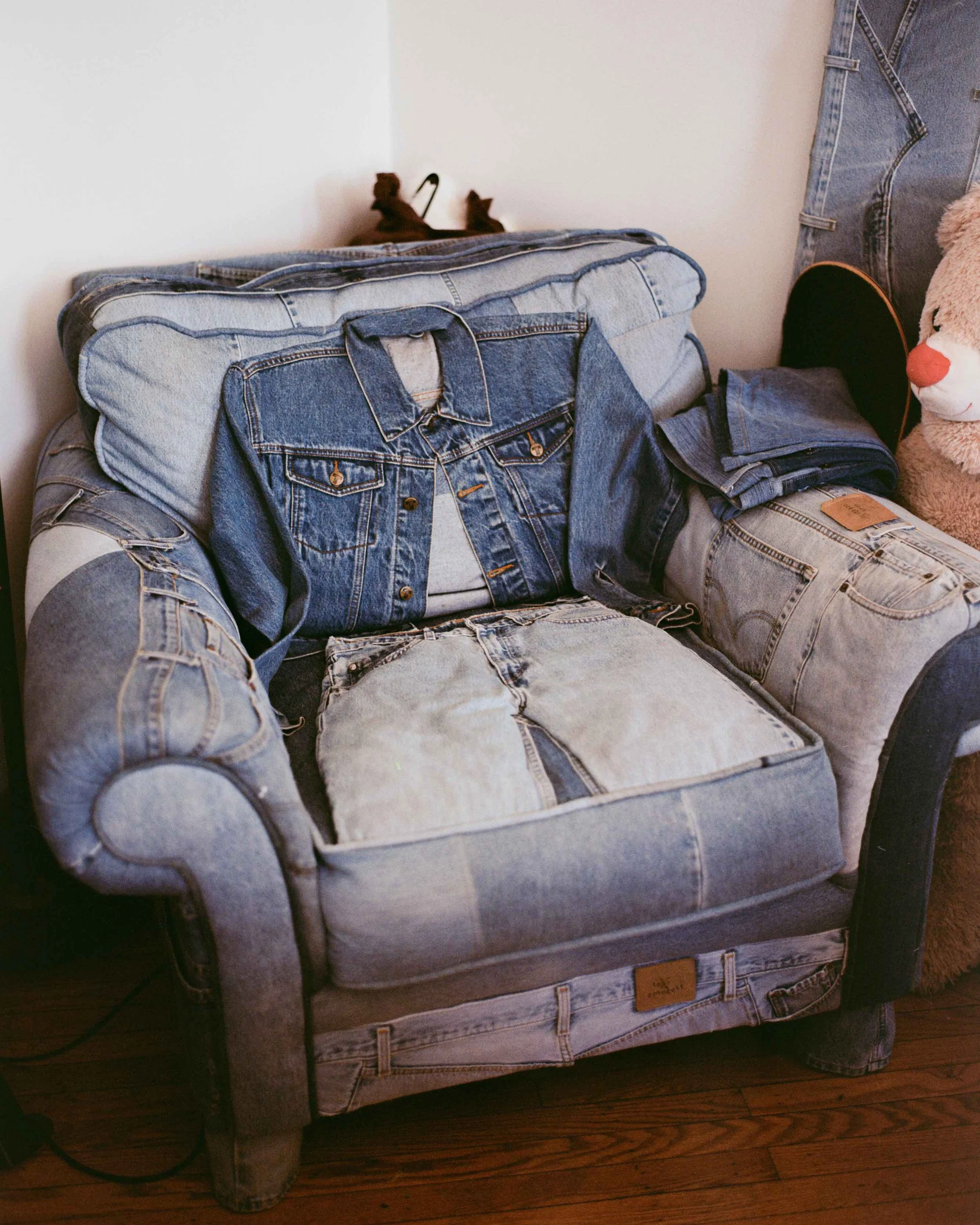
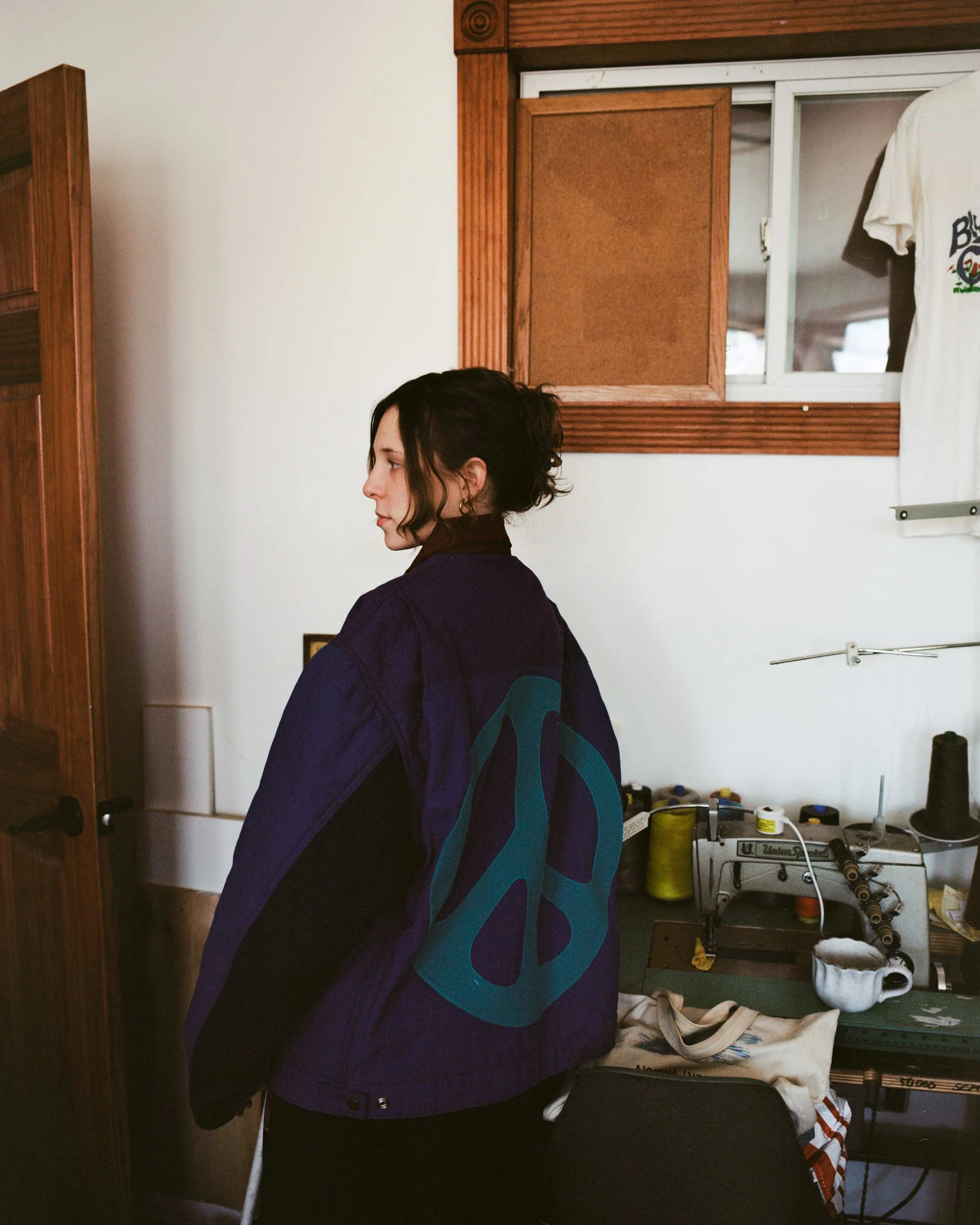
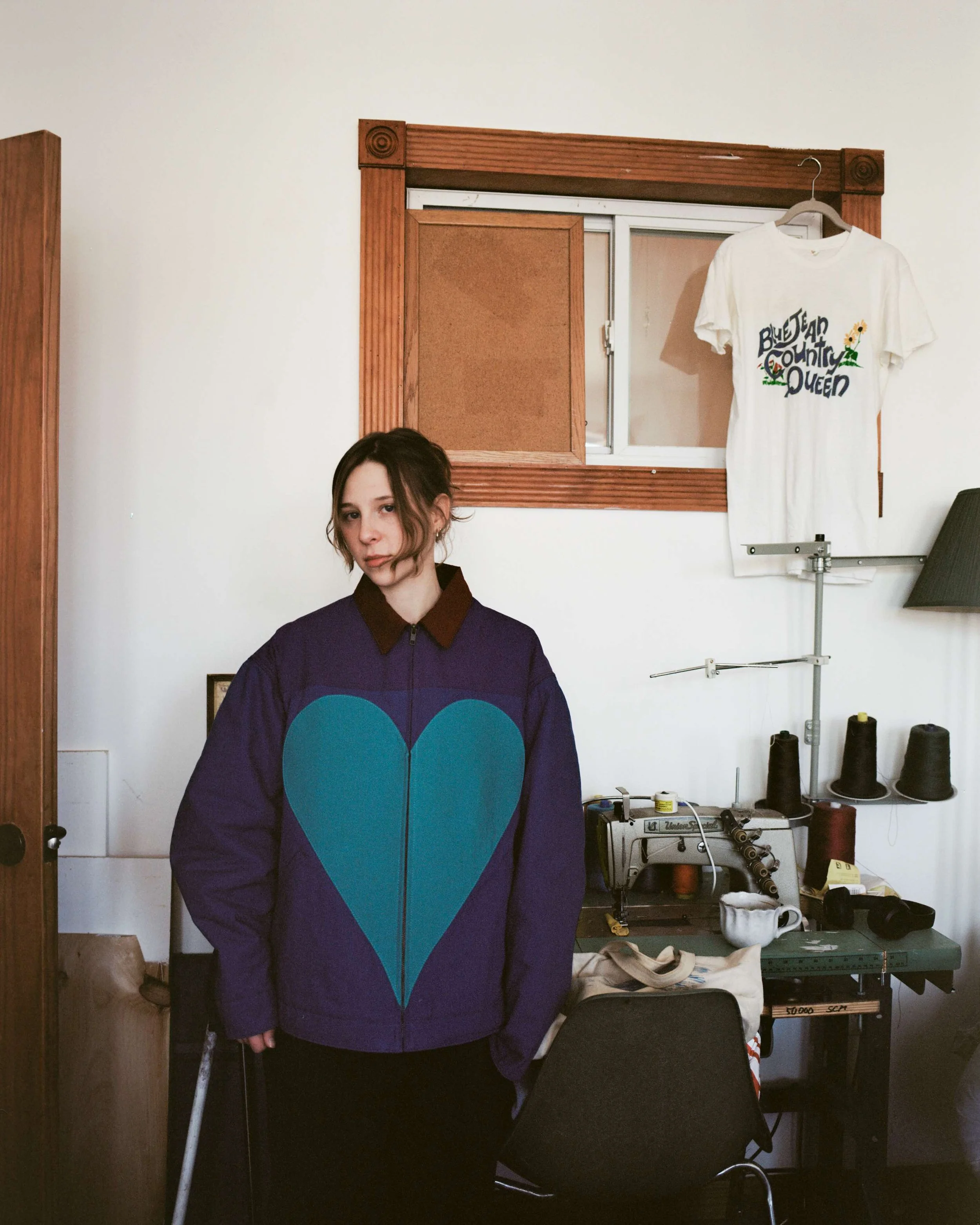
Tess sewed the jacket as part of her first exhibition show in Japan in 2024; now, she’s making three more pieces based on childhood outfits as part of her senior thesis at Parsons School of Design. Tess’s projects range from fitted wool jackets and patchwork bags to denim fire hydrants and teddy bear folding chairs. Each time, a childlike imagination meets impeccable construction in a wink. Why can’t a piece of corn be constructed from jelly beans? Why can’t your denim tie hold a lighter and pens? Tess’s projects are notable for the way they combine the humor of skate culture with vibrant colors and impeccable garment construction, crafting a functional world of whimsy.
Tess belongs to a generation of kids that packed their bags in Los Angeles and shuttled to New York with an Instagram account as their portfolio and their ticket into the downtown social scene. At Parsons, professors have pushed her to think theoretically about what she’s creating, applying articulation to instinct.
“I feel like when we get older, we grow to see less, or see what the world wants us to see, rather than what it is.”
“Going to art school, there’s this idea that you really have to have a reason for something,” Tess says. “That’s complex for me, because I do think in a lot of ways, there should be reasons to make things. But that’s what being an artist is, just making first and then reflecting and processing.”
With every stitch, Tess’s work questions how individuals dampen the ability to think unconventionally during young adulthood, and how they can harness absurdity and wonder in their daily lives. Lately, this practice took shape in a research course where Tess was instructed to create an archive. She developed a photo album of color combinations found on walks, featuring images like a cobalt blue scarf on the sidewalk next to a metallic purple car or bright yellow grates next to a ruby red door.
“I feel like when we get older, we grow to see less, or see what the world wants us to see rather than what it is,” reflects Tess.
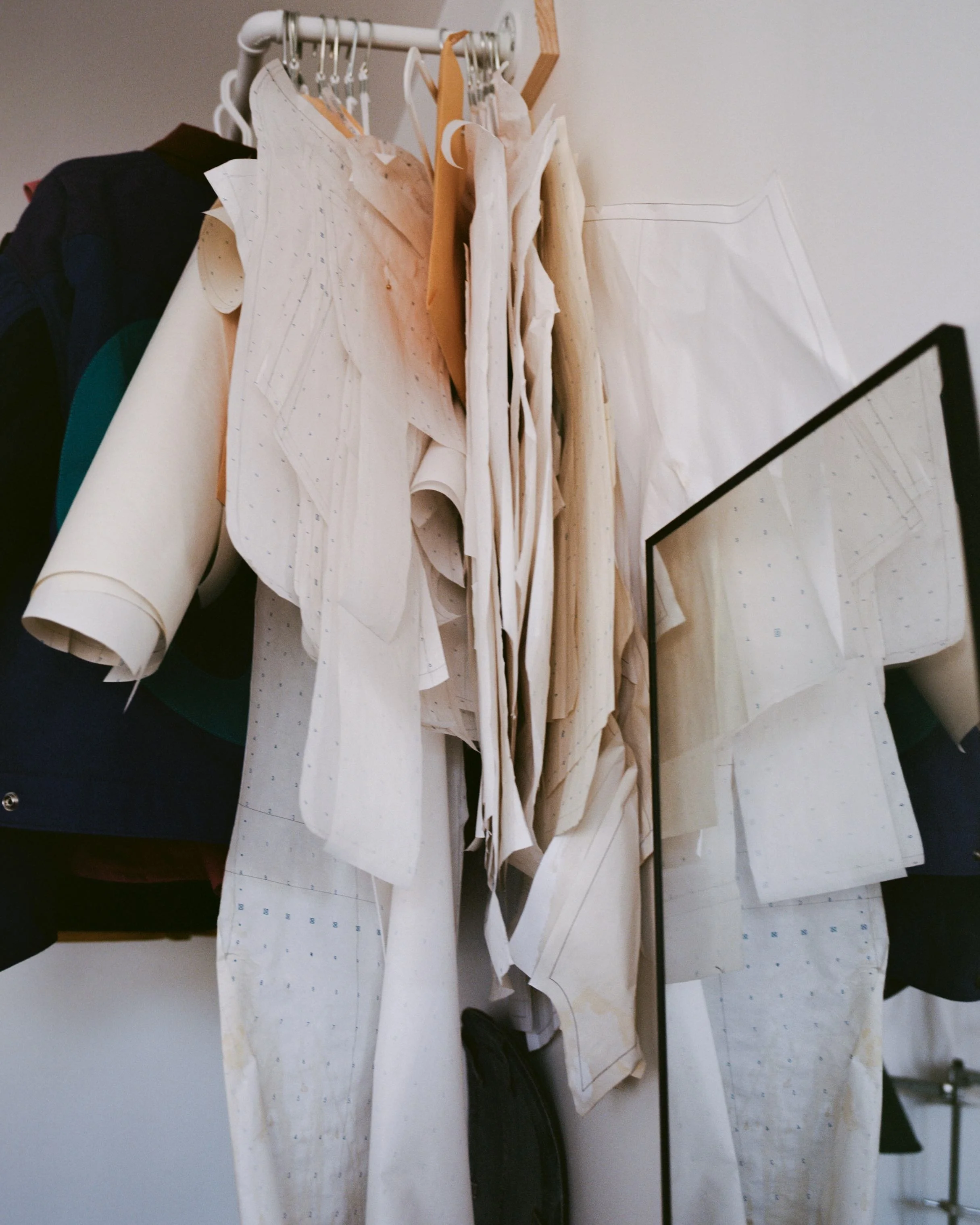
When she was a child, Tess saw the world through colors in motion. She trained as a competitive gymnast until she was 16, right before the height of the COVID-19 pandemic. Alone in her room, Tess’s pent-up energy needed a release. She learned how to sew off the same vintage patterns her mom used years prior to make her dresses, working at 5 am before online school to experiment with fabrics and techniques.
“It was a time when I wasn't very well versed in what I was doing,” Tess explains. “Life is getting back to that type of freedom. That freedom is representative of being a kid, figuring out how things work.”
The sewing machine followed her to Parsons, where she continued to hone her practice using recycled materials. She made new friends, soon repairing denim for skaters across the city. “Denim holds so many memories as a material,” Tess explained, showing me photos of reworked jeans with neon stitches and heart patches. Her early work is baggy, leaning on the conventions of workwear to create an androgynous silhouette.
Last summer marked a quieter shift. Heat pooled in Tess’s Ridgewood apartment, stretching afternoons into long, unfocused chunks of time. Friend groups changed. A relationship ended. The social architecture she had built began to loosen, and with it, so did her work. For years, Tess says, much of her energy had gone toward seeking validation in spaces that were never fully hers.
“I think for a long period of time, I wasn’t prioritizing the women in my life because I wanted to feel included,” she says. “I wanted to be respected so badly. I wanted to be seen, and it was never going to happen. I was never going to win that battle.”
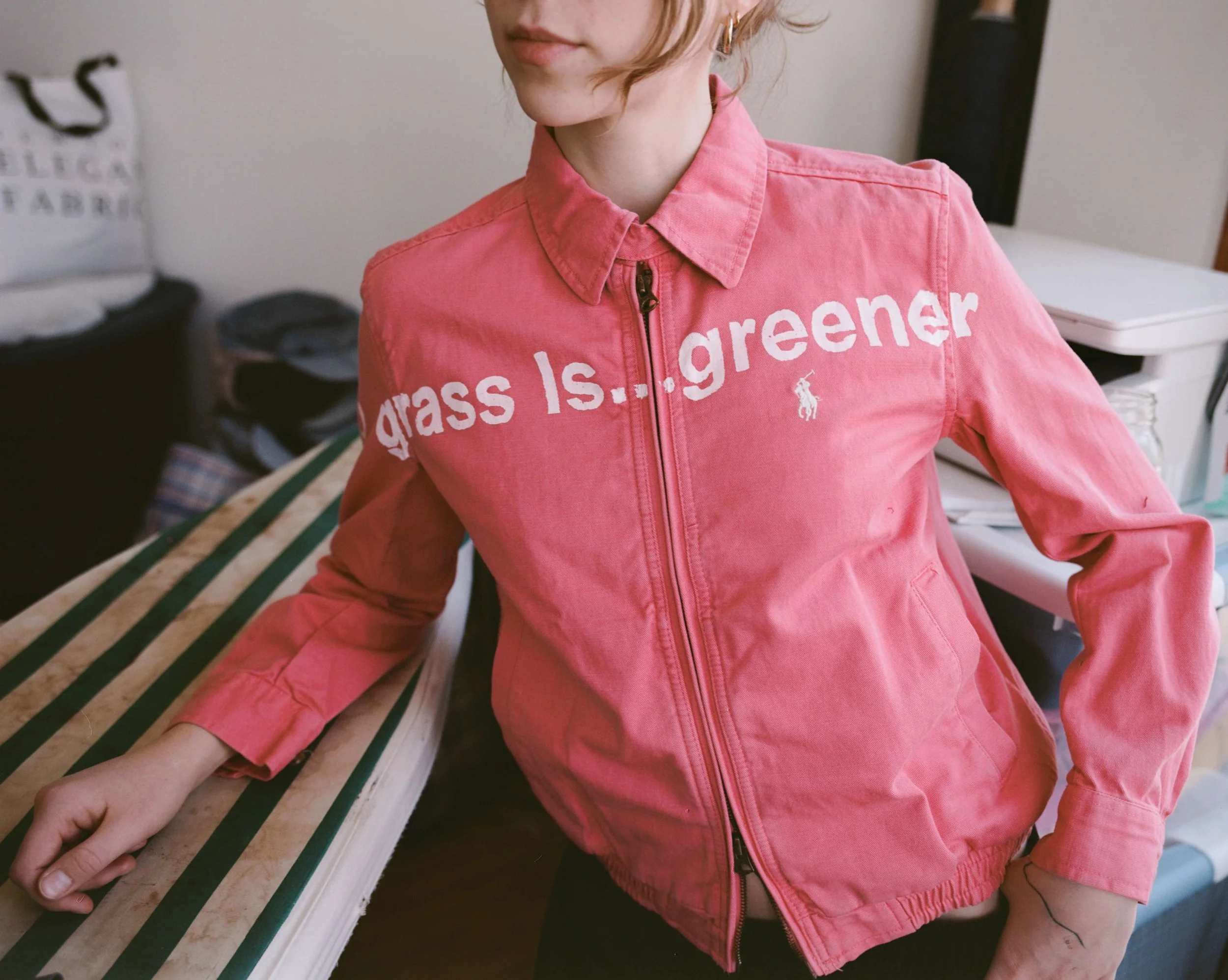
The realization redirected both her personal life and her practice. Ribbed bands narrowed jackets at the waist. Patterns became more intricate, less utilitarian. The silhouettes softened without losing their structural rigor. More and more, the pieces appearing on her Instagram were modeled by women—friends, and collaborators. She has dreams of producing a femme-focused art show in the future, and points to her current boss, tailor Emma Sienkiewycz, as a source of inspiration.
“Those free thoughts are so essential to being an artist, and everyone has them. But some people’s are a lot more quiet. Which is fair. That’s the way growing up works.”
“She’s a great example of a woman who has succeeded in every capacity in her field by building her own path,” Tess says. She tells me that two days before we met, she slipped into what she calls “the zone,” working for hours without noticing time passing, adjusting seams and testing proportions. Her roommate Ophelia moved quietly around the apartment, accustomed to the ritual, later pointing out that Tess mumbled while she worked.
“To be known and seen takes so much time, and nobody spends that much time together in New York one on one unless you’re living with someone.” Tess says.
Her home studio is a concentration of that intimacy, morphing into a space for textural play and pure instincts. It’s reminiscent of the kind of time spent in the backyard or basement as a child, absorbed in imagination. She remembers watching parents linger at the doors of playdates, wondering how adults could talk for so long without picking up a toy to play with.
She pauses, searching for the right phrasing.
“Those free thoughts are so essential to being an artist, and everyone has them,” Tess continues. “But some people’s are a lot more quiet. Which is fair. That’s the way growing up works.”
In Tess’s studio, growing up isn’t about abandoning those voices, but rather learning how to hear them again: as the child rearranging colors, the teenager waking before sunrise to sew, the artist talking to herself late at night, trying on something once more before deciding it’s finished.
This story was first published in Bias Cut 03: The Signature Issue in Spring 2026.