
Made to Fade
Graffiti artists LABER and SLOCAR talk about the risks, rules, and rush of graffiti in New York and Los Angeles.
Moderated by CHARLOTTE SHELTON
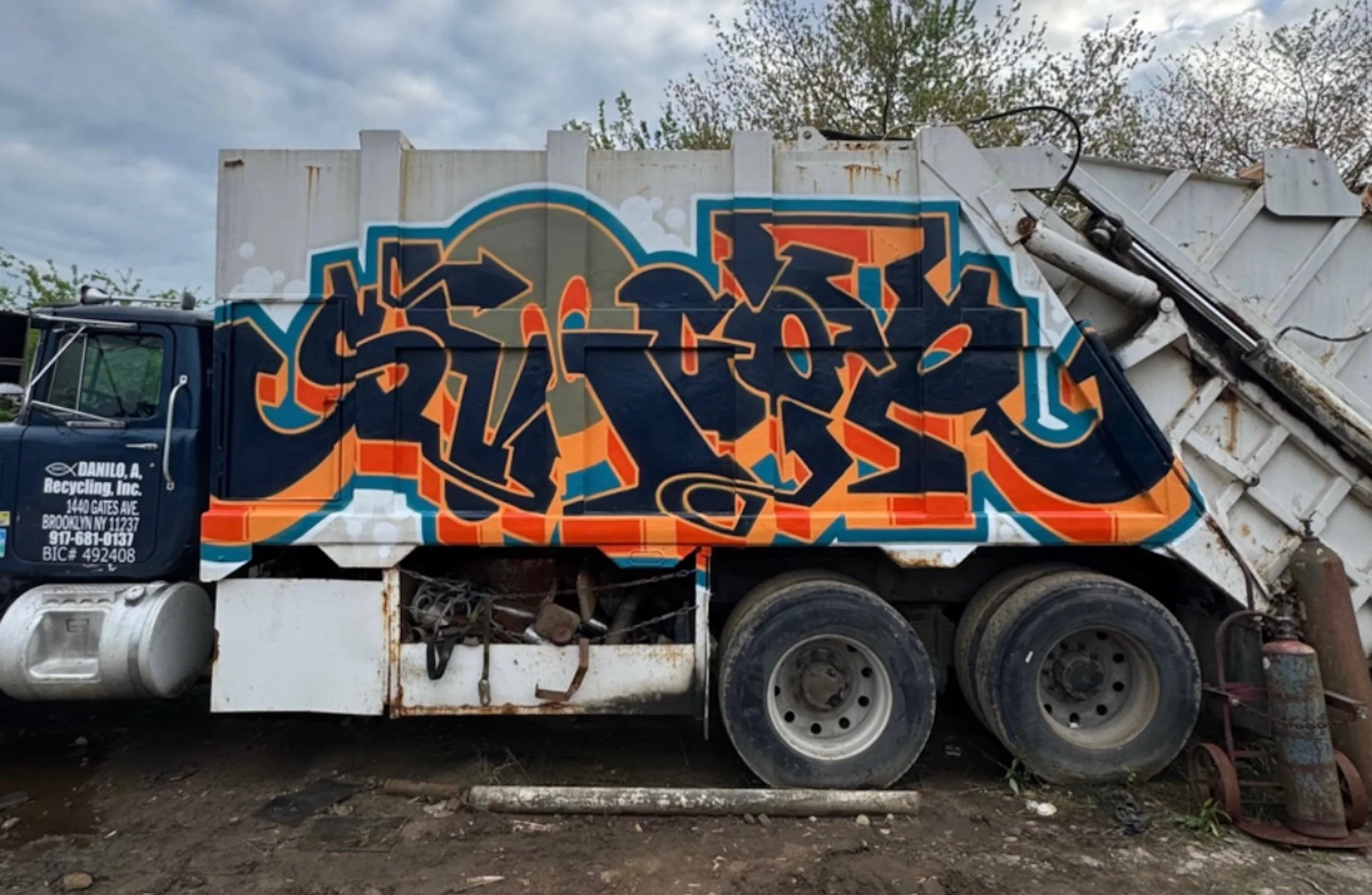
SLOCAR: Whats up LABER. Heard things about you bro.
LABER: What’s up? I'm on my way to go play some music in Venice Beach. I wish I wasn’t sitting in traffic, but alas.
SLOCAR: That's where I'm from. My homie KRILL pushes the same crew as LABER, and he put me on to your work.
Crew: Group of graffiti writers who tag under the same chosen name
Pushing a crew: Writing one's crews name
Writer: Someone who writes graffiti
CHARLOTTE: You’re such a mysterious community. How did you both get introduced to this world?
SLOCAR: I'm originally from Chicago, and I moved to Venice Beach when I was 12 years old. I started graffiti writing in Venice, when I was maybe 15. I didn’t take it very seriously. I was a kid. I was into graffiti, but I wasn’t trying to learn. I practiced a lot at the legal walls in Venice, right on the beach. That was a big learning experience for me to go there, have my pieces get covered [by other graffiti writers] every day, and keep coming back to trying new stuff.
I moved to New York City in 2020 for art school. I really started taking graffiti seriously and painting as much as possible. I 100% identify as a graffiti writer.
LABER: I’m from the West Coast. I was born in Oregon, but moved to LA shortly after. I went back to Oregon to study music. One of the first friends that I met there, who also studied music, saw that I did some art. He asked if I had ever tried graffiti, and I didn't know how to answer the question, because I was like, “Well, I do like to draw my real name in block letters.” He put the right words in the right places to get me thinking about graffiti. I was quickly drawn to it, no pun intended. I was addicted.
Graffiti is one of the many ways I like to express myself and it's something I enjoy doing more than a lot of other things. It keeps me motivated to continue my constant forms of expression and also helps me take some risks. So graffiti has definitely shaped me as a person, and I’m really taking it to the next level because I've been on this special team [in LA].
CHARLOTTE: LABER, you started with writing your name. But how did you guys come to both of your tag names?
SLOCAR: When I started writing, I had a crappy three letter name. It was pretty toy. I got arrested when I was 18 years old, six months into living in New York, because I was painting like I was still living in LA. I didn't know what was up or how to conduct myself in a new city and I had a lot to learn. I didn't know that there was a whole police unit in New York for vandalism that tracks graffiti writers. I was spooked by the New York City vandal squad.
I was writing SLOC and I just decided to add the AR. It was more fun, there were more letters. I noticed a lot of New York writers had a cool “R” kicker at the end of their tag, and I thought that was sick. I tried to come up with something that sounded like a real word—like slow car.
Toy: Bad at graffiti, wack style
Tag: A stylized signature—the most basic form of graffiti
LABER: I relate to a lot of that, especially the R thing.
I didn't get arrested for graffiti, but I almost did. I was writing MARS, my nickname, all over my [college] campus, like an idiot. Somebody tipped me off, telling me “They’re looking for whoever writes MARS all over campus, so you gotta chill the fuck out.”
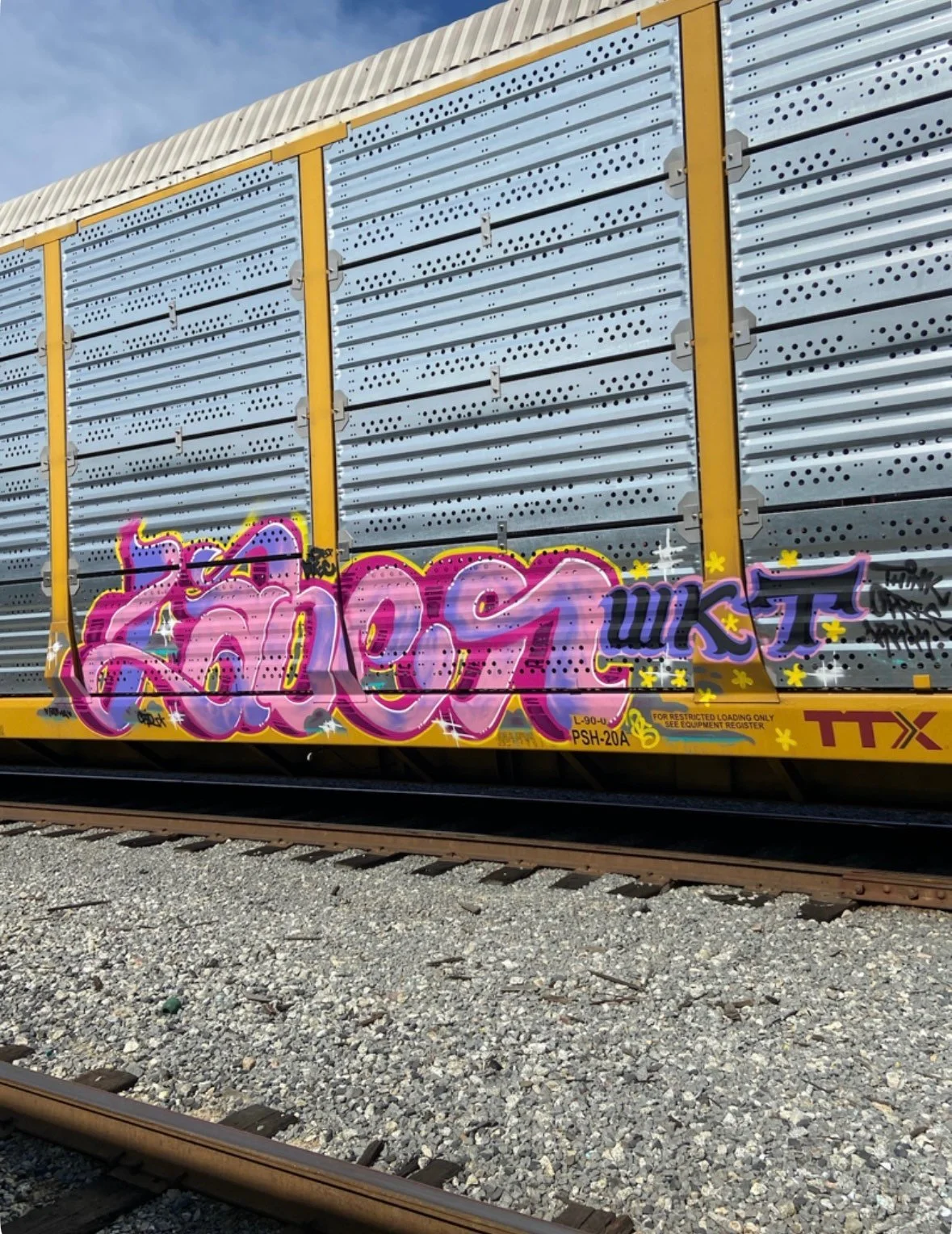
I was trying to change my name after that, and I was thinking about the word FIBER a lot. I started writing that, but some other dude was already writing that in Portland, and I was in Eugene, which wasn't very far. I started writing LABER because I liked the way that those letters flow together. “ER” were the two letters I wanted to end my name with. Sometimes writers try to find a little extra letter to put in. That's why we call ourselves graffiti writers. We’re making art with lettering. We are changing how people consume letters and words together.
CHARLOTTE: What’s the crew that you’re a part of?
LABER: Graffiti crews usually have an acronym to represent themselves and then they change what each letter means in their acronym. WKT is my crew. We Kill Toys, Well Known Threat, Wanted Kross Town—all these things are jokes. It's not that serious. Right now, [from my car window] I see “MY RENTS LATE”. I know that’s the MRL crew. We're all trying to just make each other giggle with what words we can come up with and what meanings we can attach to our style and the crew.
“It’s a secret language”
It's interesting making the distinction between street art and graffiti, because there is still a lot of meaning behind both styles of art. Obviously graffiti has a unique way of interpreting the art of letters, because even calligraphy is its own style.
CHARLOTTE: There’s a lot of dialogue in graffiti.
SLOCAR: It definitely is a sort of secret language. Whether intentional or not, you're pandering to the people in the community who read what you're writing. There’s something to be said about legibility. Not everyone can read it. It's kind of sick when you're walking with your homies that don't write graffiti, and they aren't really paying attention or reading [graffiti]. Maybe it just doesn't feel visual [to them], or like it’s not for them. But for all my homies and all the writers that I know, every day you have a little magazine or a comic to read everywhere you go. You’re hyped to check out who's writing what, what the little hit offs are, who they're shouting out, and what crew they're pushing.
Hit offs: Writing a homie’s name—often next to or inside of your own graff.
LABER: I do enjoy that as well, the legibility versus non-legibility. Some people have a crazy, developed style that—unless you're hip to it and really understand it—you can’t read it. You’ve got to do the work to earn your stripes and be able to understand what's up. Graffiti is also about style and sharing: you walk down the street and you see free art.
The perception of graffiti plays a role in the public opinion of it and how people react to it. My mom doesn't know I write like this. My dad does, and his first reaction was, “You're in a crew. What does that mean? Is it a gang?”
I was like, “No, no, no. It's not a gang. We all go under the same name and do art together.” So it's interesting how the secret club element ties in and it all connects.
SLOCAR: LABER has a great point about graffiti crews and what they stand for. A lot of people don't really know what's up with graffiti. Maybe they think it’s a lot of crime or gang stuff. I know my parents, when they caught me writing graffiti when I was in high school, were worried that I was in a gang. They saw me putting up letters that were different from [my] name. In some ways, there’s maybe a gang or a crew mentality, but it's different.
CHARLOTTE: Were the crews—that secret element—something that drew you to graffiti in the beginning?
SLOCAR: For sure. It takes time to know what's up, like LABER was saying. You have to do your research, which comes from passion. It becomes a fixation. You get addicted to it. You're just thirsty for content, videos, magazines, anything to help teach you.
I don't think I fully understood the weight of what it meant to be in a crew until a year or two into writing. I didn't know anybody, I was just writing with my best friend from high school and we were watching videos like Style Wars and Infamy. They’re kind of the [graffiti] Bible. Through those, you learn it's not a gang thing. It’s just a weird fraternity or brotherhood with my homies. It means that they’ve got your back and you respect their style and vice versa. You want to be seen up on a wall with them, and if you get into any issues, they’re the people that will hold it down for you.
LABER: You pretty much nailed it. When I first got into graffiti, my friend [and I] just made our own little baby crew. We wanted to do our own thing. That was just our way of attaching ourselves to something greater. It gave us the drive and it gave us something to rep. Like I said earlier, [in a crew] there's more meaning to attach to things that you do.
When I was first writing at my college like an idiot, I didn't know what I was doing. It was fun to be punk and do whatever the fuck I wanted—to not give a shit. But when [you create] with intention and purpose, that's where you know to start taking yourself more seriously. Other people in the community will, too.
“Graffiti is as legit as any other art form”
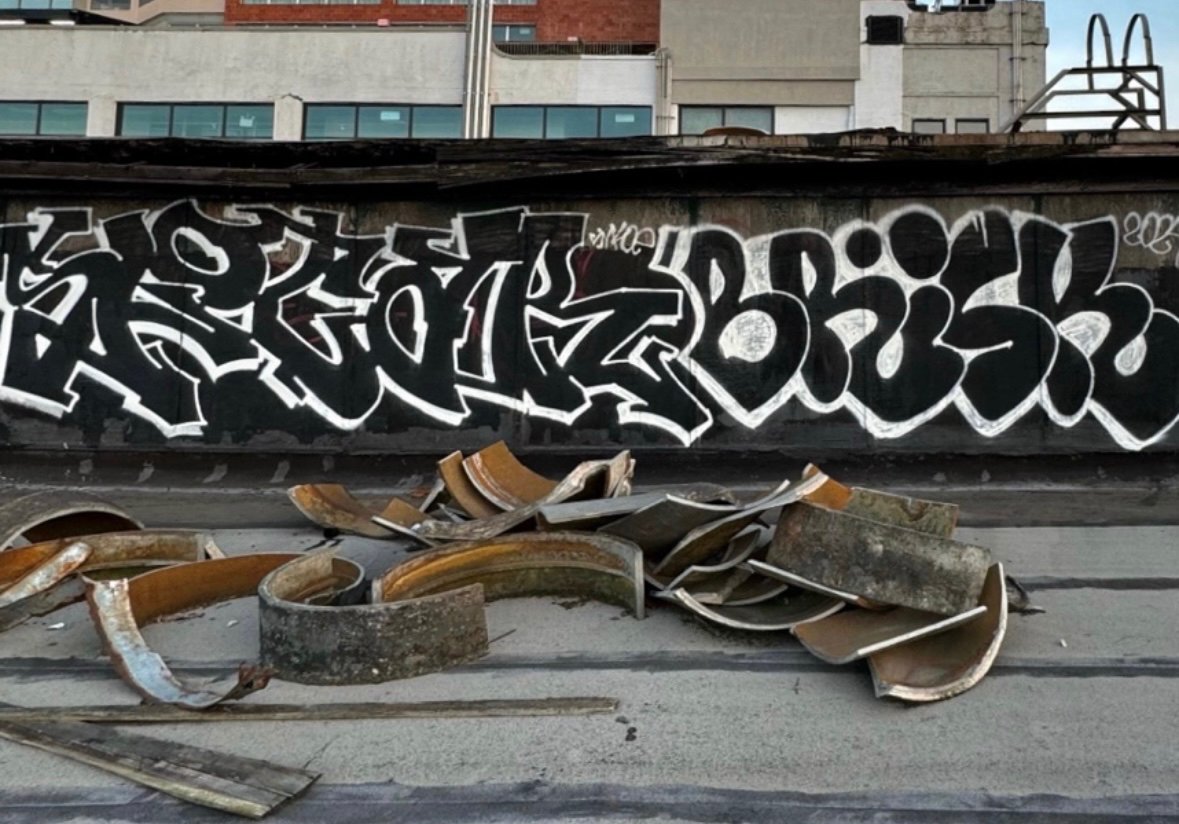
Like SLOCAR said, [crews are] people who are down with your style and who want to go paint with you. When I finally got put onto [WKT], I really felt the love of, “Let's go do this. We have to put some respect on this club that we're all a part of now.” It's important to maintain consistency, and also have the intention of putting your hit, tag, or crew name in runner spots. We’re putting it in places people can see it.
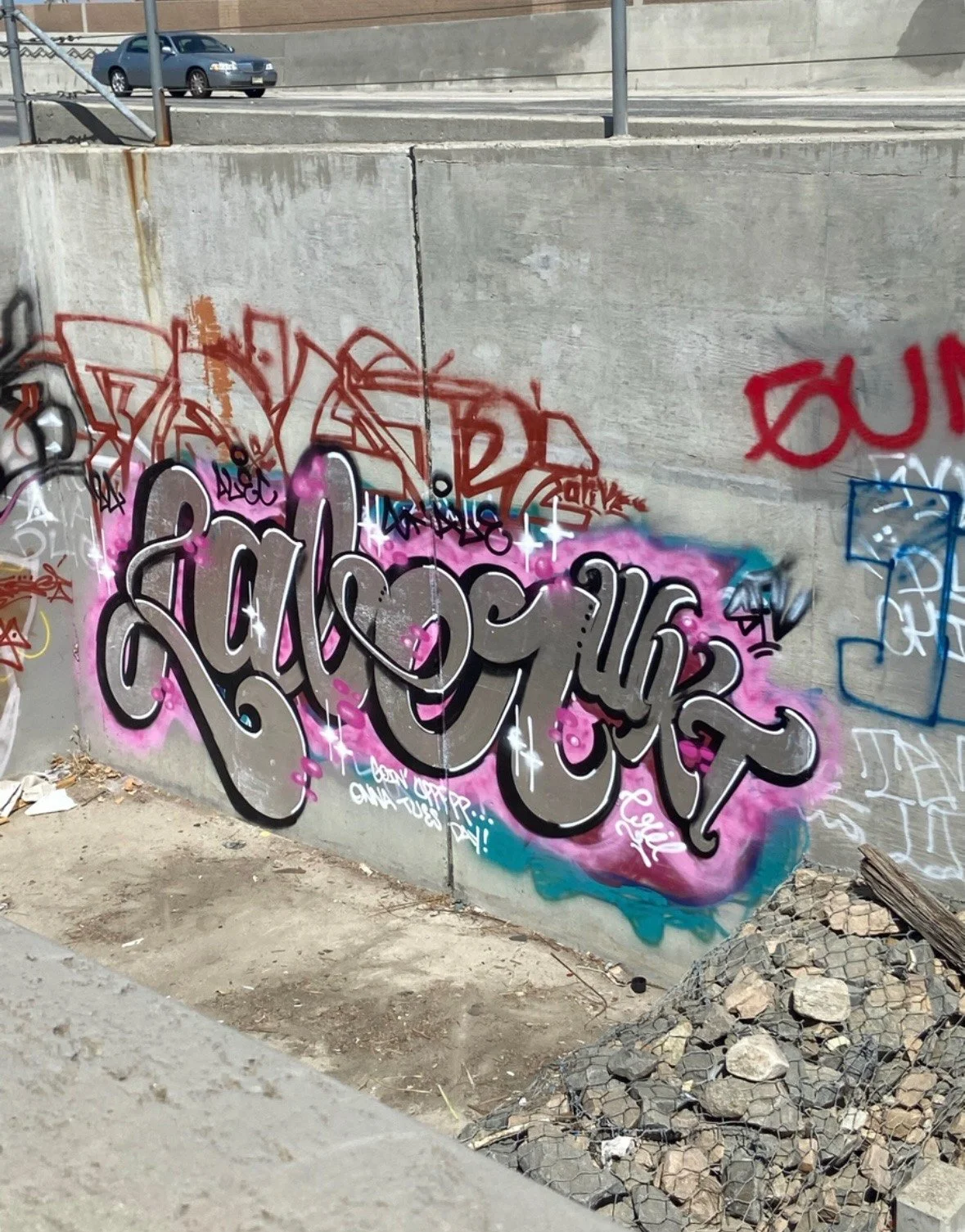
New York is great for seeing everything. When you ride the train, you see people’s hit ups on buildings at least five, six, seven times on the same line—especially if you go to an outer borough. In LA we have freeways everybody is commuting on instead of the train. People are doing [graffiti] on the freeway walls over here.
Right now, I'm next to Krill’s WKT [tag] on the back of the billboard, a spot that’s been running. You see these, and then you see your friends, and you're like, “That's my homie.” It's like a scavenger hunt. When you find a clue, or you find a little tag, it’s a surprise. It feels good that you can make that connection.
Runner spots/running: long lasting spots / to last or avoid the buff
CHARLOTTE: That's what art is all about—making connections in one way or another.
LABER: [Graffiti is] a reinterpretationof something, an event that happened. People do that shit with graf—they're interpreting what's on the billboard and incorporating their own work. There’s groups of people who will go and “deface” these billboards to make it fit their message. It’s political.
SLOCAR: It’s anti-political, too.
LABER: Yeah, exactly. Trying to have a message, that's what art is all about. Graffiti is as legit as any other art form. It's cool that people are willing to risk the legality of it and their freedom, just so they can get their shit up. Their [graffiti] can get buffed or someone can go over it. Then you're like, “Wow, what is that like? You're just doing art to get it destroyed.” But it's not just about the art.
The one last thing I want to say is something I learned when I went to music school. One of my teachers actually told me, “Don’t be so attached to every piece of art that you do,” which I found to be very profound. With the music that you write, don’t stay on one or two little details in the piece. Finish it, get it done, and if it's bad, move on to the next thing. The same goes for graffiti. Sometimes I put up some dog shit and I'm like, “Damn, I hope the buff gets that.”
There’s also times when you're like, “Damn, that was a sick one, hopefully nobody goes over it.” And guess what? It gets buffed within 24 hours. There's so many things that make graffiti what it is.
Part of it is being able to let go. You're not doing it so that it can just be this precious work of art that lasts forever. It’s humbling in a way.
Buffed: When a piece is taken down / painted over by the city
SLOCAR: One point about permanence and not being so precious: I have my own creative artistic practice outside of graffiti. I'm a huge perfectionist and struggle with that. It's hard for me to walk away from an artwork. In graffiti, I have to change my mindset about perfection, and let go. It's art, and it's kind of a sport. Not only do I have to make the work special, I have to do it in a certain amount of time. Even if I'm not happy—but we need to leave to stay safe—I have to walk away from it and let it be. Sometimes you luck out, and sometimes you don't. Maybe something you didn't like does get buffed. Maybe your favorite piece that you did that month gets painted over really quickly. You have to move onto the next and be less precious with stuff. That's important. I'm working on not thinking so much about every detail being perfect.
CHARLOTTE: Every person I know who is a graffiti writer does it in conjunction with another art form. It seems like a meditative practice.
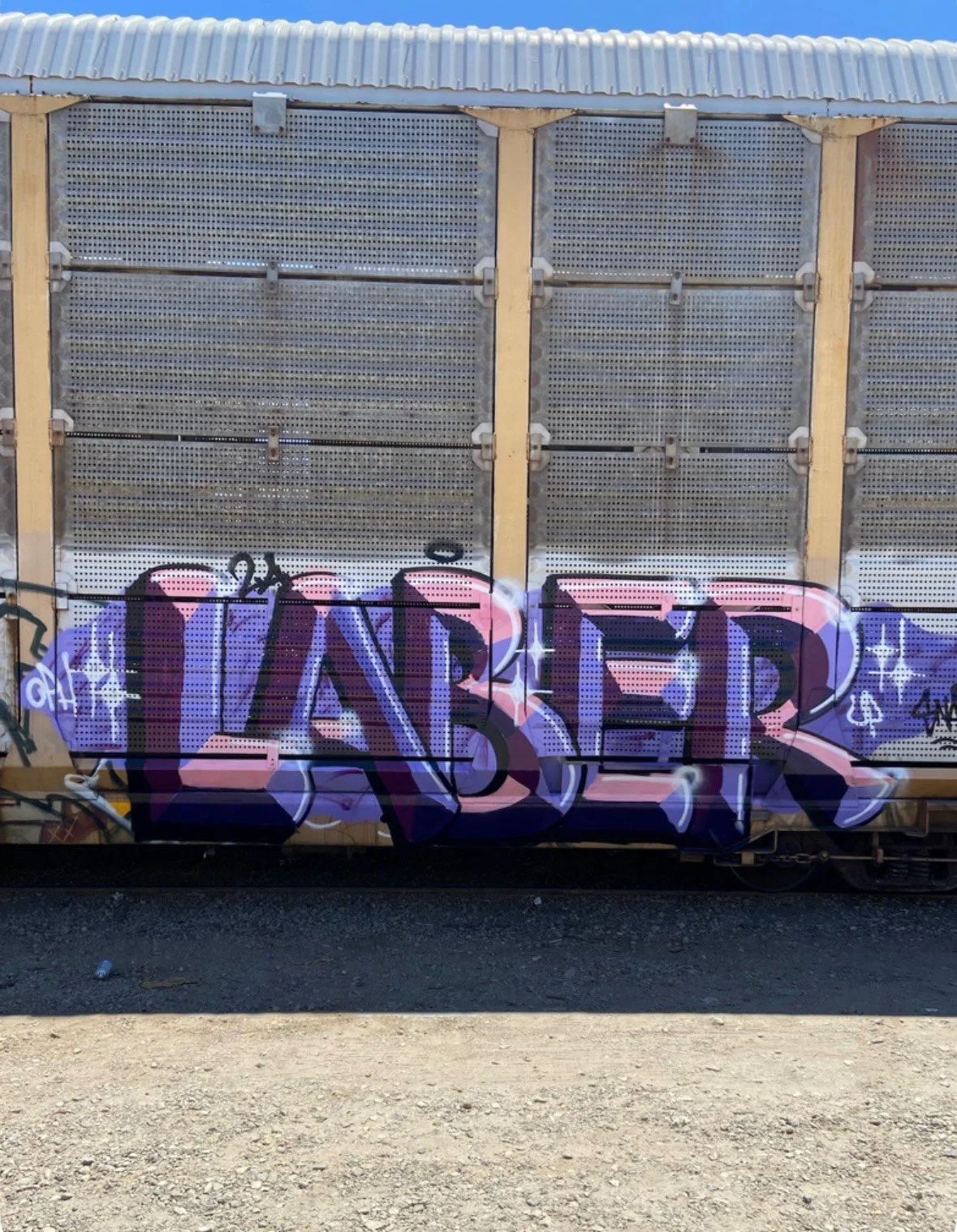
LABER: I think about a lot of musicians that I look up to. Joni Mitchell has talked a lot about her fine art and how that inspires her music. Miles Davis did boxing, sports, and other fine art. There's so much that goes into being someone who is [outwardly] expressive. I'll play a gig, and right after, I'll go and paint. It’s a mindset change. I enjoy being challenged, even if it's as small as just tagging that spot that I've been eyeballing for a couple of weeks.
Everybody's trying to stamp their shit. Everybody's trying to just go and throw it up. Funny I said ‘throw it up’ because I feel like in New York they're much more dialed in with style. Like SLOCAR is so clean. You started writing at a younger age than I did, and I can see it in your style and the way things come together.
In LA people have characters. They’re much more into the beachy vibe in California.
The graffiti element of “I want it to be simple,” or even “I want it to be legible,” is there. I would say a lot of people do straights out here. They’re just trying to just be quick, big and bold, not always focused on the details.
But then when I go to New York, it seems much more dialed in than out here [in LA]. That's just my view on it, but I know I haven’t been riding as long as SLOCAR, so I want to know what you think.
Throw/throw up: A bubble-style outline of a writer’s name, generally filled in with one color and outlined with a contrasting color
Straight/straight letter: a simple style that emphasizes letter structure and legibility—generally more time consuming than a throwup.
SLOCAR: There's definitely regional differences between LA and New York.
Transportation is a cool topic to get into. LABER paints freight trains that travel all across the country. Trains are a big topic in New York too, with the MTA. The subway system is how the golden age [of graffiti] started in the ‘70s and ‘80s. It was the birth of modern graffiti. I think that's why freight trains get painted now too, to pay homage, to create a moving spectacle that a lot of people see.
LABER was getting at some cool points about LA, like people who paint billboards. The freeway is a big thing because people are commuting, so they’re hitting those spots because they want a lot of people to see them. People are focused on big, legible stuff. A lot of the big crews out of LA like CBS, TKO, or WKT—the crew LABER pushes—have cool, stylized, distinctly California pieces. That's definitely influenced me in a lot of ways.
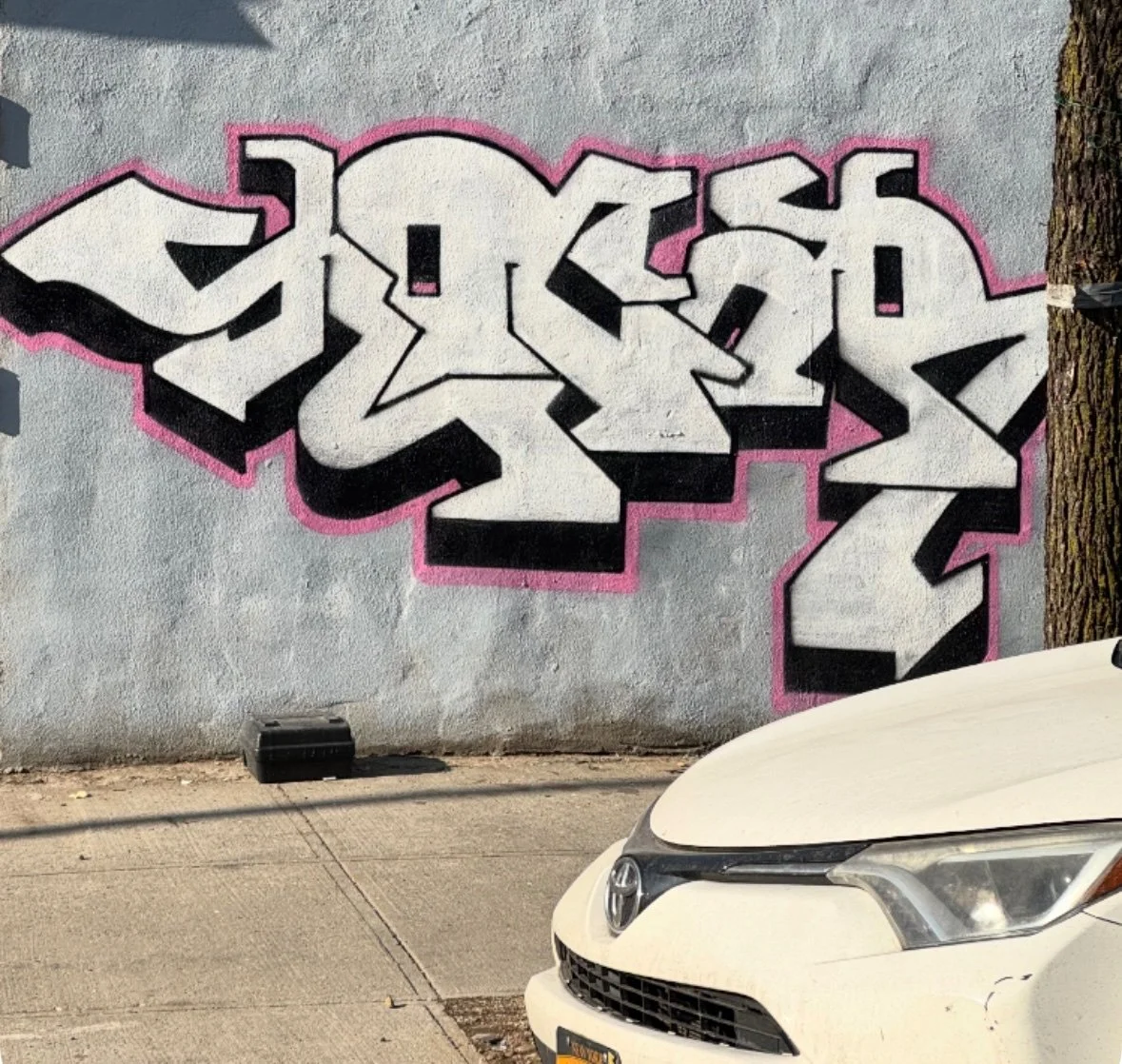
Piecing is something that you see less in New York City. It’s something that LA, or California, lends itself to more. There are a lot of spots you can drive to and bring a lot of paint to, whereas, in New York, you have to take the train or your bike. Unless you have a car, you have to be mindful in a different way. If I want to paint something that takes me an hour or two, something that I can really practice on and use a bunch of colors, I have to plan. LABER has a car that he can keep his stash of paint in, so if he drives past something cool, he can just pop out. Whereas, for me, I carry a bag everywhere that can fit maybe 10 cans [of paint]. But that's a crazy thing to carry around with you all day.
So if you're trying to do something that's going to fulfill your creativity for that day, to feel like you painted something that was worthwhile, you have to plan it and be like, “I'm going here, I'm taking this train, I'm bringing this many cans and this many colors, and I want to kill all these cans before I leave.”
Shout out LABER for the compliment. I want to repay it and let him know that his style is sick, too. I damn near wouldn't have agreed to do the interview if I didn't think that was the case.
Piece: short for masterpiece—a more detailed and complex style of painting that a writer spends a longer amount of time on with multiple colors.
CHARLOTTE : I also agree with what LABER was saying. SLOCAR is one of the only tags that I can read in the city.
SLOCAR: Thank you, that means a lot. It was cool when LABER popped out [in New York City]. We've got some mutual friends, so I knew LABER was out here. I saw his stuff in my neighborhood. It's always exciting to see somebody pushing a regional style that I can tell is from my hometown. When you're from one place and move somewhere else, your style kind of morphs and adapts to the city that you're in. Respect to all the New York City writers that are actually from here. I have a lot of respect for LA writers, too.