
The Next Stylists: Dominick Barcelona
From altering Goodwill bargains to crafting looks for Chappell Roan and Marina Diamandis, stylist Dominick Barcelona discusses building his career without a blueprint.
By JENNIFER SUAN
Photographer NIC LAZO
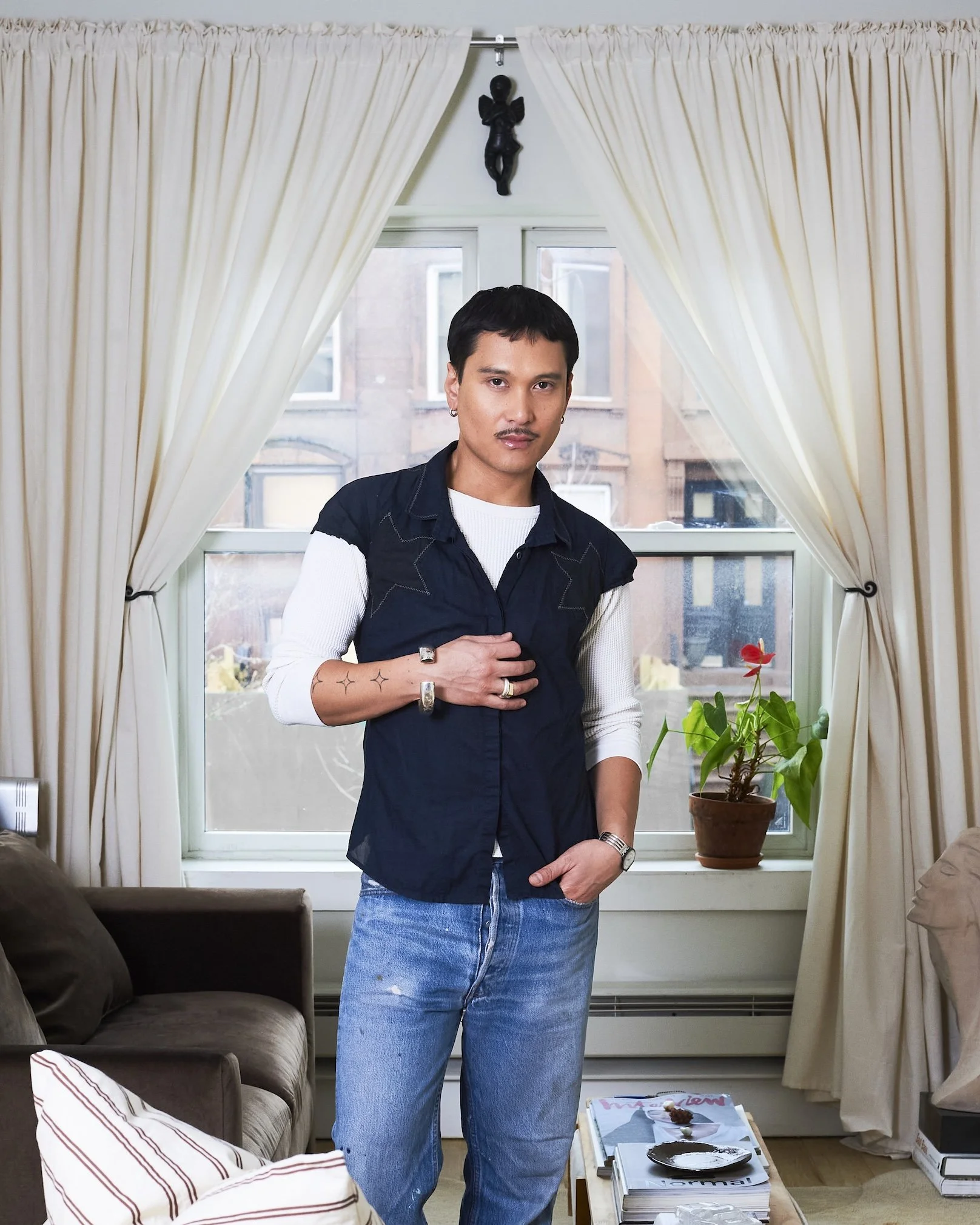
Jennifer Suan: How did you get involved with styling?
Dominick Barcelona: When I was in high school, my girl friends paid me their lunch money to organize their closets. I would organize and then tell them what to get rid of and what to wear, and that’s the earliest hustle I can remember. I started shopping by myself at Goodwill and Salvation Army. I would alter all my clothes by hand and cut them up and then sew them back tighter.
The first time I monetized my talent was working at a boutique called Therapy in San Francisco. Women came into the store asking for me saying, “Where's Dominick, my stylist?” They called me a stylist, but I had no idea what that was. I looked it up and it just excited me.
In 2013, my best friend visited New York and told me, “New York is awesome. All the people here in San Francisco are played out. You need to move [there], where people look like you and talk like you. That is where you need to be.” That really resonated with me. I saved up $2,000, packed all my stuff up into two suitcases, and moved. I was 21 at the time, eyes wide open–I didn’t know what to expect.
I didn’t know where to start. I was messing around, partying, meeting assistants and stylists, saying, “I would love to work with you. Are there any opportunities? Let's have coffee, let's hang out.” I've always been a talker. I met new friends and asked them where they worked, and they’d say, “Come in for an interview.”
Working at a brand called Gilt Groupe opened up a lot more doors for me. I said yes to everything. At 23 years old, I had a friend working at Opening Ceremony. They were celebrating rising designers from all over the world, and the first ones that housed Y/Project and JW Anderson. I started assisting there and I met the founders, talked to them. I wasn't being anybody else but myself. Once their lead stylist quit, they were like, “Where's Dominick? I think he’d be great.” So I got the job at 24 years old, which was crazy. I did all of their social media and was the liaison between stylists for editorials. It was a commercial fashion bootcamp. It was very scrappy and exciting and exhausting, but rewarding. I learned to understand this different [commercial] realm of styling. I didn't study it. I went into it so blindly, with pure excitement. I think that's how I got to where I am today. I didn't follow a blueprint, I just remained open and kept creating.
Jennifer: You were raised in the Bay Area and spent most of your adult life in New York City. How has living in these places influenced your signature style?
Dominick: Being from the Bay and from an immigrant culture, I wasn’t exposed to luxury brands or a luxury lifestyle. I didn’t need a top-notch Louis [Vuitton] or Balenciaga bags. I don't gravitate towards that. In the Bay Area, everybody has their individual swag. In the Filipino community, my cousins and I always wanted to stand out. I take pride in finding one-of-a-kind pieces. When I hold something that has a story or a history to it, that is the most exciting thing for me to wear. I'm a creator more than a consumer.
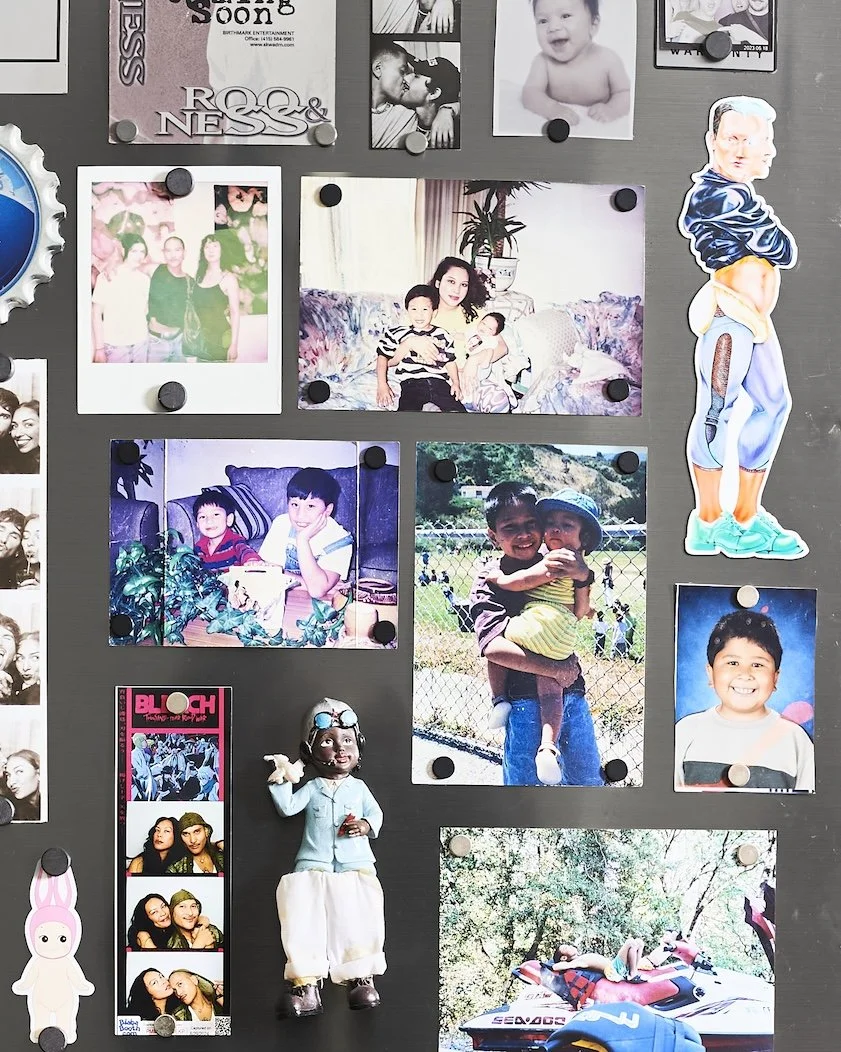
Jennifer: How has it been melding the aspects of craftiness and resourcefulness with luxury designer elements?
Dominick: It's exciting. When you create a look, you do the luxury piece justice just as much as the archive [one]. I’m creating a cohesive piece of art on the body. How is everything flowing? What's the conversation here? Stop, pause, and think. Don't just throw it on the body. Putting the luxury and vintage archival pieces together—that's me. If you're hiring me, expect me to do that.
Jennifer: You have such a deep understanding of every vessel that you're working with, whether it be the clothing worn or the body wearing them. Your work creates this beautiful, inherent sensuality and intimacy. To you, what is the relationship between body and fabric, and fabric and place? How do all these come together to create a piece?
Dominick: It's first the spirit that I have to connect with: talking to somebody, studying them. I can describe someone from the exterior, but I have to know them from the interior as well. It's a conversation between the subject and myself. You’ve got to dig deeper. It's also just [good] taste.
Jennifer: Your taste developed outside of a traditional schooling system, outside of textbooks.
Dominick: Very much so. I don’t know any other way I could do it.
Jennifer: So far, what has been one of your favorite projects to work on?
Dominick: I think styling Chappell Roan’s “[The] Subway” [music video in January 2025]. I didn’t know the song would end up being nominated for a Grammy.
Jennifer: It was so cool watching them announce, “Chappell Roan, ‘The Subway’” for [nomination for Record of the Year and Best Pop Solo Performance]. The music video played, and I thought, “There's your styling!”.
Dominick: That's so crazy! I have to watch that, honestly.
Jennifer: How was that project?
Dominick: It was a really crazy experience. Having everybody’s trust was probably the greatest part. The team trusted me to make something special. It was one of the greatest challenges that I've had in my career to make everyone look good and feel good.
Jennifer: I'm fascinated with the idea of crafting New York City archetypes [through styling]. Where did inspiration come from?
Dominick: It had to do a lot with casting. It was conversation and play. We had the breakdancers, the weirdo, and the old Upper East Side art freak. It felt very natural to create semi-mundane looks with flair.
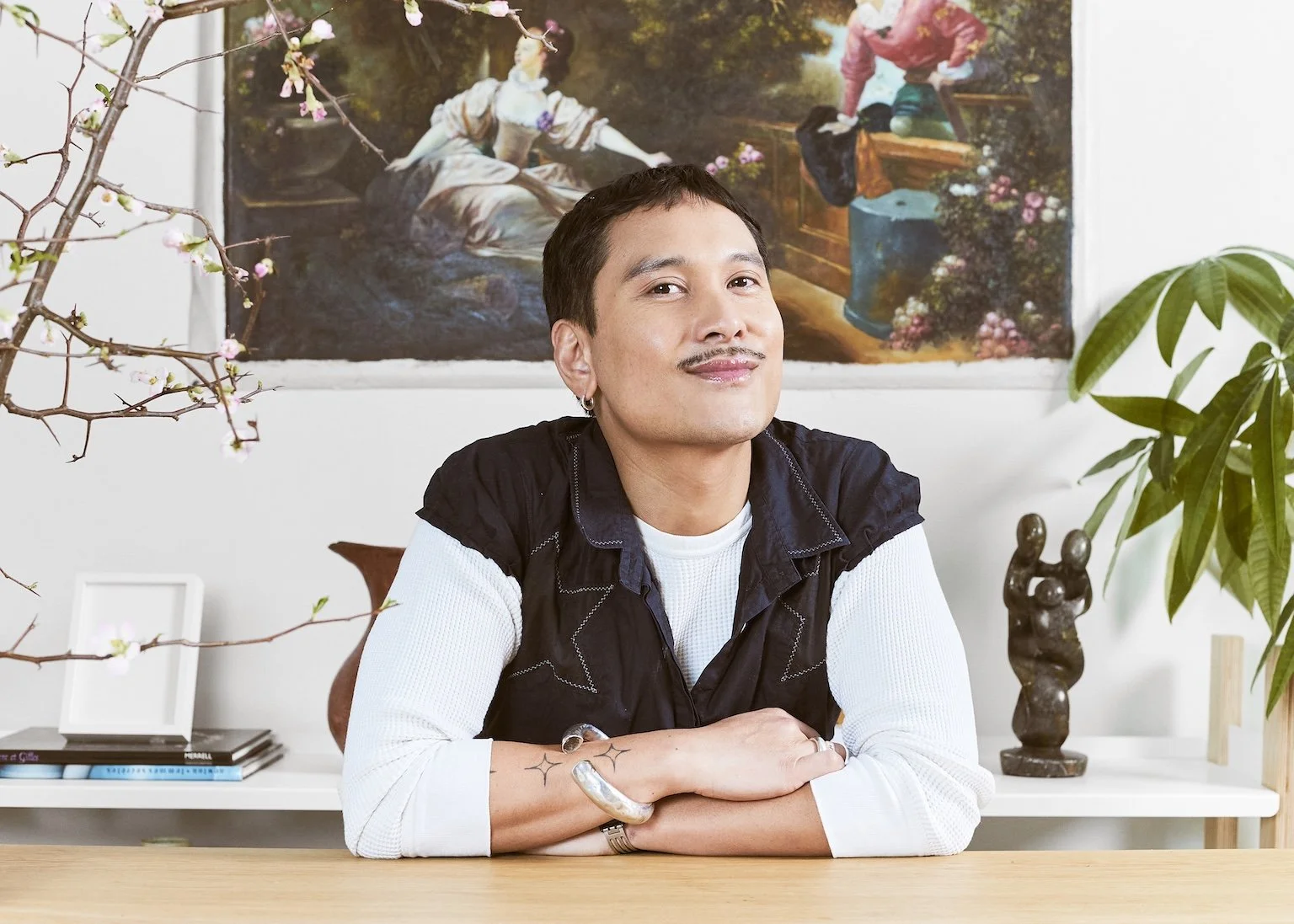
Jennifer: You also worked with Marina Diamandis for her [Princess of Power] tour. You used both custom designs and vintage. Did you design those pieces yourself?
Dominick: I did. They were really exciting pieces to make. She came to me with a board of ‘80s Japanese anime and ‘70s rock and roll images. I was blending those two worlds together. It became poetry. You just need a good team that you trust. I was so blessed with an illustrator and a seamstress.
Jennifer: You also used vintage for her looks. Where do these pieces come from—in-person sourcing, or online?
Dominick: A little bit of both. This [Marina Diamondis] job was in LA. LA has, I think, the most accessible vintage costuming. There, it was fun and much easier to source things. I have two favorite [vintage] archives that I really enjoy going to.
Jennifer: How does vintage sourcing differ from coast to coast?
Dominick: New York is good, but the prices here are just so messed up. LA just doesn't have New York’s [level of] taste. Everything's a bit more accessible there, though. It's awesome; there are these massive warehouses and showrooms that you can go into. It's a privilege out there. If I had access [in New York] to what I have in LA, work would be a little bit easier.
Jennifer: Can you define New York taste?
Dominick: We’re ahead and we're expressive. We [also] understand what's happening in Europe. I can't generalize everybody's New York taste. It's a different hustle. We're moving faster. We have a different type of urgency to create and get our hands on things.
Jennifer: A lot of the style that really resonates with me comes from immigrant communities, whether it be here in New York or in California. I think that's where the culture is.
Dominick: I agree.
Jennifer: Do you have a favorite decade for influence and inspiration?
Dominick: I love the ‘70s. In a different lifetime, I was partying at Studio 54 until the sun came up. I love the magic and freedom. It was the rise of pop culture.
Jennifer: What's exciting in fashion right now?
Dominick: Brands that aren't following the monotonous. I like to call it “gutter grunge,” meaning things that are muddy and gross and punk. Anyone who's creating color, introducing color, and [using] different color combinations excites me. Like Kiko Kostadinov—I love how they unexpectedly put colors together. I’m working with Pipenco, styling their show this season, so keep an eye out for them. It's nice to see someone inspiring joy. Anyone who's bringing joy and happiness to this heavy world is giving people life.
Jennifer: How would you describe your signature style in one word?
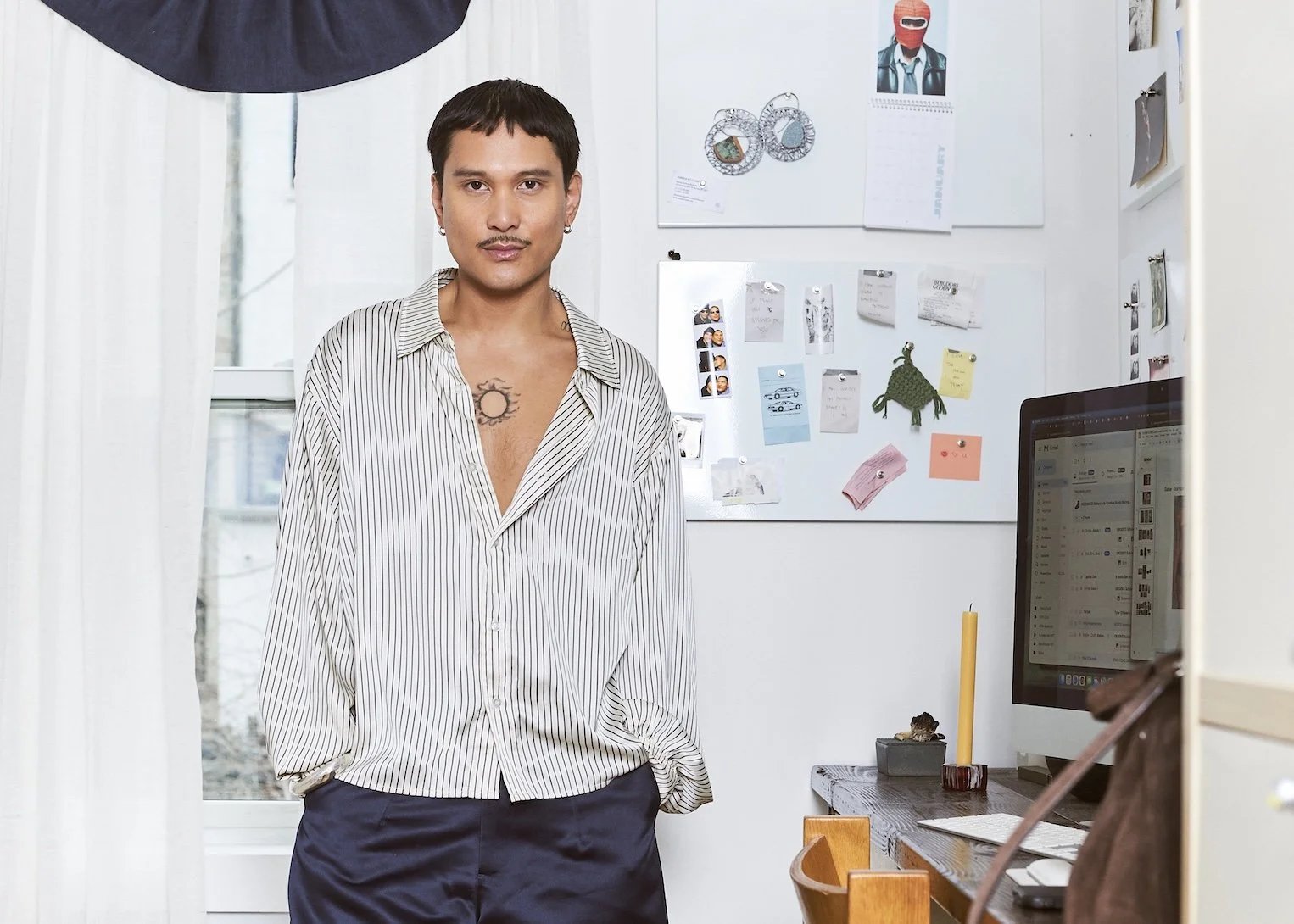
Dominick: Storytelling. I genuinely care about what I put on my body. My friend gave me the sweater I’m wearing right now, and I feel her [when I wear it]. I just want to talk about my outfit. When I go outside, I’m like “Guys, guess where my outfit’s from?”
Jennifer: There’s a cyclical nature in receiving something and wanting to spread it.
Dominick: Very much so.
Jennifer: What projects are you working on right now that you're excited about?
Dominick: I'm excited about two big commercial jobs. They're going to expand my network, and I want to learn from them. And the Pipenco show. I'm sourcing a bunch of shoes.
Jennifer: Any last words?
Dominick: Fuck ICE. When the world is heavy, take a break from it when you can.