
Maya Man and Her Uncanny Valley of Tweenage Competitive Dance
In her first New York solo show at bitforms gallery, multimedia artist Maya Man uses artificial intelligence to build a digital dance ecosystem of lavender sparkles and eerie pirouettes.
By EMMA SCHARTZ
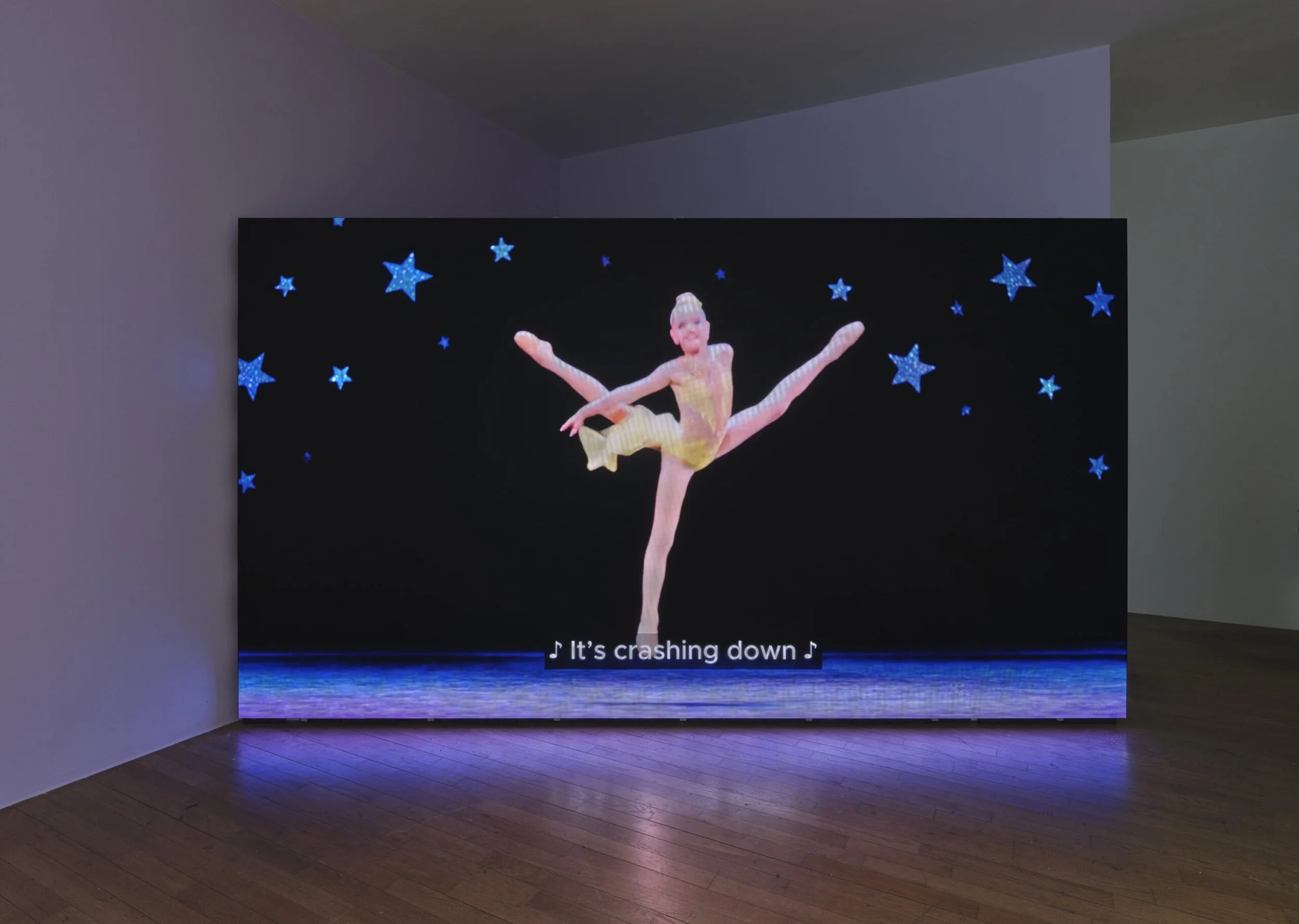
Maya Man, StarQuest, 2026. Image courtesy of the artist and bitforms gallery.
At bitforms gallery in the Lower East Side, Maya Man’s new exhibition StarPower simulates a feedback loop, similar to an endlessly autoscrolling Instagram feed propped up on a bathroom sink or cradled in a lap on the bus. The heartbeat of the internet fuels StarPower.
In Maya’s latest work, she uses video, software, text, and fabric to construct a universe centered on a fictional competitive dance series, each piece resembling a digital or physical artifact of fandom timelines. StarPower is the culmination of two years of work ruminating on girlhood, performance, and the uncanny valley of competitive dance.

Installation view of StarPower. Image courtesy of the artist.
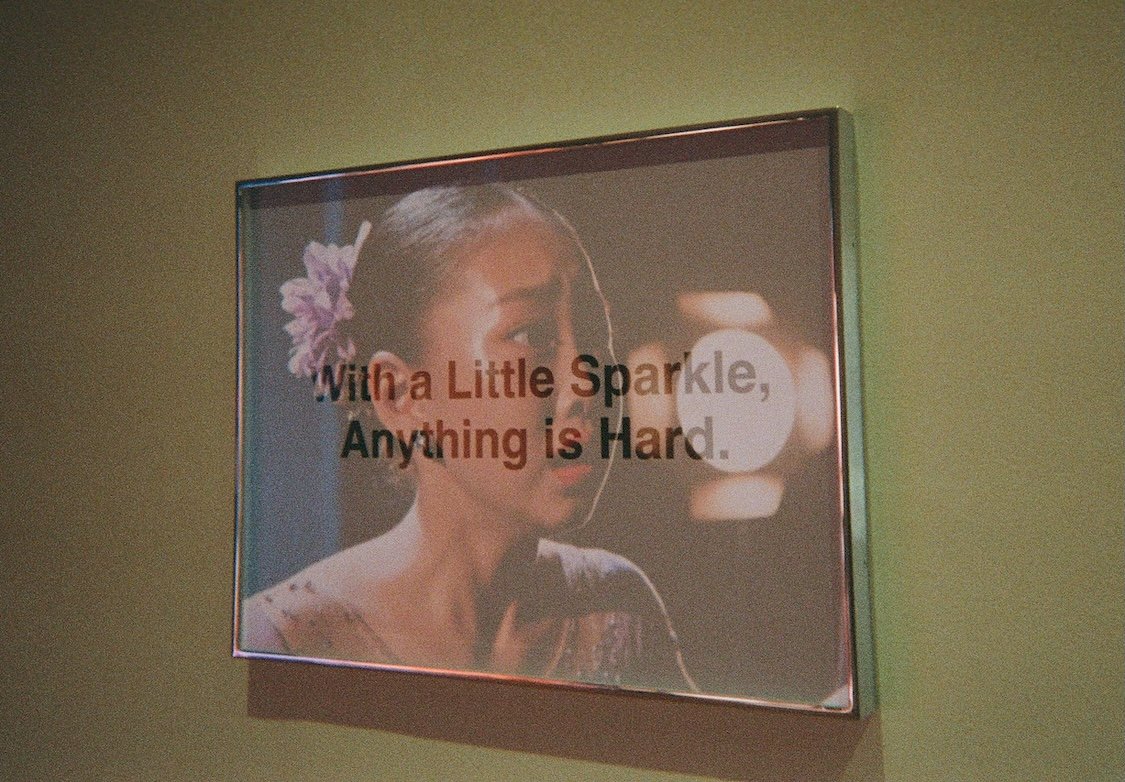
Installation view of StarPower. Image courtesy of the artist.
The exhibition’s central work, StarQuest, 2026, flickers through 111 AI-generated scenes of competitive dancers. Wearing lipgloss and mascara, the preteens look up at off-screen instructors and contort their bodies at absurd angles on a large projection in the main room of the gallery. Glitter covers the floor underneath, reflecting the uniforms’ aquamarine-fuschia fabric. The video sequences are brief, looping, and endlessly recombined, producing a non-linear choreography that never quite resolves. Occasionally, the dancers pause to deliver confessional monologues that echo the cadence of reality television. The aesthetic evokes mid-2010s TLC reality shows, but the dancer’s facial expressions are distant and off-beat.
The effect is uncanny. These are not dancers so much as iterations of dancers, shaped by training data and optimized for spectacle. For Maya, the material is deeply personal. She grew up as a competitive dancer, and StarPower draws from that world with both intimacy and distance. “It was entirely autobiographical,” she said following the opening. “I needed the distance from that time in my life to be able to make this piece.” That distance is palpable in the work’s tone, like an arbitrarily nostalgic camera roll memory.
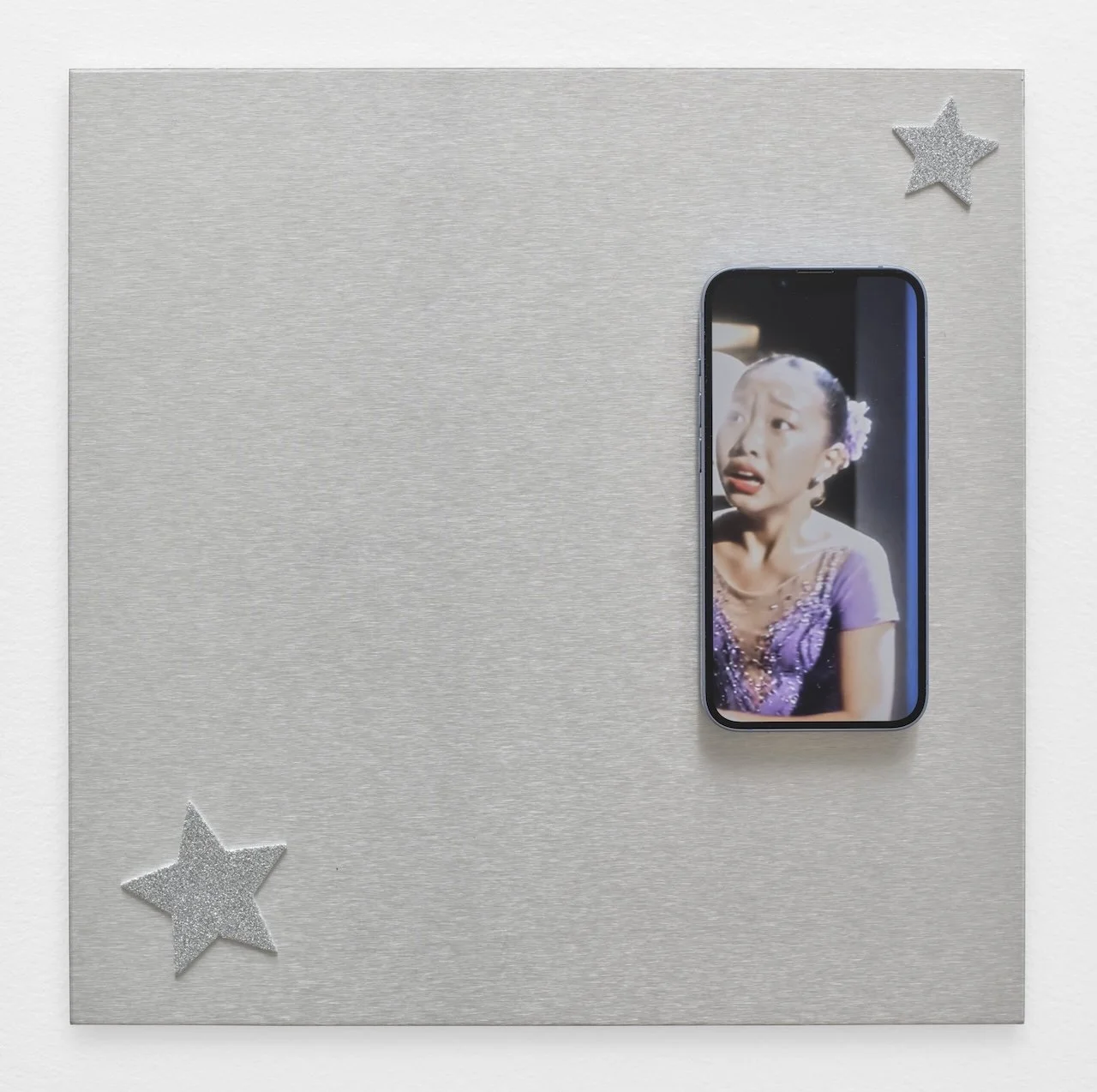
Maya Man, StarQuest Edit #2 (girl like me), 2026. Image courtesy of the artist and bitforms gallery.
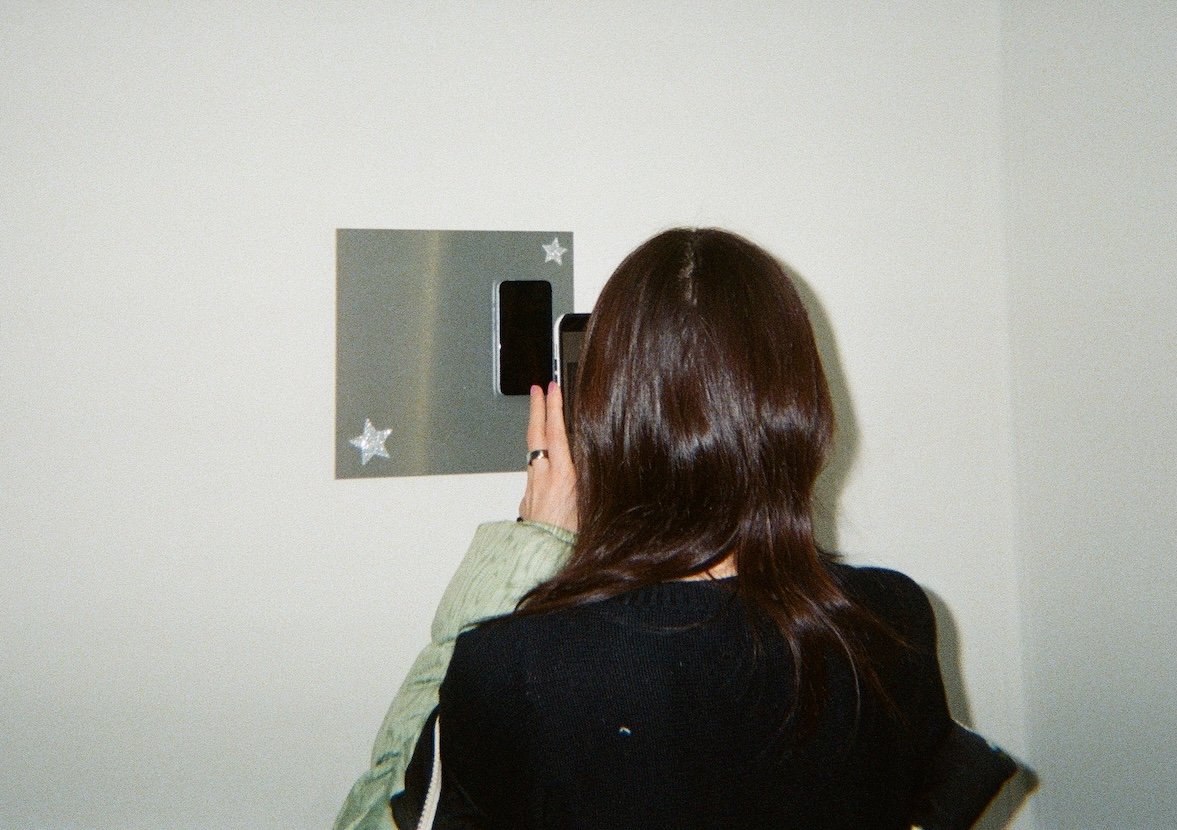
Installation view of StarPower. Image courtesy of the artist.
What distinguishes StarPower within Maya’s broader practice is its scale and commitment to worldbuilding. Rather than presenting discrete works, the exhibition constructs an entire ecosystem. A fictional dance company, Shimmer, emerges across the show, appearing in background signage, motivational slogans, and even costume elements like a warm-up jacket pinned with real competition badges that appears at the entrance of the gallery. In the first gallery room, “fan edits” of StarQuest clips play on mounted iPhones, mimicking the aesthetics of TikTok and YouTube remix culture. The installation requires visitors to lean in closer, creating a moment of intimate screen-time in crowds of craning necks. And while StarQuest dominates the main room, visitors pause at quilted screenprints and motivational posters peppered along the nearby walls.
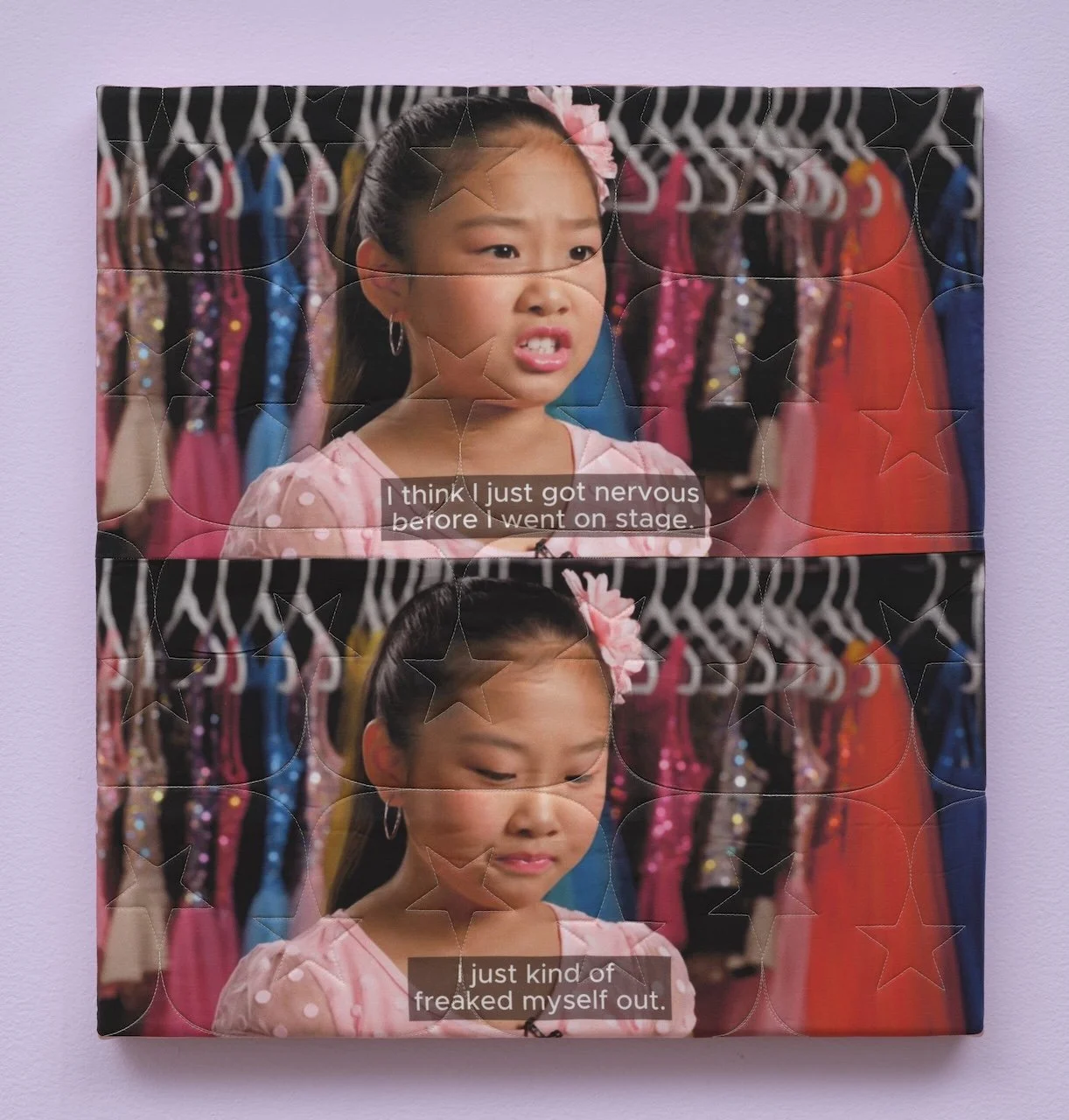
Maya Man, freaked myself out, 2026. Image courtesy of the artist and bitforms gallery.
This layered approach allows Maya to trace a continuum between past and present forms of performance. The hyper-disciplined world of youth dance competitions, where girls are trained to perfect their bodies and personas, bleeds seamlessly into today’s algorithmic economies of self-presentation. In both cases, identity is something rehearsed, optimized, and reposted.
Despite the exhibition’s conceptual density, its emotional core remains surprisingly accessible. The opening itself, Maya noted, was “really special,” filled with friends and family. By translating the psychology of female tween performance into the language of generative software, Maya reveals that the stage is no longer just physical; it is continuous, networked, and infinitely replayable. In StarPower, the dancer never stops dancing. The performance, like the feed, goes on even as crowds of young people tumble on to Allen Street and the gallery lights dim.
StarQuest is on view until May 2, 2026 at bitforms gallery at 131 Allen St, New York, NY 10002.