
The Singularity of an Absence
A meditation on graveyards, hyper-individualism, and Jacques Derrida.
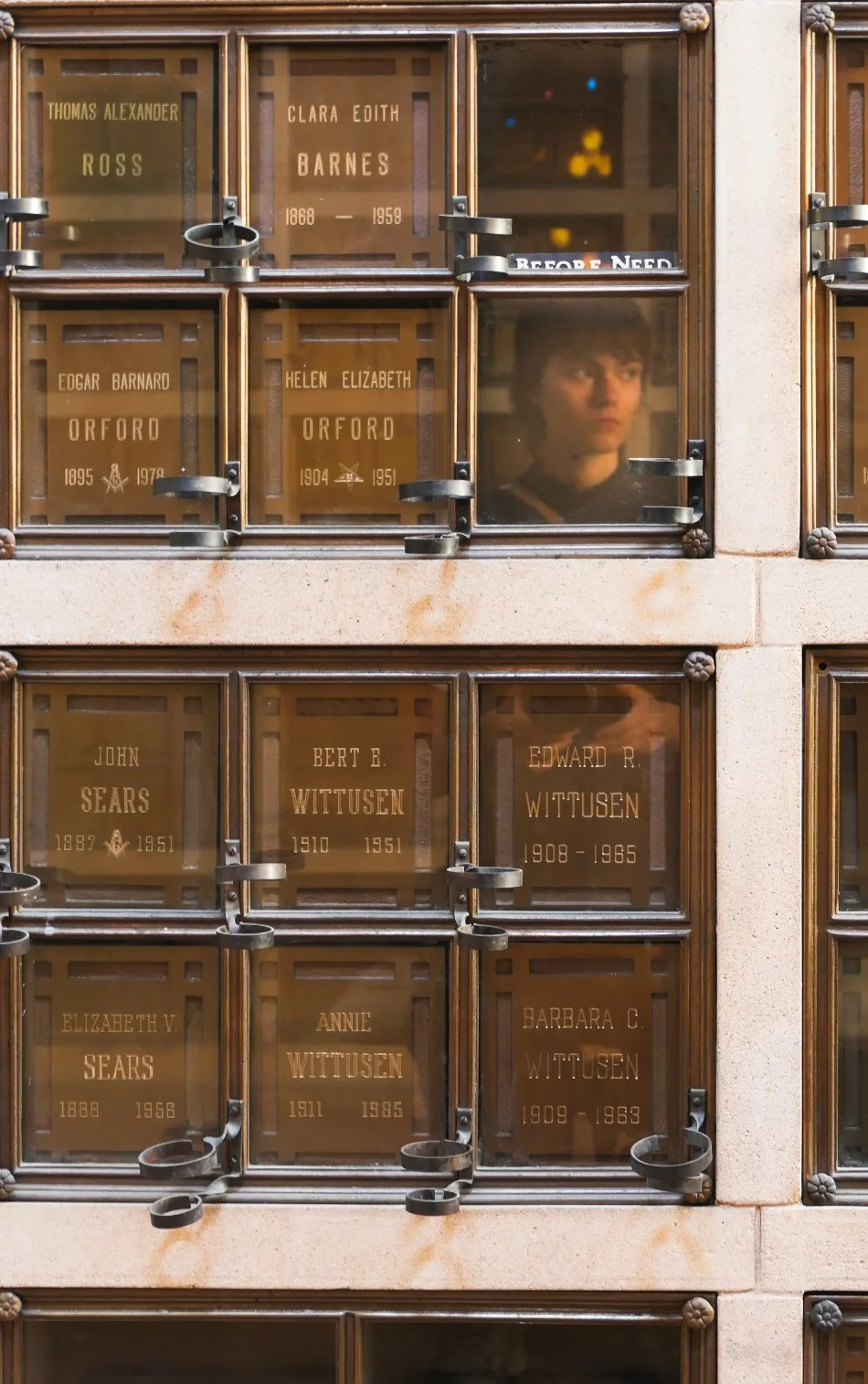
At the entrance to the Père Lachaise Cemetery stood a rack of complementary sightseeing maps, encouraged but not required. Against my better judgment, I set out to find Arthur Rimbaud’s grave without geographic aid.
Located in the northeast corner of Paris, the graveyard totals roughly 100 acres, about the size of New York City’s SoHo neighborhood. But unlike the high-end shopping district, Google Maps has yet to display all the small, winding, cobbled roads that weave through headstones with a sense of sentience—unaccountable and unruly to the humans who travel them empty-handed.
It was a Tuesday in October, and the Parisian rain made the air fizzy. Alone with the dead, trying to read the mossy signage, I soon found myself completely lost, far from the poets and thinkers I had come to venerate. After half an hour of searching, I sat down on an eroded bench and decided I would stop trying. No sooner had I done so than the sun emerged. The sky had finished crying.
Next to my bench lay Louis de Severin (1850-1893). Louis is now reduced to his engraving, the remains of his finite time above ground. I sat with Louis for a while, speculating on the details of his life. Had the courtesy of recognition been extended to him in the last century? Born shortly after the French Revolution, maybe Louis was an office clerk, tasked with keeping the records of the Third French Republic. He had a wife, Solange de Severin (1855-1893), buried next to him. Judging by the proximity of their deaths, they probably succumbed to the same illness, leaving Earth in quick succession.
By the time I had plotted their lives out, it was raining again and I decided it best to conclude my afternoon in the cemetery. I did not see Marcel Proust, Gertrude Stein, or Amedeo Modigliani. On my way out, I passed a few groups, maps in hand, and pondered our shared curiosity.
The stakes of our small human lives seem to boil down to the question of what trace we will leave after a short interlude of aliveness. Tombs are the most democratic of such traces, both common courtesy and ritual necessity, utilized nowadays by both the devout and the secular.
Yet a grey slab among many does little—for most, myself included—to pacify the foundational human anxiety of disappearance. A headstone may serve as a signpost for immediate family, but it does not secure the kind of permanence we crave. The figures venerated at Père Lachaise managed something more: they left their traces before burial, leaving behind not only a stone but the security of an aesthetic signature.
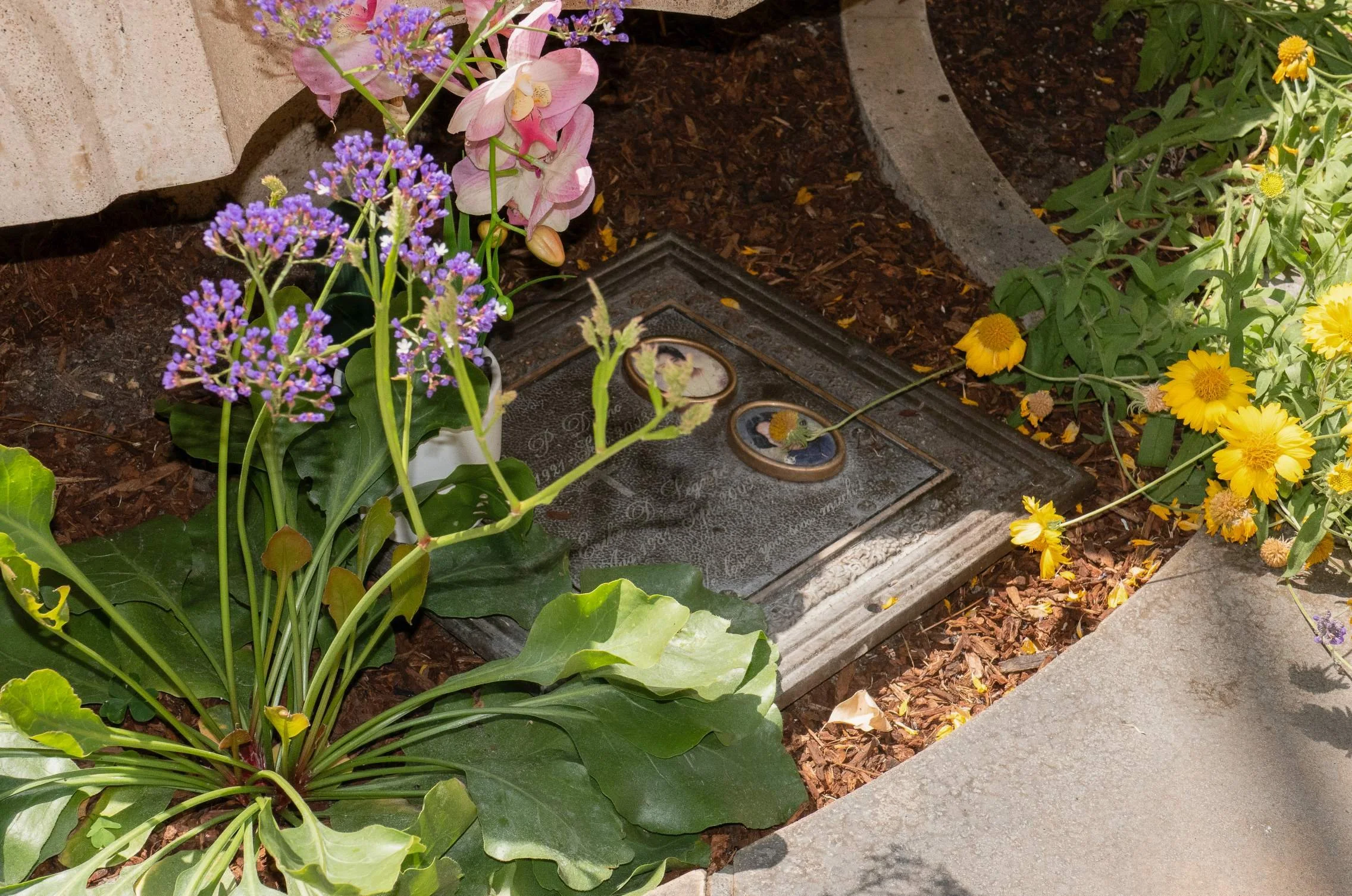
In his piece “Signature, Event, Context,” Jacques Derrida theorizes that the written signature anchors and authorizes the performative utterance (I agree, I decree, etc.) in the written form. It concretizes and supplements for the lacking of the authorizing individual, guaranteeing a permanent nowness that aids in the extension of an individual’s domain through space and time. Signatures ease the primary anxiety of being—our assured impermanence—by allowing us to exact the illusion of discrete personhood in varied periods and places.
From the story of its long history, traceable to Mesopotamia in 3100 BC, the signature helps a person guarantee the integrity of their communication, their rights over land, capital, and even other people (marital documents, slave trading). The written signature is an authoritative, proprietary force. It reveals the complicated entanglement of decreeing, having, and being.
“The stakes of our small human lives seem to boil down to the question of what trace we will leave after a short interlude of aliveness.”
In this day and age, where written signatures feel obsolete, swapped for digital authentication measures, signature morphs into a modifying adjective: signature style, signature stroke, signature palette, signature subject matter. But signature in this context still semi-upholds the Derridean absence of its pen-on-paper predecessor. To have a signature is to become recognizable through repetition—to produce gestures that can be iterated upon yet still read as “yours.” But this recognizability does not depend on fidelity to a pure origin; rather, the origin itself is constituted through repetition. The signature’s authority lies not in untouched presence but in its capacity to survive alteration.
Functionally, the signature serves as an enclosure that enhances personal legibility, replicability, and consumability, helping expand an individual’s domain across space and time. If she chooses to keep the same haircut like Amélie for a whole decade, she becomes easily interpretable to others on first impression (she is a lover and emulator of independent French cinema) and facilitates the production of circumstantial understanding. (Take her on a date to the indie theater’s ten-dollar Tuesday special.) If he continues to share political think-pieces written in a sardonic tone, we have an excuse to engage him in conversation (sending him a dryly written New York Times opinion column to catalyze drinks on Friday). And if she enjoys making geometric wire sculptures, it is safe to say she will probably want to hang out with us on an open Sunday. (Have you been to the Ruth Asawa retrospective yet?)
Undoubtedly, there are many advantages to having a signature. People can simultaneously stand out and simply exist within certain crowds and contexts. A signature helps one establish a niche and find a community within it. It allows one to defy both space and time. As people seek to differentiate themselves in an increasingly saturated online world of selves, our personal traces are deemed more crucial than ever.
But this business of carving out a signature is a tiring affair, and leaves people inflexible to life’s ever-changing demands and constraints. Questions change, tastes change, outlooks change. When we stake too much on our signatures, are they malleable enough to account for that drift? When, if at all, can a signature take on the quality of a headstone—leaden and unyielding—sentencing our individuality to a premature death?
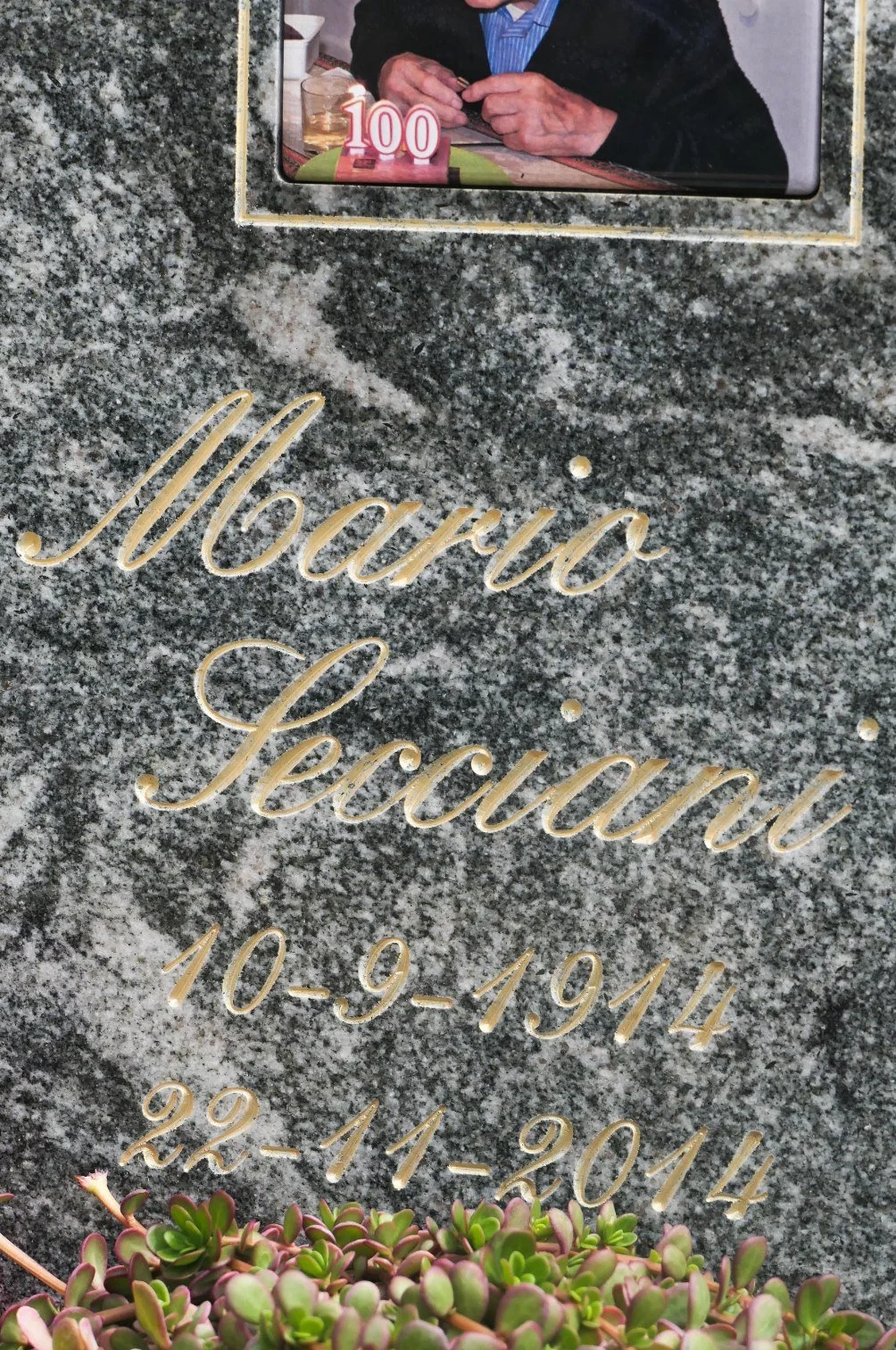
Obsessed with leaving a mark on the world, participants in today’s hyper-individualistic culture overlook what Jacques Derrida calls “différance”—the idea that identity never fully arrives at a stable presence. A mark is singular only in that it differs from other marks and defers its meaning to a future interpretation. The signature is marked by its repeatability, not its origin point. The pressure to uphold a certain signature (style, persona, brand-identity) rests on the illusion that there was once a stable presence to preserve. What we forget is that identity itself is always a trace, produced in an ongoing disidentification with the environment. Trying to define a “signature” is like holding water with your fingers spread.
Perhaps this is what the cemetery reveals with such indifference. A headstone does not contain a life; it marks the impossibility of containing one. Tombs remind us primarily that the singularity of an absence is often more profound than that of a presence. At its best, the signature can function similarly: not as a monument to a fixed self, but as an opening, a relic we create then leave behind. A trail of breadcrumbs we happily drop on our way to a greater clearing, where we’ll revel at some magnificent landscape and embrace the sheer implausibility of our existence.
In shedding our selves from ourselves, a voice emerges from that hole, that well, an echo from our inconsequentially glorious cluster of cells.
This story was first published in Bias Cut 03: The Signature Issue in Spring 2026.