
The Women Behind The G-Strings
For the G-Strings, a show isn’t merely a performance, it's a portal into their own fantastical world with zero limitations.
Anyone involved in New York nightlife has likely overheard talk of the G-strings. And, no, the rumblings aren’t about the undergarment; rather, they are about the seven professional dancers who have adopted the name and formed an unstoppable dance group: The G-Strings. Known for performing in not much more than a G-string itself, the women in the group transcend the antiquated notion that female bodies are to be either shielded or fetishized. With unshakeable self-conviction, the G-String’s act has taken them from headlining the afterparty for the 50th anniversary of the MoMA PS1 to kicking their pink-bottomed pumps at the Park Avenue Armory.
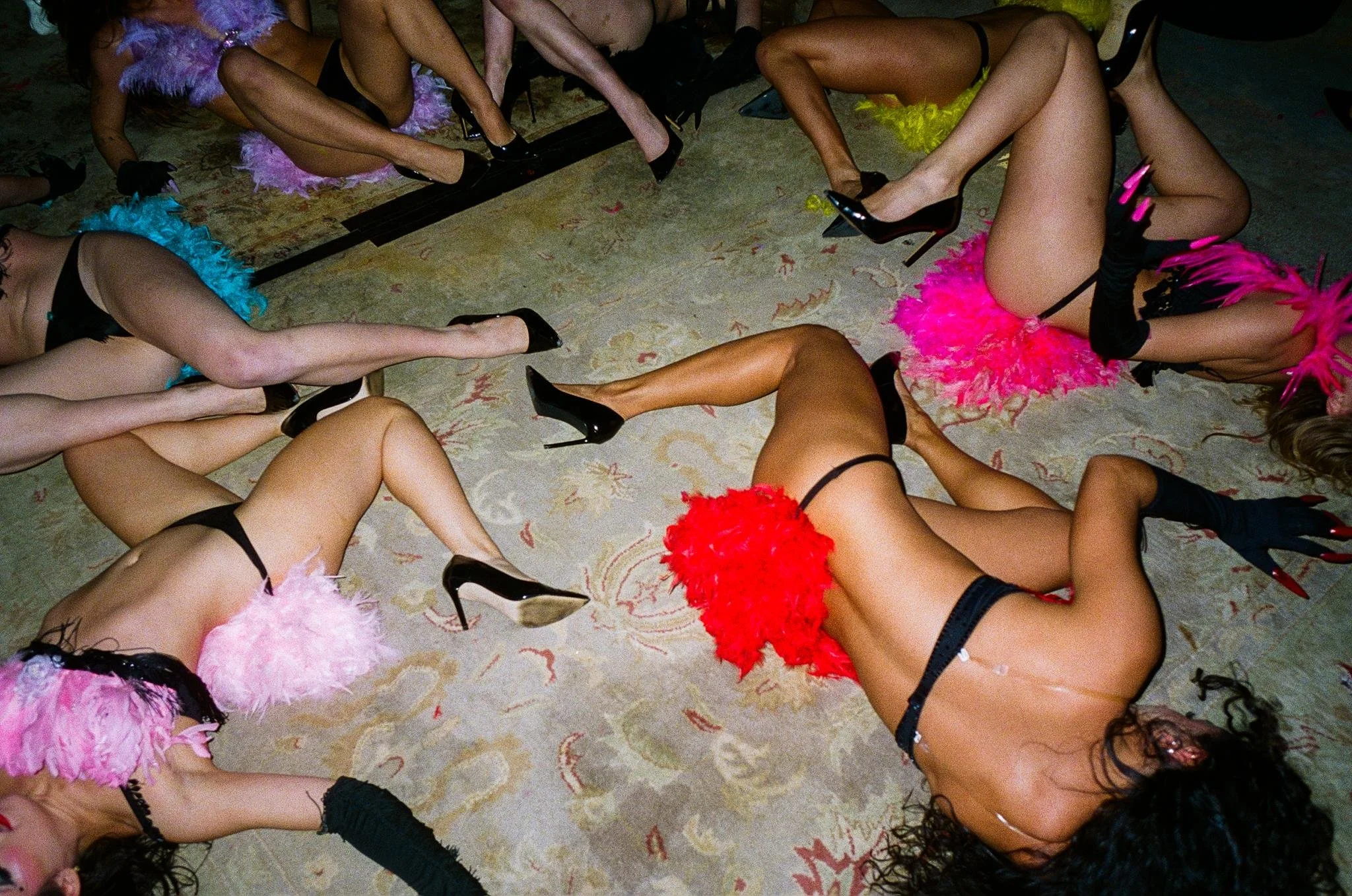
Photo by Julie Benatar.
Speaking with the women of the elusive group—Charlie Sue Birznieks, Chloe Terlingen, Emily Eshoo, Frances Pine-Rinella, Julia Dipretoro, Julia Padanova, and Roberta Lavalle—makes instantly clear their refusal to confine themselves within a single genre or label. The G-Strings wander from the Lower East Side at burlesque venue The Slipper Room, to the Brooklyn-based Play Me Techno dance party and performance hub. While their performances do include elements of burlesque, striptease, and vaudeville, their show is an ever-evolving entity that has a life force of its own.
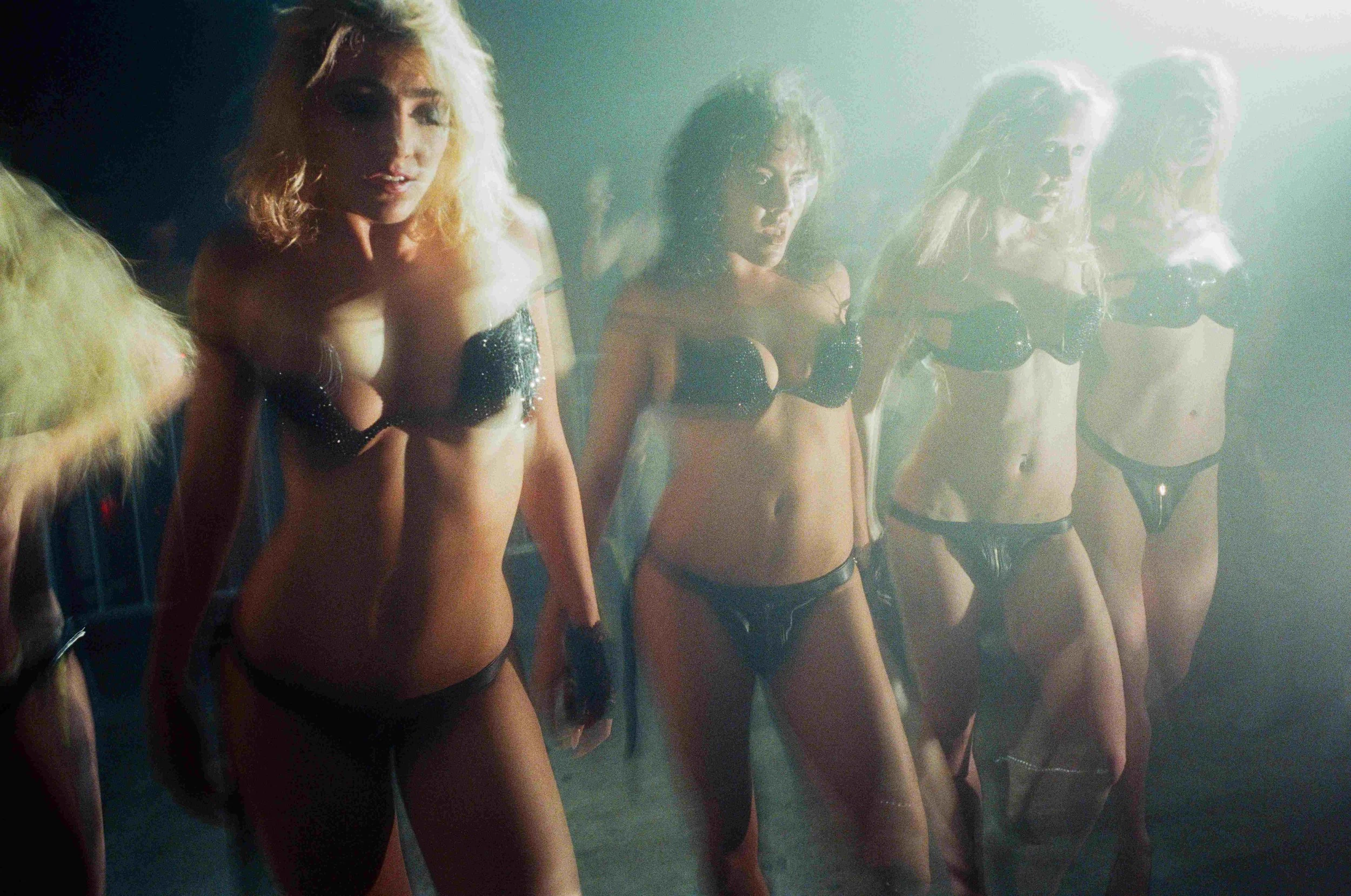
Photo by Julie Benatar.
“The G-Strings come from a shared desire to be living our lives as freely as possible. We are about being authentic and making choices that come from the deepest part of our souls,” explains Charlie. “That's what so much of the practice and the true work of The G-Strings is: way before it's a business or even a performance, it's a philosophy—it’s about learning from each other.”
“It’s about learning from each other” - Charlie Sue Birznieks
Like any successful performance or movement, it has taken The G-Strings hard work, relentless dedication, and some divine timing to get to where they are now. The women found one another through dance school and different performance acts. “We were all swimming in the same waters—of nightlife, burlesque, and heels [dance] classes,” says Julia D. “We were attracting similar experiences, and we thought, ‘it makes sense to have autonomy over what we're doing, and to try to produce our own act’” she continues.
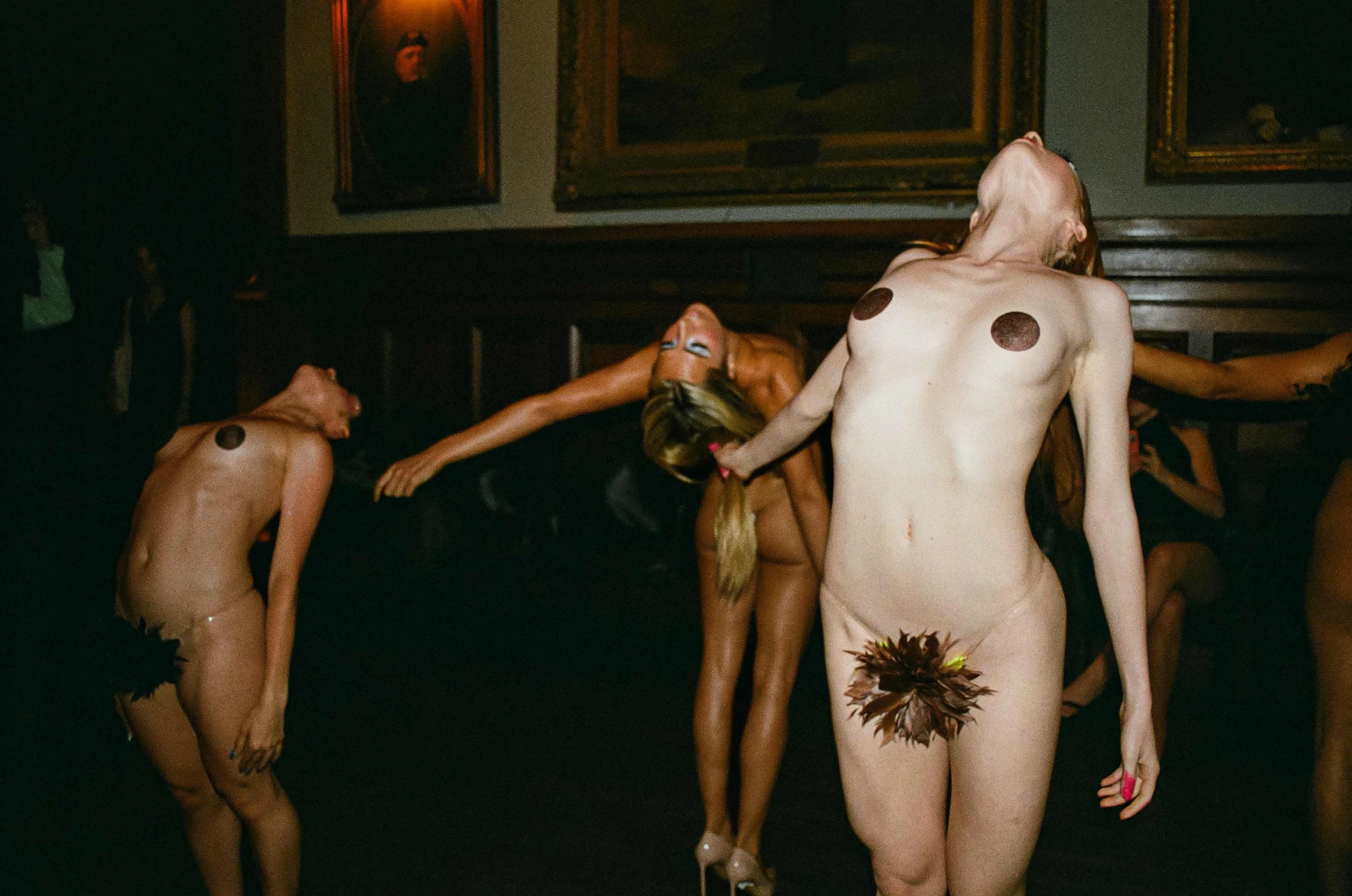
Photo by Em Higgins.
All seven women lead unique lives outside of The G-Strings. They all have different hustles, whether it’s performing in separate cabaret groups and dancing at strip clubs, dancing on stage with Addison Rae like Julia D., or dancing on the basketball court as a Knicks City Dancer like Chloe. However, when they perform, their paths converge to create something entirely new and dynamic. “Our references come from each of our life experiences. They all create a sort of matrix that we can pull from when we're making new work,” Emily says. This same bond also creates a level of physical synchronicity that allows them to surpass the limitations of their individual bodies.
At their Spring 2026 MoMA PS1 show, they performed what they call a “pump spine,” where they literally wove their bodies together, creating a deity-like figure that moves with one powerful force. Similarly, at their Park Avenue Armory performance in June, they sat in a line to braid each other’s hair, and then linked their bodies to crawl around the floor with the braids in each other’s mouths.
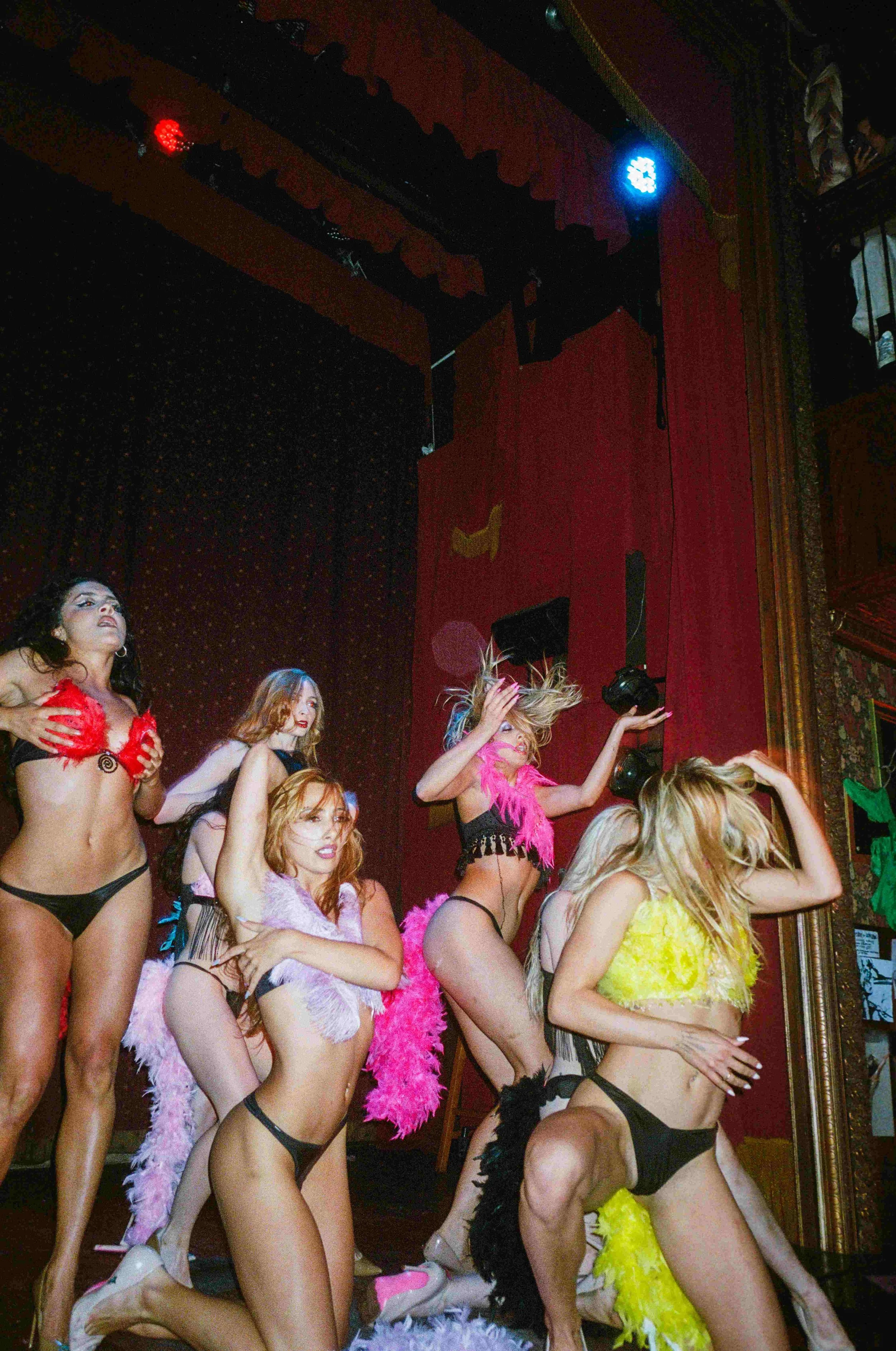
Photo by Julie Benatar.
“We all kind of get into a trance, and we have this philosophy where we keep saying ‘yes’ to see how we evolve,” says Julia D. “But no performance is entirely perfect.” She continues, “We're always slightly off, you know. There's always things in our lives that some of us are dealing with, but because it's our life's work, we stay consistent with how we perform and how we show up for each other.”
“We're young women. It's a big challenge—standing up for ourselves.” -Emily Eshoo
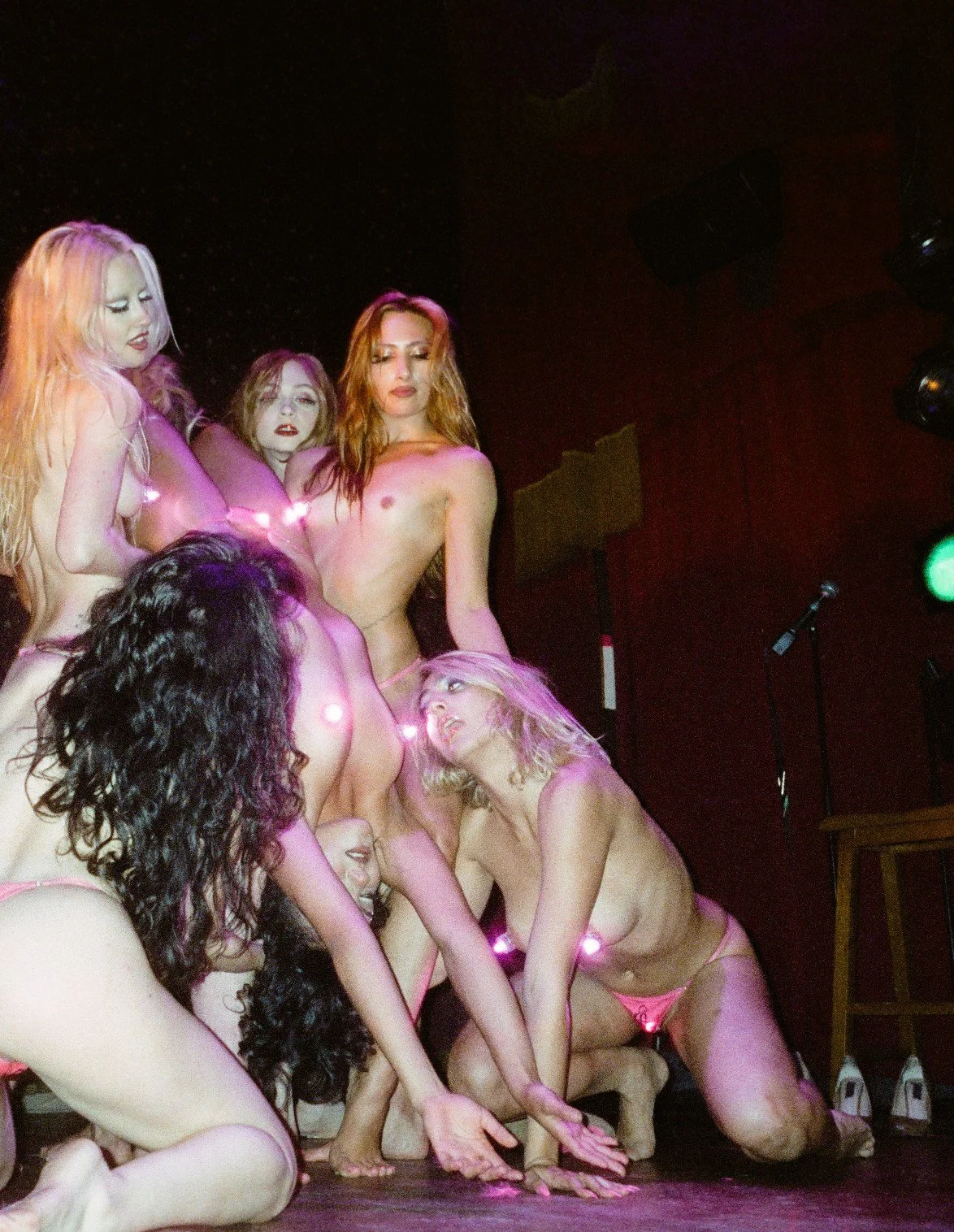
Photo by Julie Benatar.
For a majority of The G-Strings’ performances, they are almost entirely nude, and there hasn’t been a show of theirs where this isn’t celebrated. However, many of the women have supported their G-String careers working in pockets of New York nightlife where disrespect for dancers is the norm. They describe the mindset needed in order to survive in patriarchal spaces, and in a society that shames them for using their bodies to make money or art. “We're nude, and you should respect us and our choice to do that,” states Emily. “At the same time, we're young women, and we're telling you how much you need to pay us, and we’re telling you that you can't speak to us that way. It's a big challenge—standing up for yourself—but I think that's a huge part of how we've managed to stay so authentic.”
When asked how she got into burlesque and striptease-style dance, Charlie was quick to say it was just a “born this way” type of scenario. Importantly, she also described the unlearning of a culture of “whorephobia,” which, especially in America, is often wielded against sexually liberated women. When asked how she’d dealt with her own self-doubt and internalized whorephobia, she replied, “Those are not my own thoughts; it's thoughts that were said to me, and that are said to us through the culture. I feel that we're all at a point now where we don’t need to explain ourselves.”
“We’ve found a way to make our show relatable to anyone with the openness to appreciate our performance.” -Julia Dipretoro
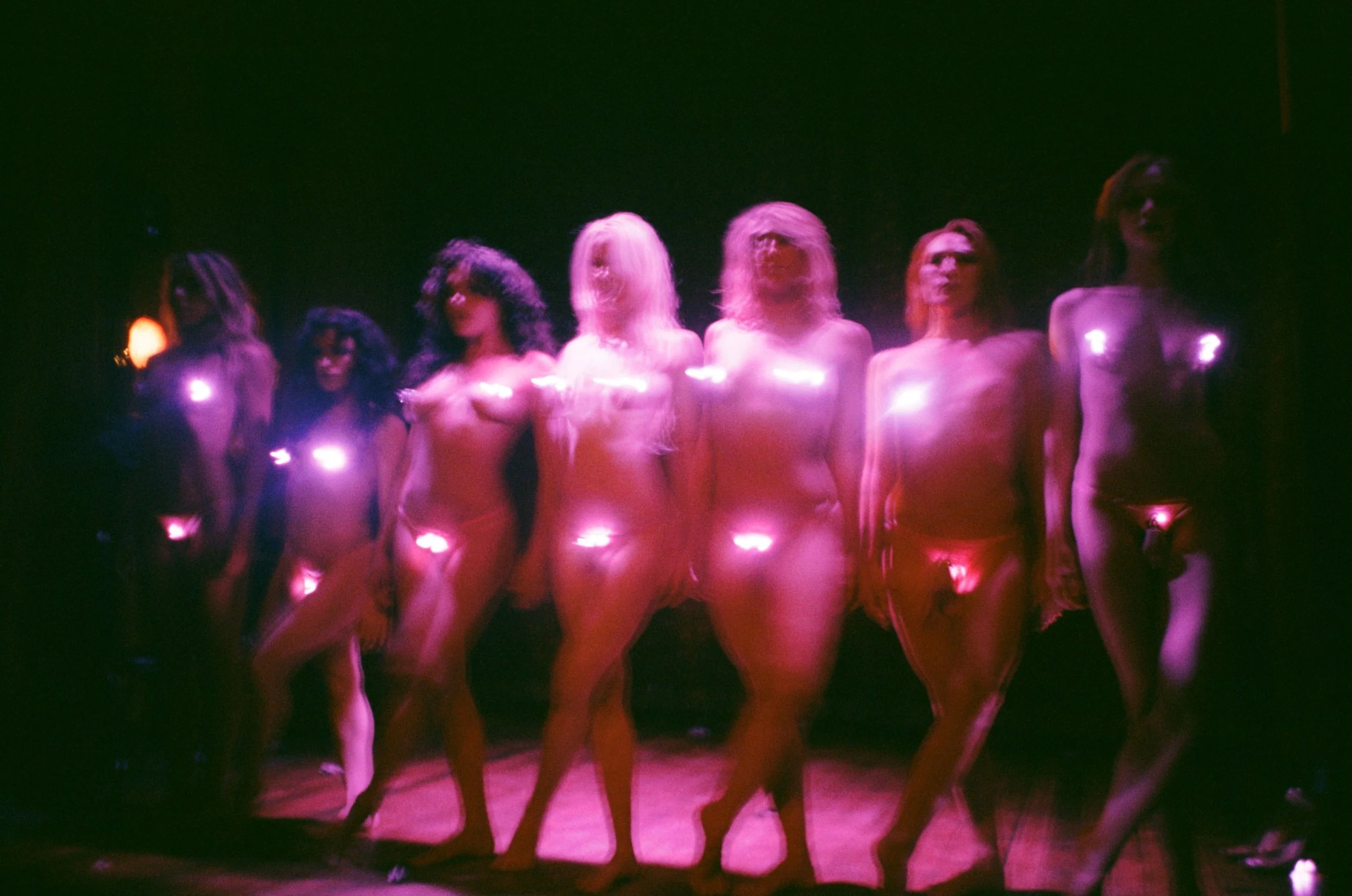
Photo by Austin DeWitt.
When The G-Strings performed at The Slipper Room in the Lower East Side on May 23, it was clear they had no explaining to do. A line of young downtowners snaked around the block waiting in the on-again, off-again rain to get into the iconic burlesque venue. When the stage lit up The G-Strings immediately commanded the room in their pink bottomed pumps, kicking, shimmying, and cheekily engaging the audience. To celebrate Emily’s birthday, the women brought out a number of whipped cream pies and proceeded to cover her in them while Madonna’s synthy rendition of “American Pie” played over the speakers. Sitting in the front row for this spectacle were none other than downtown icons, Julia Fox and Richie Shazam. Julia even joined the girls on stage and pied Emily herself, smiling ear to ear as she walked back down to her seat. Addison Rae and Chappell Roan were also in attendance, both among the new wave of pop stars ushering in a renaissance of burlesque aesthetics in fashion and pop culture. Although, The G-Strings made it clear that true burlesque goes far beyond fishnets and feathers.
“We don't need to explain ourselves.” - Charlie Sue Birznieks
“Everyone is drawn to the burlesque aesthetic right now because it’s taboo,” Charlie says. “People always want to do what somebody else isn't doing, and to try to be taboo, but to us, the most taboo act is to be completely authentic,” she muses. After several nude acts, at that same show at The Slipper Room, The G-Strings came out dressed in baggy pants, t-shirts, and backwards baseball caps, and break-danced to the Beastie Boys. Drawn to the G-Strings for their spirit and charisma rather than the mere spectacle of their nudity, the audience was equally as titillated. Further proving the group’s aversion to being pigeonholed, Charlie explains that “Our strategy is always transforming; we're not attached to the burlesque aesthetic.” She also made it abundantly clear that a common misconception about burlesque is that it is all about sex appeal, and void of any goofiness or fun. Between the pie, break dancing, and a naked climb of the rafters by Frances, there was no shortage of fun that night on Orchard Street.
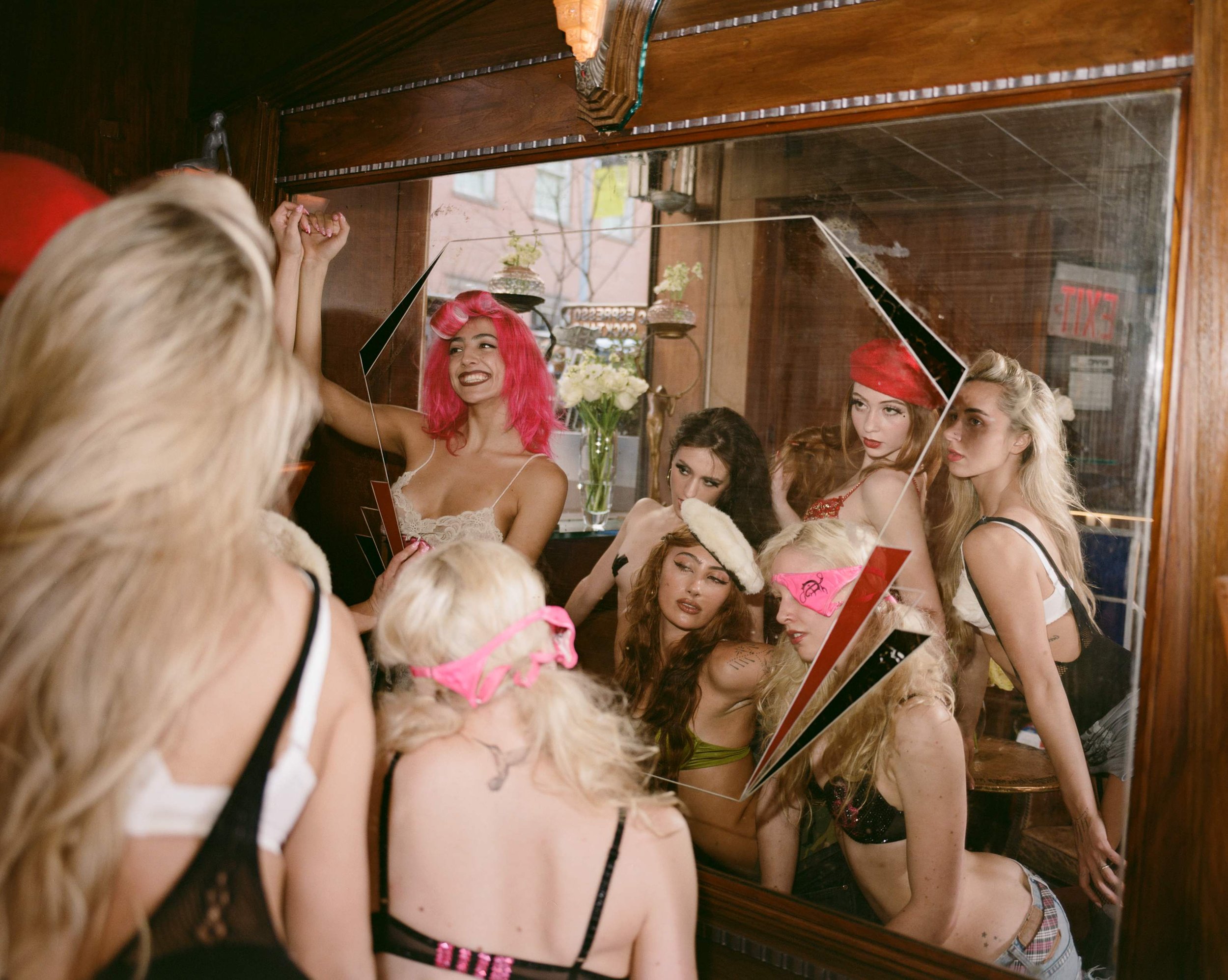
Photo by Maisy Lewis.
Arguably the most contagious and erotic element of a G-Strings show—beyond their talent and training—is the lighthearted energy they cultivate. “Eroticism has to start deep in your soul and your desires, and my personal desire is to dance and play all the time,” Charlie confesses. A performance by The G-Strings feels much more like a celebration than a spectacle. It is inspiring to watch seven women with such a sense of self-assurance—not one derived from the fact that they can perform naked, but instead because they’re living out their self-determined destinies. When they perform, their audience is offered a chance to look back at themselves and ask if they are doing the same.
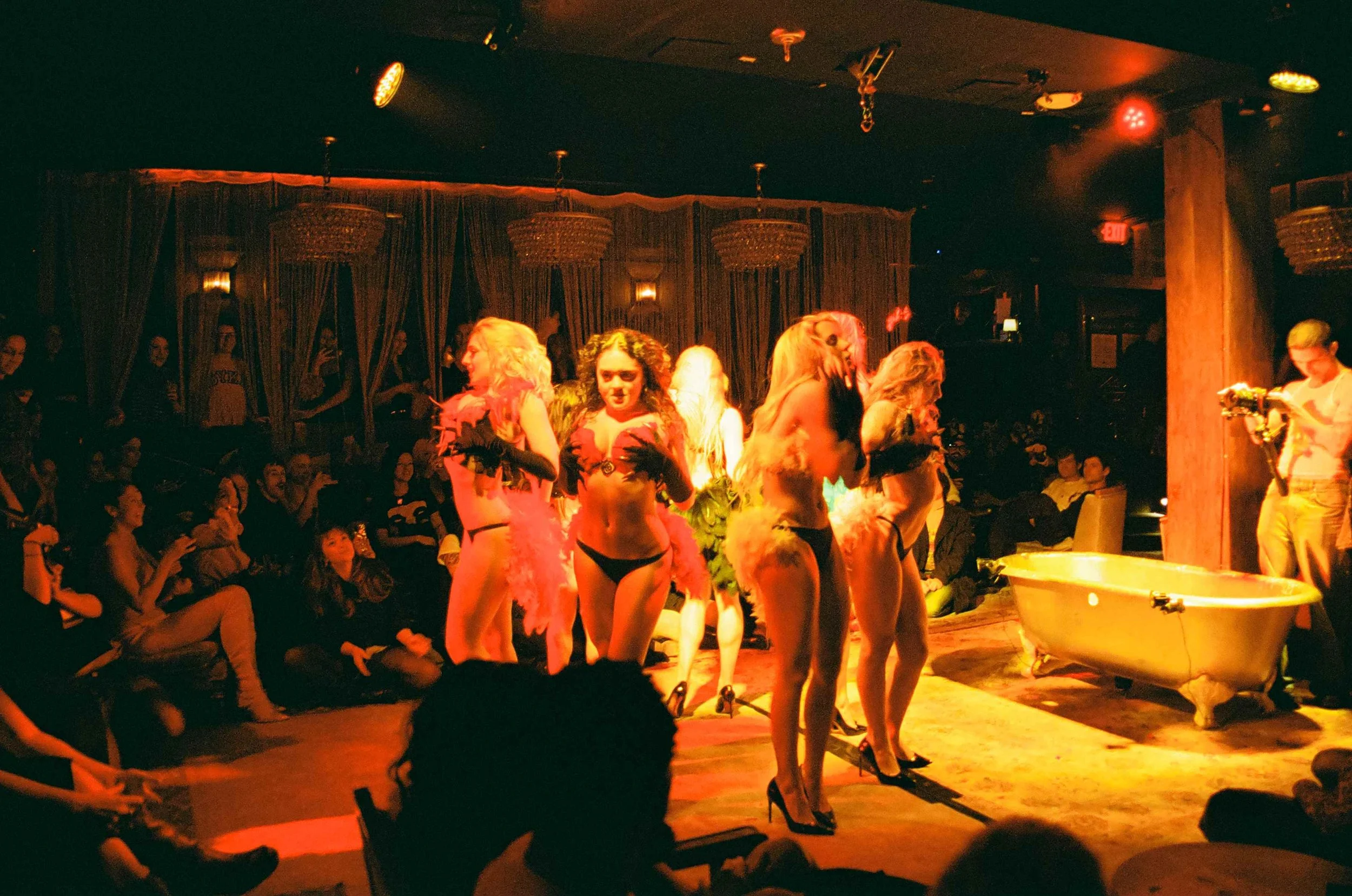
Photo by Em Higgins.
A show that garners this type of rapturous reaction is bound to take off, regardless of any supposed taboos. The G-Strings’ ascent has been swift since they formed a year ago, though they’ve managed to toe the line between the underground and the established world of celebrity with ease. “We are in this really sweet spot,” says Julia D. “We have access to types of venues and audiences that you can’t really access once you are mainstream. One night we're performing at a warehouse rave, and then the next day at the Park Avenue Armory,” she continues. “We’ve found a way to make our show relatable to anyone with the openness to appreciate our performance.”
“Eroticism has to start deep in your soul." - Charlie Sue Birznieks
Throughout conversation with The G-Strings, each woman refers to the group as a whole before referring to themselves. Each member demonstrates a level of selflessness and sisterhood that fuses them together into a single, impenetrable entity.
This story was first published in print for Bias Cut 04: The Body Issue.